+91 97734 41022 sales@exoticalloy.com
DIN 912 / ISO 4762 · Vented · Hex socket · To drawing

Hollow Allen Bolts Manufacturer in India

Hex socket head cap screws with an axial bore through the floor of the socket. The range covers vented cap screws for vacuum, hollow cap screws for fluid, wire and sensor feed-through, low-head hollow screws and through-bored socket set screws. Made M3 to M36 in stainless steel, 12.9 alloy steel, titanium and nickel alloys, with every socket gauged and every bore cleaned.

Request a Quote WhatsApp Sales
  • ISO 9001:2015 certified manufacturer
  • EN 10204 3.1 / 3.2 test certificates
  • Sockets gauged to ISO 23429
  • Vacuum cleaning & clean packing
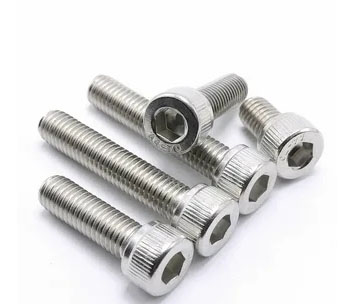
Stainless steel hex socket head cap screws with knurled heads, the base form of hollow Allen bolts
Size M3 – M36 Bore through the socket floor Grades A2 · A4 · 12.9 · Ti
Overview

DIN 912 Vented Cap Screws & Hollow Socket Screws: Manufacturer & Distributor

A hollow Allen bolt is a hex socket head cap screw with a hole drilled along its axis. The bore starts in the floor of the hex socket and runs out through the thread end. From the side it looks exactly like a standard DIN 912 / ISO 4762 Allen bolt, and it is tightened with the same Allen key.

Exotic Alloy makes hollow Allen bolts in Mumbai, India. The bore is drilled into socket head cap screws made to ISO 4762 and DIN 7984 dimensions, or the whole screw is machined from certified bar for exotic alloys and short runs. The range covers vented cap screws for high and ultra-high vacuum, hollow cap screws that carry gas, fluid, wire or a thermocouple through the joint, and lightweight titanium screws. We distribute across India and export to Oman, the UAE, Saudi Arabia, Qatar, Europe and the Americas.

Custom Sizes & Quick Delivery, from M3 Vacuum Screws to M36

A vented A2 or A4 screw can be drilled from a standard socket cap screw within days. Hollow 12.9 screws are drilled before heat treatment. Titanium, duplex, Inconel and Monel versions are turned from bar in 7 to 15 business days. Every size, length, bore and finish is made to your drawing.

M3 – M36 | No. 4 – 1″ Bore through the socket floor Plain or knurled head A2 · A4 · 12.9 · titanium Vacuum clean & bagged
Hollow Allen bolt at a glance
Head
Cylindrical, plain or knurled, to ISO 4762 / DIN 912; low head to DIN 7984
Drive
Hex socket for an Allen key to ISO 2936; key size s per size
Bore
From the socket floor to the thread end, always smaller than the key size
Thread
ISO metric coarse 6g, fine pitch, UNC / UNF on request
Typical use
Vacuum venting, feed-through, lightweight assemblies
Sister product
Hollow hex bolts, where a spanner can be used
Half-section of a hollow hex socket head cap screw showing head diameter dk, head height k, hex socket key size s, socket depth t, socket floor w, bore d i running from the socket floor to the thread end, and thread diameter d k dₖ t w s (key) d dᵢ (bore) knurled head outside view section vent path: thread end → bore → socket EXOTIC ALLOY
Drawn to ISO 4762 M10 proportions: head 16 mm across, 10 mm high, 8 mm key, socket depth 5 mm and floor 4 mm. The 2.5 mm bore passes through the socket floor w and stays well inside the 8 mm key size, so the flats that the Allen key drives on are untouched. Upper half is the outside view, lower half the section.
Specification

Hollow Allen Bolt Specification

Head and socket follow the standards below; the bore, length and finish follow your drawing.

Head & socket standardsDIN EN ISO 4762 (formerly DIN 912) socket head cap screws, product grade A; DIN 7984 low head; ISO 4026 / DIN 913 socket set screws; ASME B18.3 inch socket cap screws; hex keys to ISO 2936; socket gauging to ISO 23429
Size rangeM3 to M36 (ISO 4762 itself runs M1.6 to M64); DIN 7984 M3 to M24; inch No. 4 to 1″ on request. Lengths from 6 mm, full or partial thread to ISO 4762 b values
BoreAxial, from the socket floor to the thread end; vent bores of about 0.3 × d3, larger bores up to about 0.5 × d3; always smaller than the key size s; burr-free at both ends
ThreadISO metric coarse 6g as standard; fine pitch, UNC / UNF class 2A and left-hand on request; rolled where the wall allows, cut where it is thin
TypesVented cap screw, hollow cap screw (feed-through), low-head hollow screw, through-bored socket set screw, socket-head hollow screw with cross holes, lightweight titanium hollow screw
MaterialsAlloy steel to class 8.8, 10.9 and 12.9; stainless A2 (304), A4 (316 / 316L), A4-80; duplex 2205; titanium Gr. 2 and Gr. 5; Inconel 625 / 718; Monel 400; Hastelloy C-276; brass for feed-throughs
FinishPlain / black oxide and oil (alloy steel); zinc flake (ISO 10683); electroless nickel (coats the bore); passivated stainless; silver plating against galling in vacuum; degreased, ultrasonically cleaned and bagged for vacuum
CertificationEN 10204 3.1 material certificate with heat number; 3.2 by TUV, DNV, Lloyd's, BV or SGS; PMI on alloys; dimensional report with socket gauge result, bore diameter and runout
MarkingHead marking of material class and manufacturer's mark on the head where the size allows (ISO 898-1 / ISO 3506-1), with the drawing number on the label; vented screws can be supplied unmarked for vacuum
PackingBores kept clean and capped; VCI for alloy steel; double-bagged in clean-room film for vacuum screws; labelled with size, material, heat number and quantity
Types

Types of Hollow Allen Bolts We Manufacture

All share the hex socket drive. They differ in head height, bore size and what the bore is for.

Vented Socket Cap Screws

ISO 4762 / DIN 912 · small vent bore, e.g. 1 mm in M3

The standard vacuum fastener. The small bore lets gas trapped at the bottom of a blind tapped hole escape during pump-down. That prevents the slow “virtual leak” that limits high and ultra-high vacuum. Supplied in A2, A4 and titanium, cleaned and bagged.

Hollow Cap Screws for Feed-Through

ISO 4762 head · bore up to ≈ 0.5 × d3

A larger bore carries compressed air, coolant, a wire, an optical fibre or a thermocouple through the clamped parts. The socket head means no spanner clearance is needed. Bore edges are radiused so cables are not cut.

Low-Head Hollow Socket Screws

DIN 7984 head · 54 to 70 % of the ISO 4762 head height

For thin parts and shallow counterbores. The lower head leaves a shallower socket and less metal under it, so we keep the bore small and check the head section before quoting.

Through-Bored Socket Set Screws

ISO 4026 / DIN 913 flat point base · bore to drawing

Headless hex socket set screws (grub screws) with an axial bore. They act as threaded vents, adjustable orifices and wire guides, or as stops that still let air or fluid pass.

Socket-Head Hollow Screws with Cross Holes

Blind bore + cross holes · to drawing

A banjo-type screw with a socket head, for compact hydraulic and lubrication manifolds where there is no room for the spanner a DIN 7643 hex banjo bolt needs.

Lightweight Titanium Hollow Screws

Ti-6Al-4V Grade 5 · ISO 4762 geometry

Titanium already weighs about 56 % as much as steel for the same volume. A bore takes away more weight again. Used in motorsport, cycling, aerospace and drones, with the stress area calculated for every design.

Left: a vented socket head cap screw in a counterbored blind tapped hole, with the gas trapped under the thread escaping through the bore into the socket. Right: top view of the head showing the hex socket of key size s, the bore circle inside it, and the knurled rim. Vented cap screw in a blind tapped hole Top view: bore inside the hex socket trapped gas vents through the bore and out of the socket head sits in a counterbore, no spanner clearance needed vacuum chamber wall s = 8 (key) dᵢ = 2.5 bore is 0.31 × s: the key flats are untouched EXOTIC ALLOY
Why the socket head suits vacuum and compact assemblies. The head sits down in a counterbore, so nothing projects and no spanner room is needed. The vent bore opens into the bottom of the socket, which stays fully open to the chamber. In the top view (M10 proportions) the bore sits well inside the hexagon, so the Allen key drives on undamaged flats.

Hollow Allen bolt or hollow hex bolt?

PointHollow Allen bolt (this page)Hollow hex bolt
DriveAllen key in the head socketSpanner or socket on the hexagon
Clearance neededOnly above the head: fits counterbores and tight cornersAround the head for the spanner
Where the bore opensInto the floor of the hex socketInto the head face (through-bored) or blind (banjo)
Standard banjo designNone: socket-head banjo screws are made to drawingDIN 7643, M8 × 1 to M45 × 1.5
Typical grades12.9, A2-70, A4-70 / -80, titanium Gr. 58.8, A2 / A4, free-cutting steel, CW710R brass
Best forVacuum chambers, compact manifolds, flush heads, lightweight assembliesFuel, oil and hydraulic lines, external feed-throughs
Dimensions

Hollow Allen Bolt Dimensions: ISO 4762, DIN 7984 & Bore Sizes

Head and socket dimensions are those of the standard screw. The third tab gives the vent and maximum bores we recommend for each size and how much of the solid stress area each leaves.

SizePitch Pdk max
plain / knurled
k max
head height
s
hex key
t min
socket depth
w min
socket floor
b
thread length, ref.
M30.55.5 / 5.6832.51.31.1518
M40.77 / 7.224321.420
M50.88.5 / 8.72542.51.922
M6110 / 10.226532.324
M81.2513 / 13.278643.328
M101.516 / 16.271085432
M121.7518 / 18.27121064.836
M14221 / 21.33141275.840
M16224 / 24.33161486.844
M202.530 / 30.332017108.652
M24336 / 36.3924191210.460
M303.545 / 45.39302215.513.172
M36454 / 54.4636271915.384

DIN EN ISO 4762:2004, product grade A, dimensions in mm. dk is shown for plain and knurled heads; s is the hex key size, t the minimum socket depth, w the minimum floor thickness under the socket and b the reference thread length of partially threaded screws. Shorter screws are threaded to the head. The standard covers M1.6 to M64; hollow versions are made from M3 to M36.

SizePitch Pdk
head dia.
k
head height
s
hex key
t
socket depth
b
thread, L ≤ 125
Head height vs ISO 4762
M30.55.5221.51267 %
M40.772.82.52.31470 %
M50.88.53.532.71670 %
M61104431867 %
M81.2513553.82262 %
M101.516674.52660 %
M121.75187853058 %
M142218105.33457 %
M162249125.53856 %
M182.52710126.542—
M202.53011147.54655 %
M222.5331214850—
M24336131785454 %

DIN 7984:2022, dimensions in mm. The low head is 54 to 70 % of the ISO 4762 head height and the key size is smaller (M10: 7 mm instead of 8 mm), so low-head hollow screws carry smaller bores.

Sizes
hex key
w min
socket floor
d3
minor dia.
As solid
mm²
Vent bore
≈ 0.3 d3
KeptMax. bore
≈ 0.5 d3
KeptMax. bore / s
M32.51.152.395.0184 %184 %0.40
M431.43.148.8191 %1.580 %0.50
M541.94.0214.2194 %278 %0.50
M652.34.7720.1196 %284 %0.40
M863.36.4736.61.595 %381 %0.50
M10848.1658.0295 %478 %0.50
M12104.89.8584.32.594 %4.581 %0.45
M14125.811.55115.4394 %5.579 %0.46
M16146.813.55156.7492 %6.579 %0.46
M20178.616.93244.8592 %879 %0.47
M241910.420.32352.5692 %1078 %0.53
M302213.125.71560.67.592 %12.578 %0.57
M362715.331.09816.7992 %15.577 %0.57

Calculated from ISO thread geometry: d3 = d − 1.2269 P, As = π/4 · ((d2 + d3)/2)², hollow As = As − π/4 · di². Bores are rounded down to 0.5 mm with a 1 mm minimum. The last column shows that even the maximum bore is at most 0.57 of the key size, so it always opens inside the socket floor.

M10 socket head cap screw heads to scale: ISO 4762 with 10 mm head height, 8 mm key and 5 mm socket depth, against DIN 7984 low head with 6 mm head height, 7 mm key and 4.5 mm socket depth ISO 4762 / DIN 912, M10 DIN 7984 low head, M10 k 10 s 8 t 5 w 4 k 6 s 7 t 4.5 less metal under the socket: smaller bore EXOTIC ALLOY
Same thread, very different head. Drawn to scale from ISO 4762 and DIN 7984 values for M10. The low head keeps much less metal between the socket and the shank. That is why a low-head hollow screw gets a smaller bore than the standard head (here 1.5 mm against 2.5 mm, for illustration).
Strength

Hollow Allen Bolt Strength: What the Bore Costs

Socket cap screws are usually chosen because they are strong: class 12.9 is the normal grade. A bore takes metal out of the threaded section that carries the load, so we calculate it for every design.

Share of the solid ISO 4762 threaded stress area kept by a hollow socket head cap screw with a vent bore of about 0.3 times and a maximum bore of about 0.5 times the thread minor diameter, M3 to M36 Hollow ISO 4762 screws: threaded stress area kept (computed) vent bore ≈ 0.3 d₃ maximum bore ≈ 0.5 d₃ 0 % 25 % 50 % 75 % 100 % M3 84 % / 84 % M4 91 % / 80 % M5 94 % / 78 % M6 96 % / 84 % M8 95 % / 81 % M10 95 % / 78 % M12 94 % / 81 % M14 94 % / 79 % M16 92 % / 79 % M20 92 % / 79 % M24 92 % / 78 % M30 92 % / 78 % M36 92 % / 77 % EXOTIC ALLOY
A vent costs very little; a large bore costs about a fifth. A vent bore of about 0.3 d3 keeps 92 % or more of the solid stress area from M8 upward. The maximum bore we recommend, about 0.5 d3, keeps 77 to 84 %. For M3 the 1 mm minimum vent already equals the maximum.
Vent bore ≈ 0.3 × d3≥ 92 %kept from M8 upward: vacuum vents, small feed-throughs
Max. bore ≈ 0.5 × d377 – 84 %kept: cables, coolant, weight saving
Max. bore / key size s≤ 0.57so the bore never reaches the socket flats

Property classes and hollow socket screws

The proof loads and breaking loads in ISO 898-1 (8.8 to 12.9) and ISO 3506-1 (A2 / A4) are calculated for a solid screw. A hollow screw made from 12.9 material has 12.9 strength, but only over a smaller area, so it does not meet the solid-screw load tables.

We certify the material class to EN 10204 3.1 and state the hollow stress area, as in the bore table above. On request we pull finished hollow screws to failure and report the measured load. For the socket itself nothing changes, because the bore stays inside the key size and the socket depth t is untouched.

Material strength used for hollow Allen bolts

Material / classStandardRm min
MPa
Rp0.2 min
MPa
HardnessNotes for hollow socket screws
Alloy steel, class 8.8 materialISO 898-1800 (≤ M16) / 830640 / 66022–34 HRCBore drilled before or after heat treatment
Alloy steel, class 10.9 materialISO 898-1104094032–39 HRCBore drilled before heat treatment
Alloy steel, class 12.9 materialISO 898-11220110039–44 HRCThe usual grade of plain socket cap screws; bore drilled before hardening; electroplating only with baking, zinc flake preferred
Stainless A2-70 (304)ISO 3506-1700450—Vented vacuum screws; ISO 4762 lists class 70 up to M24 and class 50 above
Stainless A4-70 / A4-80 (316)ISO 3506-1700 / 800450 / 600—Chloride, chemical, marine and semiconductor service
Titanium Grade 5 (Ti-6Al-4V)ASTM B348895828≈ 36 HRCLightweight hollow screws for motorsport, aerospace and vacuum

ISO 898-1 and ISO 3506-1 minimums for the material; titanium from ASTM B348. Multiply Rm by the hollow stress area to estimate the minimum breaking load in the thread, or use the calculator in section 09.

Materials

Hollow Allen Bolt Materials & Alloy Grades

Pick the material for what passes through the bore and for the strength left after it. Every grade links to its datasheet.

A2 & A4 austenitic
304 / 304L · 316 / 316L · A4-80

The standard vacuum and clean-process material. Non-magnetic when annealed, and needs no coating inside the bore. 316L where the screw sees chlorides or is baked out.

Special stainless
303 · Nitronic 60 · 254 SMO · A-286

303 for easy machining of long bores in non-critical service, Nitronic 60 where galling must be avoided, 254 SMO for seawater, A-286 for strength at temperature.

Cr-Mo and Ni-Cr-Mo steel
Class 8.8 / 10.9 / 12.9 material, quenched and tempered

4140 / 4340-type steels give 12.9 strength in hollow screws for machinery and tooling. The bore is drilled before hardening, and the finish is black oxide and oil or zinc flake.

Why 12.9 hollow screws need care
39 – 44 HRC · hydrogen embrittlement

At this hardness the steel is too hard to drill well and is sensitive to hydrogen. So we bore before heat treatment, avoid acid pickling and electroplating unless the parts are baked, and recommend zinc flake for corrosion protection.

Titanium Grade 5 (Ti-6Al-4V)
R56400 · 895 MPa tensile min

The lightweight hollow screw: strength between class 8.8 and 10.9 steel at about 56 % of the weight, made lighter again by the bore. Non-magnetic, and immune to seawater.

Titanium Grade 2
R50400 · commercially pure

For vacuum and chemical service where strength matters less than low outgassing and corrosion resistance.

Inconel
N06625 · N07718

Hot gas and furnace feed-throughs; 718 where strength at temperature matters.

Monel
N04400 · N05500

Seawater and hydrofluoric acid; K-500 for higher strength.

Hastelloy
N10276

Wet chlorine and hot acid process equipment.

Duplex
S32205 · S32750

Chloride resistance with more strength than 316, to offset the bore.

Exotic alloy hollow Allen bolts: minimum properties of the bar we machine from

AlloyUNSCondition suppliedTensile min
MPa
Yield 0.2 % min
MPa
Elongation
%
Why it is chosen for hex bolts
Inconel 625N06625Solution annealed (Grade 1)82741430Seawater, sour gas, cryogenic to 980 °C oxidation; subsea flange bolting
Inconel 718N07718Solution treated + aged (AMS 5662)1240103512Highest strength to 650 °C; turbine and wellhead bolting
Monel 400N04400Hot-finished annealed51720735Seawater, hydrofluoric acid, no chloride SCC; marine and valve bolting
Monel K-500N05500Age hardened (AMS 4676)96069018Monel 400 corrosion resistance with three times the yield; pump shafts, subsea
Hastelloy C-276N10276Solution annealed (ASTM B574)69028340Wet chlorine, hot acids, mixed oxidising / reducing media; chemical reactors
Incoloy 825N08825Annealed (ASTM B425)58624130Sulphuric and phosphoric acid, sour gas (NACE MR0175); pickling plant
Duplex 2205S32205Solution annealed65545025Twice the yield of 316 with chloride SCC resistance; offshore topsides
Super Duplex 2507S32750Solution annealed75055015PREN > 40; seawater and desalination bolting
Titanium Grade 5R56400Annealed (ASTM B348)89582810Half the weight of steel, immune to seawater; aerospace and chemical
A-286S66286Solution treated + aged———Iron-base superalloy for 650 °C bolting; on request with certified values

Bar minimums from the linked datasheets for the supply condition shown. Multiply the tensile strength by the hollow stress area to estimate the load a hollow screw can carry.

Manufacturing

How Our Hollow Allen Bolts Are Made

There are two routes. Standard stainless screws are bored after forming, while hardened grades and exotic alloys are bored before hardening or machined from bar.

1

Certified material

Socket cap screw blanks or round bar received by heat against mill certificates; PMI on stainless, nickel alloys and titanium.

2

Head & socket

Cold-headed with the hex socket formed in the heading die for standard sizes, or turned and broached from bar for exotic alloys, large sizes and short runs.

3

Boring through the socket floor

The drill is centred by the socket itself and taken through the floor w and the shank, using peck or deep-hole drilling for long screws. Runout of bore to thread is checked on first-off parts.

4

Heat treatment

Alloy steel bored first, then quenched and tempered to 8.8, 10.9 or 12.9; stainless used as formed or solution annealed; titanium annealed; Inconel 718 and Monel K-500 aged.

5

Threading

Threads are rolled on solid blanks or where the wall is thick enough, and cut where a large bore leaves a thin wall, so the tube does not collapse under the dies.

6

Deburring & cleaning

Bore exits at the socket floor and thread end are deburred, then the screw is flushed and ultrasonically cleaned. Vacuum screws are degreased and baked dry on request.

7

Inspection & packing

Socket gauged to ISO 23429, thread gauged, bore checked with pin gauges, hardness tested on heat-treated lots. Packed clean with the bores protected.

Hexagon socket gauging: a go gauge must enter the socket to depth t and the no-go gauge must not enter; the bore at the socket floor must not interfere GO: enters to depth t NO-GO: must not enter gauge seats on the flats socket not oversize

The socket comes first

A worn or oversize socket makes the Allen key cam out and round the flats. That ruins the screw and often the part around it. Drilling through the socket floor must not disturb the socket, so we gauge it before and after boring with go and no-go hexagon gauges to ISO 23429, and confirm the socket depth.

The bore is kept smaller than the key size in every design, at most 0.57 × s in our standard sizes. The key still bears on the full length of all six flats.

Finishes

Hollow Allen Bolt Finishes

Two things limit the finish on a hollow socket screw. High-strength grades are sensitive to hydrogen, and small bores cannot be electroplated reliably. See also our coated fasteners page.

FinishSpecificationInside the boreSuitable forNotes
Black oxide & oilThermal or chemical black, oiledPartial10.9 / 12.9 alloy steelThe traditional socket cap screw finish; indoor and oiled service only
Zinc flakeISO 10683Masked or not coated in small bores8.8 to 12.9No hydrogen embrittlement; the preferred corrosion finish for 12.9
Zinc electroplateISO 4042Thin or absent8.8; 10.9 / 12.9 only with bakingBake after plating to relieve hydrogen in high-strength screws
Electroless nickelASTM B733 / ISO 4527UniformAlloy steel needing an even coat inside the boreNo current, so no shadowing; adds wear resistance
PassivatedASTM A967 / A380FullA2, A4, duplexStandard on stainless; restores the passive film after drilling
Silver plated threadTo drawing—Stainless vacuum screwsDry lubricant that resists galling in stainless tapped holes under vacuum
Vacuum cleanDegrease, ultrasonic clean, bake on requestOil-freeAll vented screwsPacked in clean-room film
12.9 and hydrogen. Socket cap screws in class 12.9 (39 to 44 HRC) can fail by hydrogen embrittlement after acid pickling or electroplating, sometimes days after they are tightened. For corrosion protection on 12.9 we use zinc flake. If electroplating is specified, the screws are baked straight after plating and the bake is recorded on the certificate.
Engineering tool

Hollow Allen Bolt Bore & Strength Calculator

Choose an ISO 4762 size, a bore and a material. The tool shows how much of the solid screw is left, the estimated minimum breaking load in the thread, and how the bore compares with the hex key size and the socket floor.

Hollow socket screw inputs

mm

As = π/4 · ((d2 + d3)/2)² − π/4 · di², d2 = d − 0.6495 P, d3 = d − 1.2269 P. Estimated breaking load = As × Rm, for the threaded section only. Key size s, socket depth t and floor w from ISO 4762.

Result for M10, bore 2.5 mm
92
% of the solid stress area kept
(53.1 of 58.0 mm²)
64.8
kN estimated min. breaking load
(solid: 70.8 kN)
Hex key size s / socket depth t:8 / 5 mm
Bore / key size:0.31
Wall at thread root:2.83 mm
Bore flow area:4.9 mm²

Tightening hollow Allen bolts

Use a full-size key

Use a hex key to ISO 2936, inserted to the full socket depth t. Worn keys and ball-end keys concentrate the load near the socket mouth and round the flats.

Scale the preload

Take the preload of the solid screw for the material and friction, and reduce it in proportion to the stress area kept (the % above). Treat the result as a design figure to be confirmed.

Vacuum screws

Lubricate stainless-in-stainless threads with a vacuum-compatible lubricant or use silver-plated screws. Galling seizes a vented screw before it reaches its load.

Applications

Where Our Hollow Allen Bolts Are Used

Vacuum & semiconductor

Vented A2, A4 and titanium cap screws in vacuum chambers, deposition and etch tools, load locks, electron microscopes and analytical instruments.

Research & space simulation

Particle accelerators, fusion and cryogenic test rigs, and thermal-vacuum chambers, where virtual leaks and outgassing must be removed.

Machine tools & automation

Hollow 12.9 screws that carry coolant or compressed air through fixtures, grippers and spindle assemblies, with a socket head for tight spaces.

Hydraulic & lubrication manifolds

Socket-head hollow screws with cross holes in compact manifolds and central lubrication systems where a hex banjo bolt will not fit.

Sensors & electronics

Feed-through screws for thermocouples, fibre optics and wiring through housings and heat sinks, in stainless, brass or nickel alloys.

Motorsport, cycling & aerospace

Titanium Grade 5 hollow socket screws for brakes, suspension, frames, drones and airframe fittings, where every gram counts.

Quality & testing

Hollow Allen Bolt Inspection & Certification

CheckMethodApplied to
Material identityMill certificate review; XRF PMIEvery heat; 100 % of stainless, nickel alloy and titanium lots
Hex socketGo / no-go hexagon gauges to ISO 23429; depth tEvery lot, before and after boring
Bore diameterPin gaugesEvery lot, sampled
Bore runoutRunout of bore to thread on a V-block or CMMLong screws and large bores
Head & threadHead diameter and height; go / no-go thread gaugesEvery lot, to ISO 4762 or DIN 7984 limits
HardnessRockwell C, surface and coreEvery heat-treated lot; decarburisation check on 12.9
Burrs & cleanlinessMagnifier or borescope; flushingEvery lot; vacuum lots cleaned and bagged
Load testTensile test of finished hollow screwsOn request, measured load reported
Leak / outgassingHelium leak test of assemblies; RGA by customerOn request for vacuum parts

Every hollow Allen bolt lot ships with

  • EN 10204 3.1 material certificate with heat number
  • PMI report for alloy materials
  • Dimensional report: head, socket gauge, bore and thread
  • Heat treatment and hardness record for alloy steel
  • Drawing number and revision on the label

On request

  • EN 10204 3.2 witnessed by TUV, DNV, Lloyd's, BV or SGS
  • Measured breaking load of finished hollow screws
  • Vacuum cleaning and bake-out record
  • Helium leak test of assemblies
FAQ

Hollow Allen Bolt Questions, Answered

A hex socket head cap screw, the screw commonly called an Allen bolt, with a hole drilled along its axis. The bore starts in the floor of the hex socket and runs out through the thread end, so from the side it looks exactly like an ordinary DIN 912 / ISO 4762 socket cap screw. The bore lets trapped gas escape from a blind hole, carries a fluid, wire or sensor through the joint, or saves weight.

A vented screw is the most common kind of hollow Allen bolt. It has a small bore, for example 1 mm in an M3 screw, whose only job is to let gas trapped at the bottom of a blind tapped hole escape in a vacuum system. Hollow Allen bolts with larger bores are used to pass fluids, wires, optical fibres or thermocouples, or to reduce weight, and are made to drawing.

It removes part of the threaded stress area, which carries the load. A vent bore of about 0.3 times the thread minor diameter keeps about 92 percent of the solid area in sizes from M16 upward and more in smaller sizes; a bore of half the minor diameter keeps about 77 to 84 percent. Because the ISO 898-1 proof and breaking loads assume a solid screw, a hollow screw is certified on its material and, where required, on its calculated or tested load rather than on the property class load tables.

Yes. Class 12.9 material is quenched and tempered to 39 to 44 HRC, which is too hard to drill economically, so the bore is drilled before heat treatment and the screw is then hardened and tempered. Electroplating 12.9 screws risks hydrogen embrittlement and is only done with baking; zinc flake or a plain, oiled finish is preferred. The material is certified as 12.9 and the reduced stress area is stated.

Not when it is sized correctly. The key drives on the six flats of the socket, and the bore only passes through the socket floor. We keep the bore smaller than the key size s; in our standard design the largest bore is never more than 0.57 times s, so the flats, the socket depth t and the key engagement are unchanged. Sockets are checked with hexagon socket gauges to ISO 23429.

Choose the socket head when there is no room for a spanner: in counterbored holes, close to walls, in compact manifolds and in vacuum flanges where the head must sit flush or below the surface. Choose a hollow hex bolt when the bolt must be turned from the side with a spanner, when an impact wrench is used, or for DIN 7643 banjo joints.

Austenitic stainless steel A2 (304) or A4 (316 / 316L) for most high and ultra-high vacuum work, and titanium Grade 2 or 5 where low weight or low magnetic permeability matters. Stainless screws in stainless tapped holes can gall, so vacuum-compatible lubricant or silver-plated threads are used. We degrease, ultrasonically clean and bag vented screws for vacuum.

Thread size and pitch, length, head type (standard DIN 912 / ISO 4762, low head DIN 7984 or set screw), bore diameter, material and property class, finish, quantity and any vacuum cleaning or certification requirement. A drawing is best; for vented screws the screw size, length, material and vent diameter are enough.
Get Rapid Pricing & Availability

Request a Quote for Hollow Allen Bolts

Tell us the size, length, head type, bore, material, finish and quantity, or email your drawing to sales@exoticalloy.com. Our engineers respond within 2 to 4 business hours.

Inquiry Received!
Thank you. Our technical sales team will contact you shortly.