Grade 2 is the benchmark for titanium corrosion resistance in industrial service: excellent in seawater and brine at ambient and moderate temperatures, in oxidising acids including nitric, in chlorine dioxide and wet chlorine, in hypochlorite, and in most organic acids and oxidising salt solutions. The protective oxide repassivates instantly wherever oxygen is present, which is why titanium outlasts stainless steel so decisively in flowing seawater.
Its limit is crevice corrosion in hot chlorides. Above roughly 70 to 80°C in a tight, oxygen-starved crevice — under a gasket, inside a threaded joint, beneath a deposit — the oxide cannot repassivate and attack can initiate. A bolted joint is by its nature full of crevices, so this matters more for fasteners than for plate. Where hot chloride service is the duty, specify Grade 7 for the best resistance or Grade 12 as the cost-effective alternative. Resistance to reducing acids such as hydrochloric and sulfuric is limited.
Three absolute exclusions. Titanium must not be used in dry chlorine, with which it reacts violently; it must not be used with red fuming nitric acid; and it is rapidly attacked by hydrofluoric acid at any concentration. Fine titanium swarf and grinding dust are also a genuine fire hazard and must be handled wet and stored separately. These limits apply to every grade on this page, including the palladium and molybdenum-nickel modified grades — the alloying additions improve crevice and reducing-acid performance, they do not change these exclusions.
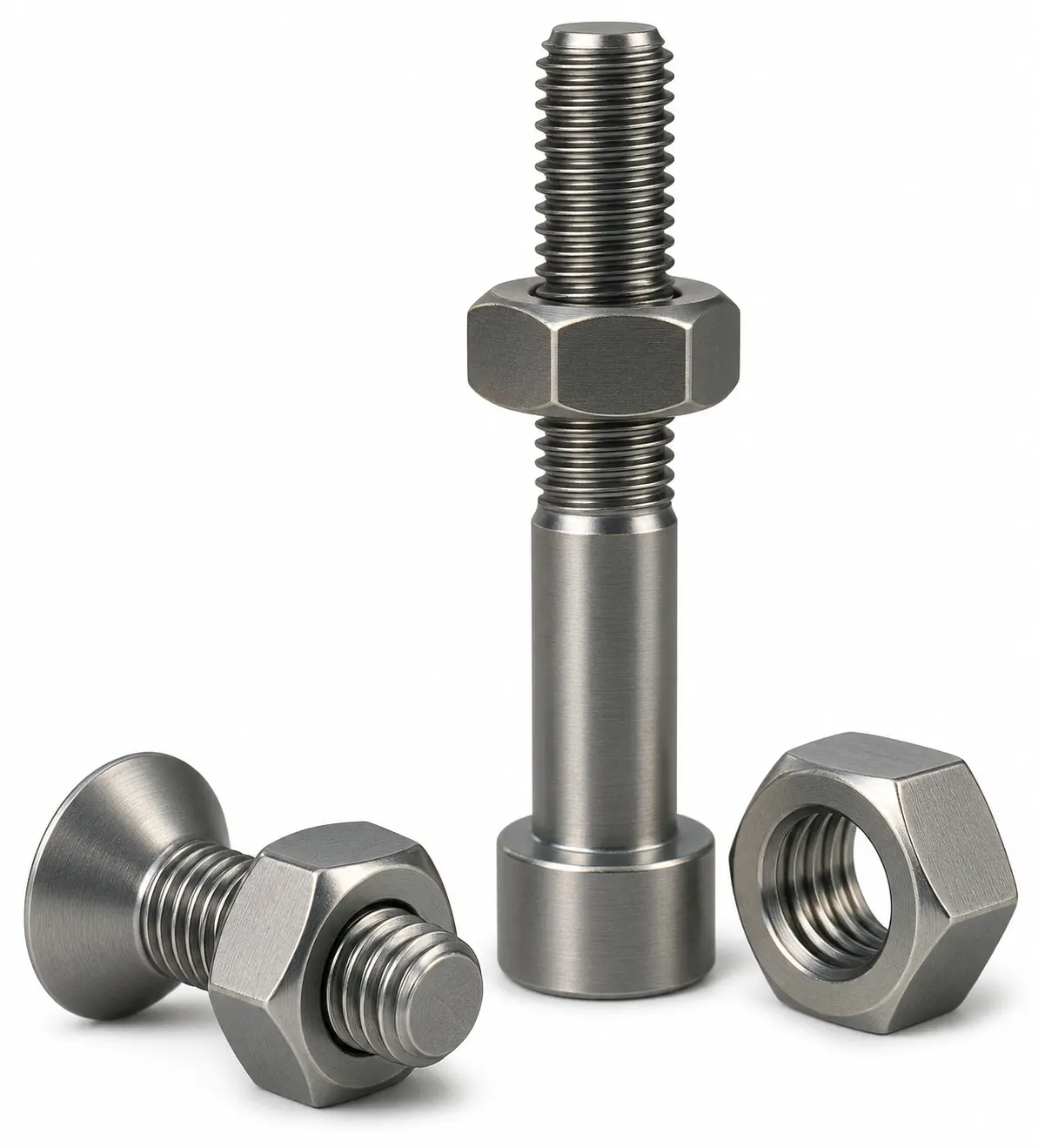
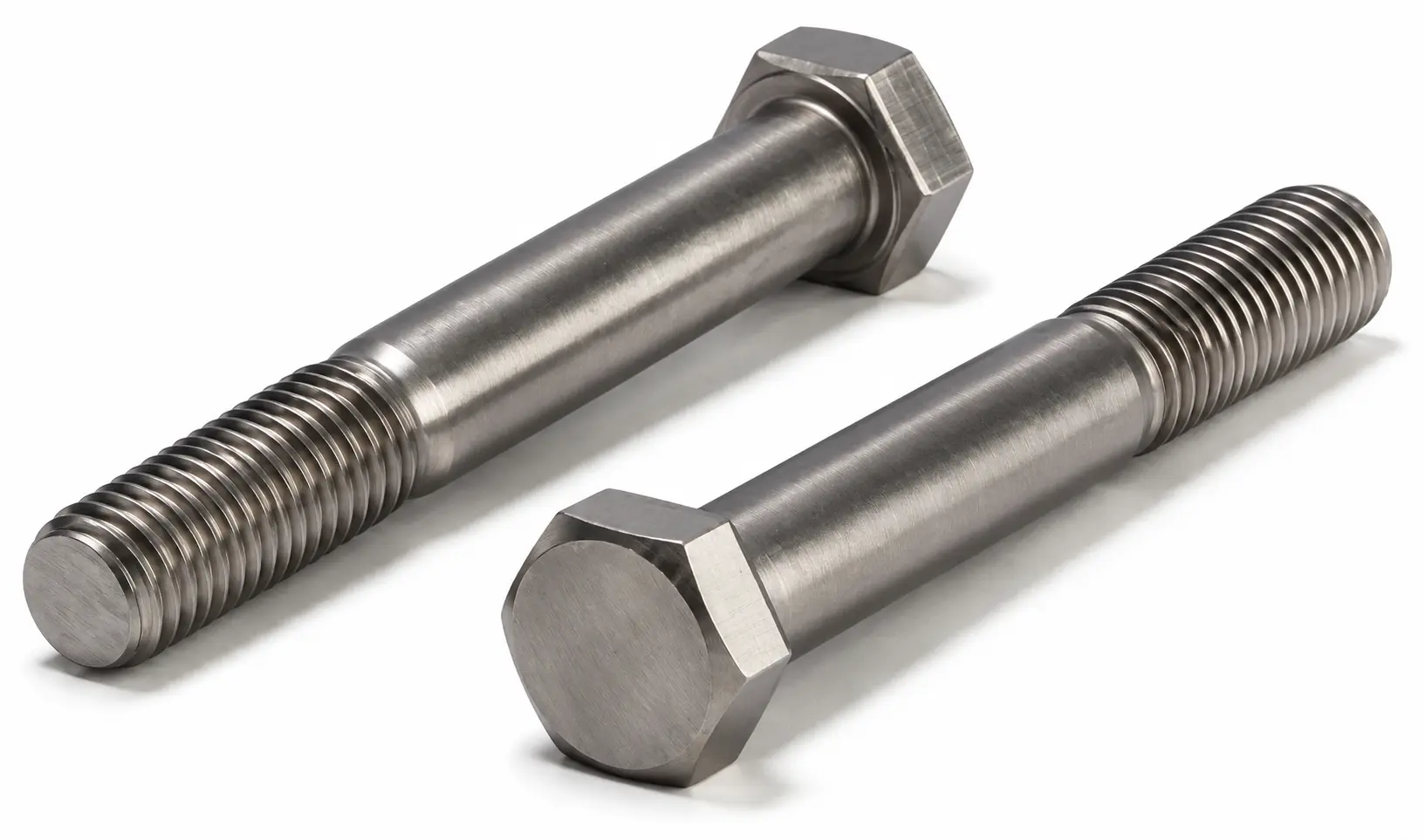
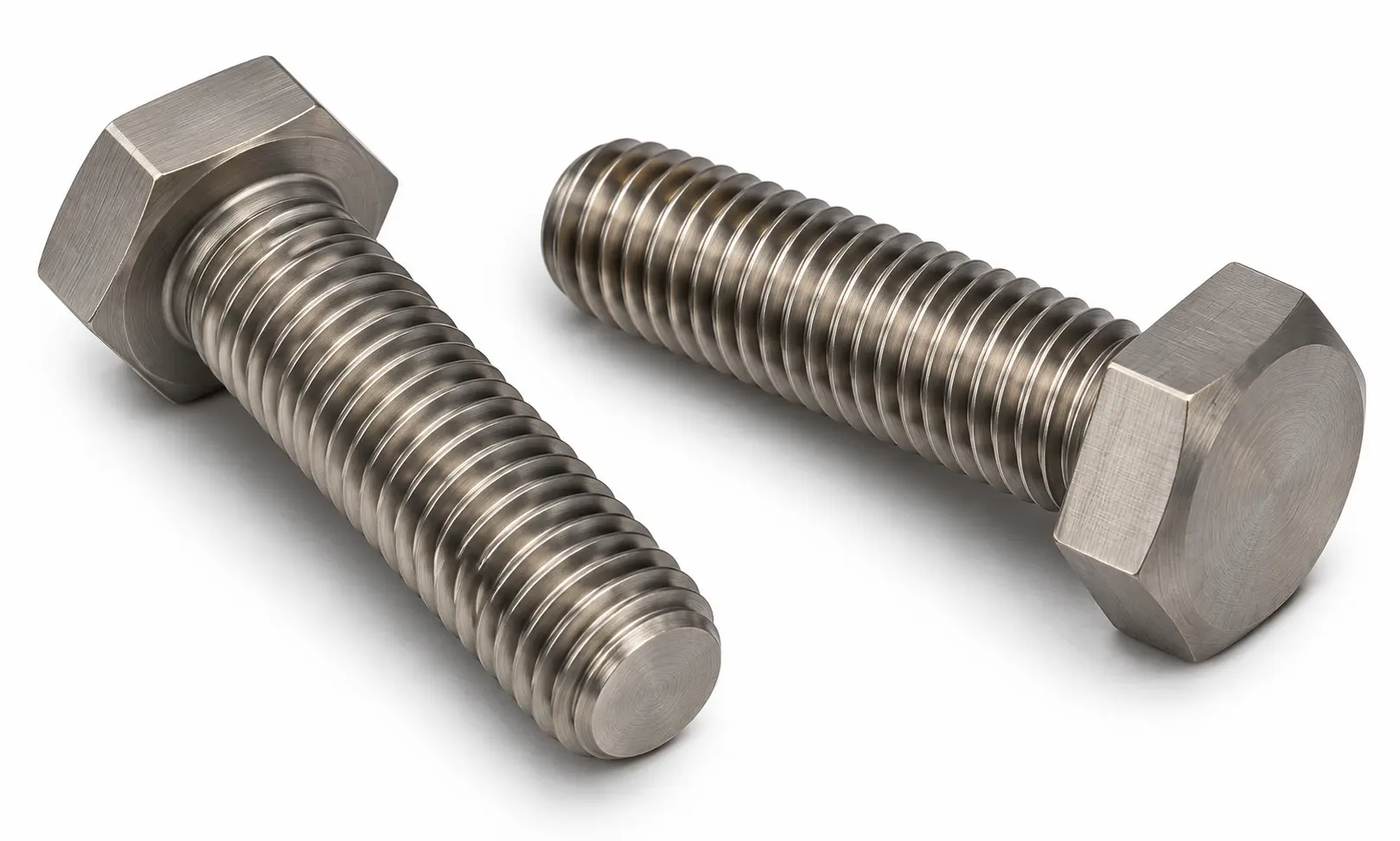
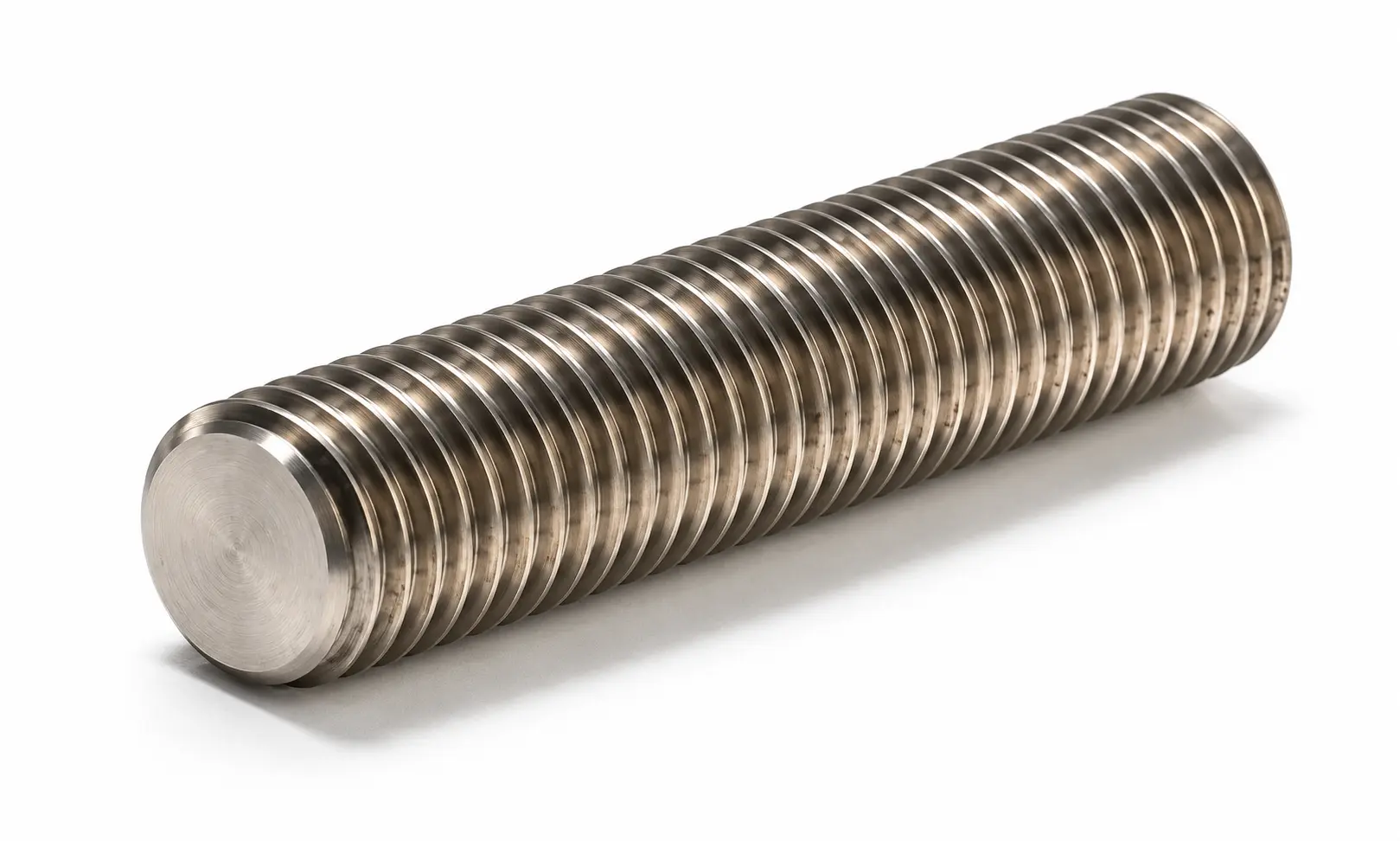
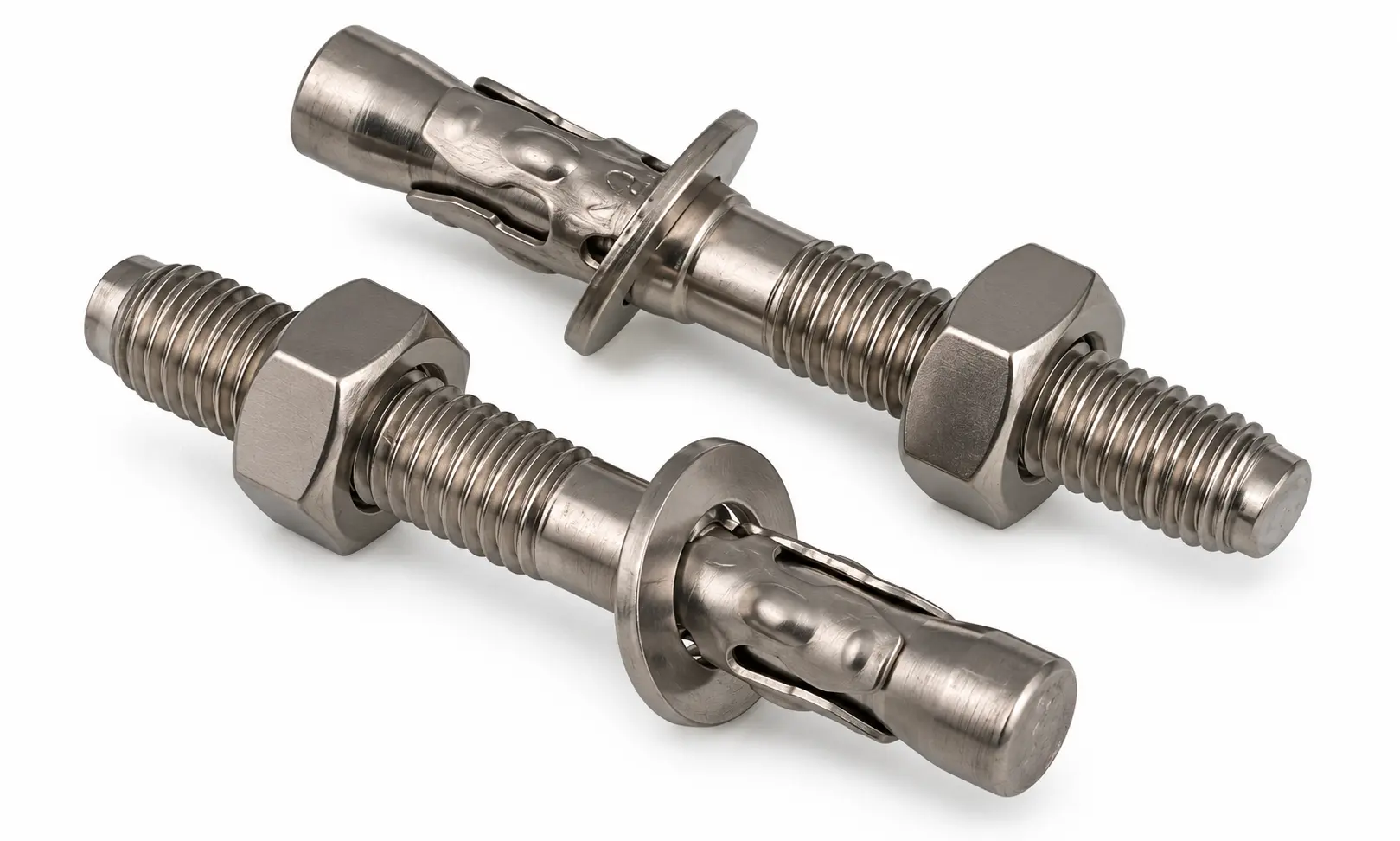
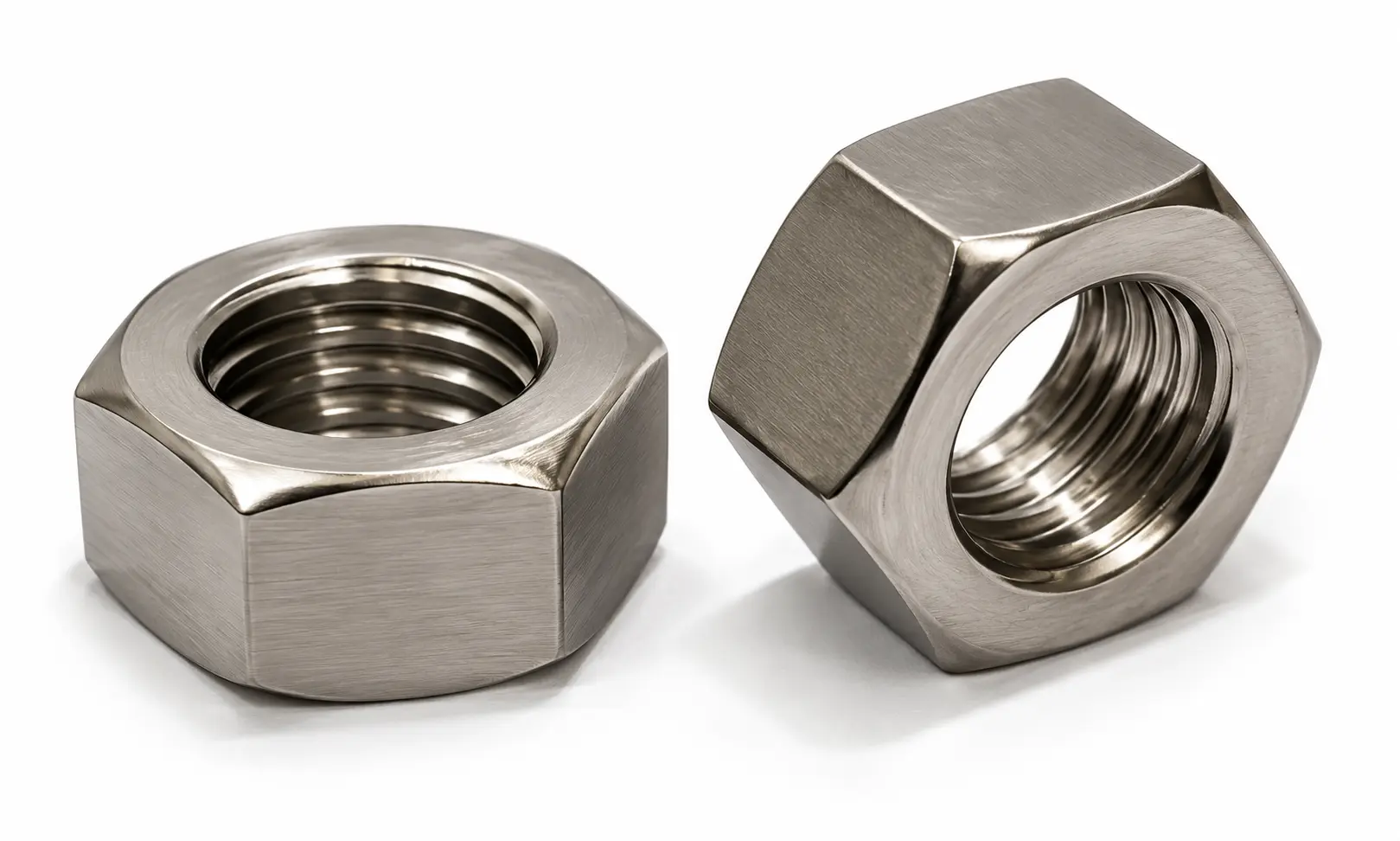
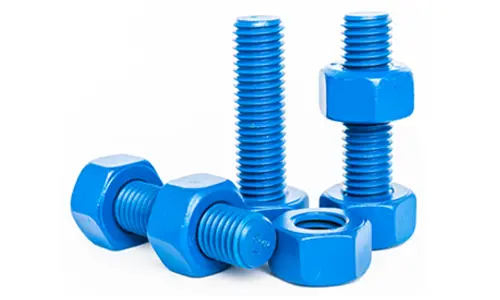
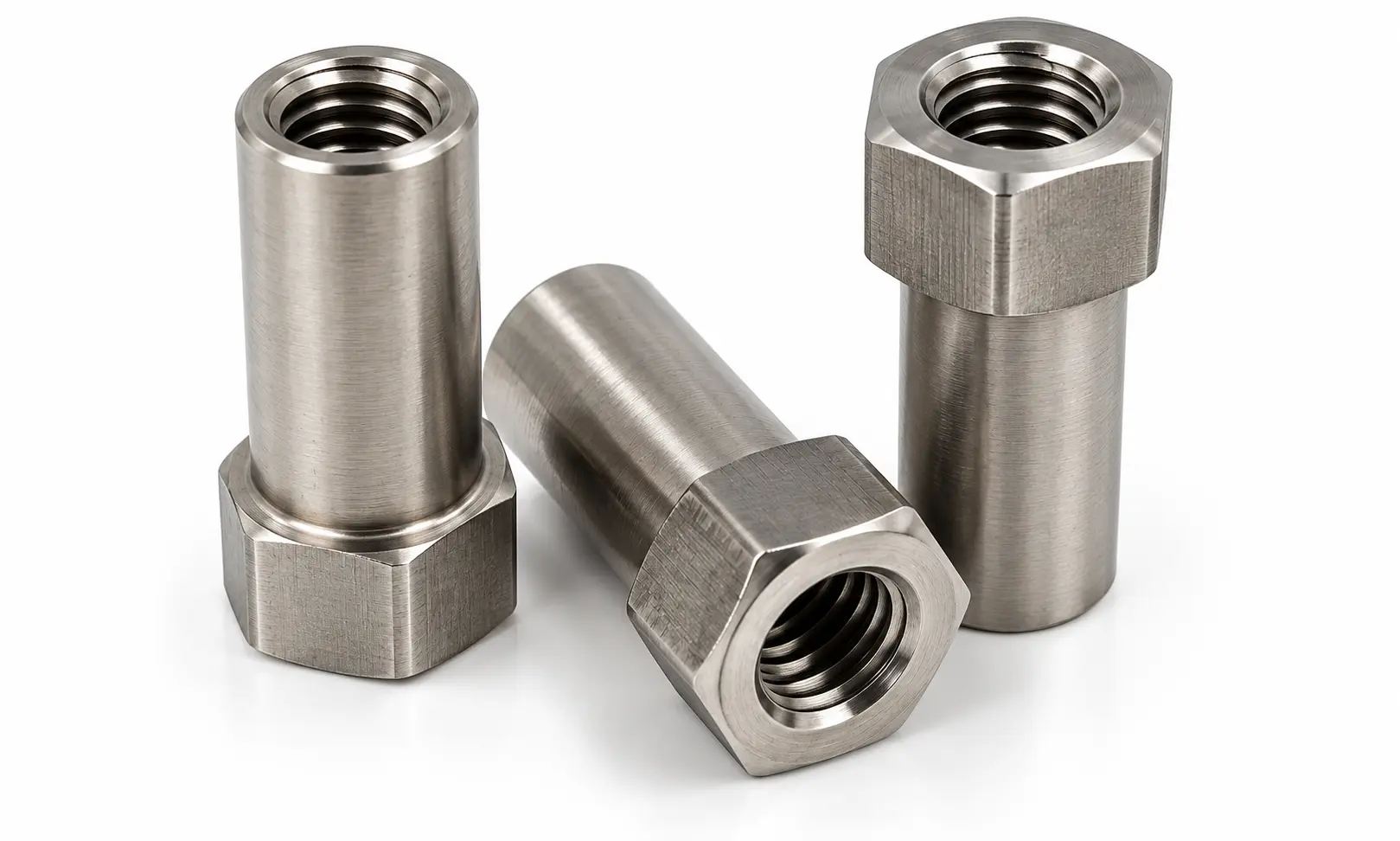
Titanium galls, and for a threaded fastener this is the single most important practical fact about the material. Titanium’s protective oxide is thin and the metal beneath it is adhesive, so a titanium thread run against another titanium thread will cold-weld and seize — often badly enough that the fastener has to be cut off. Every titanium bolted joint needs one of three mitigations: an anti-seize compound or dry-film lubricant such as molybdenum disulphide on the thread; a plated or coated thread, commonly silver or a solid-film lubricant; or a nut in a dissimilar material rather than titanium. Exotic Alloy supplies titanium fasteners with a lubricant or coating specified at order stage, and will advise on the combination if you tell us the mating material.
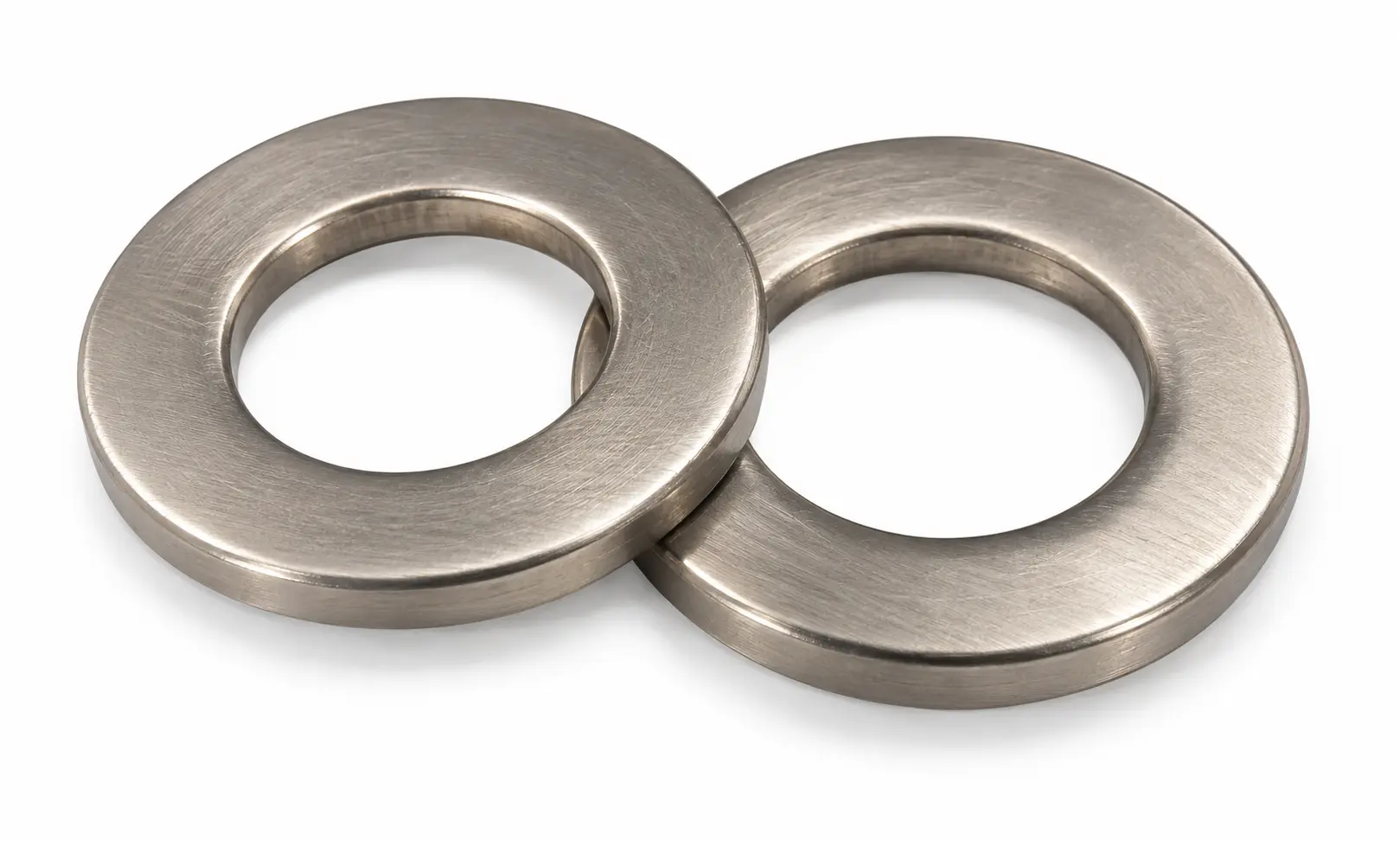
Titanium is galvanically noble, which makes it a hazard to what it is bolted into. It sits close to the passive stainless steels and the nickel alloys on the galvanic series and well above carbon steel, aluminium, zinc and magnesium. A titanium fastener in an aluminium or carbon steel structure will not itself corrode, but it will drive accelerated corrosion of the structure around it, and the small-anode-large-cathode geometry of a bolted joint is the worst case. Where titanium fasteners are used in a less noble assembly, an insulating washer and sleeve or a barrier coating on the mating faces should be specified.
Note on section size: the ASTM B348 tensile requirements apply to longitudinal sections up to 76 mm (3 in.) thick with a maximum area of 64.5 cm² (10 in.²). Mechanical properties for larger sections are negotiated between manufacturer and purchaser, so for large-diameter bolting the acceptance values must be agreed on the order rather than assumed from the table.
How the five grades divide up: Grades 1, 2, 7 and 12 are commercially pure or lean alloys selected for corrosion resistance; Grade 5 is the structural alloy selected for strength-to-weight. Within the corrosion grades, Grade 1 is the softest and most formable, Grade 2 is the general-purpose workhorse, Grade 7 adds palladium for the best crevice and reducing-acid resistance in the family, and Grade 12 adds molybdenum and nickel to get much of Grade 7’s crevice performance without the palladium cost while also being 40% stronger than Grade 2. Grade 5 is a different proposition entirely — 895 MPa minimum tensile at 4.42 g/cm³ — but its aluminium and vanadium make it less corrosion resistant than the CP grades in reducing media, so it should not be substituted for them on corrosion duty.