+91 97734 41022 sales@exoticalloy.com
Material Specification

Phosphor Bronze C51900

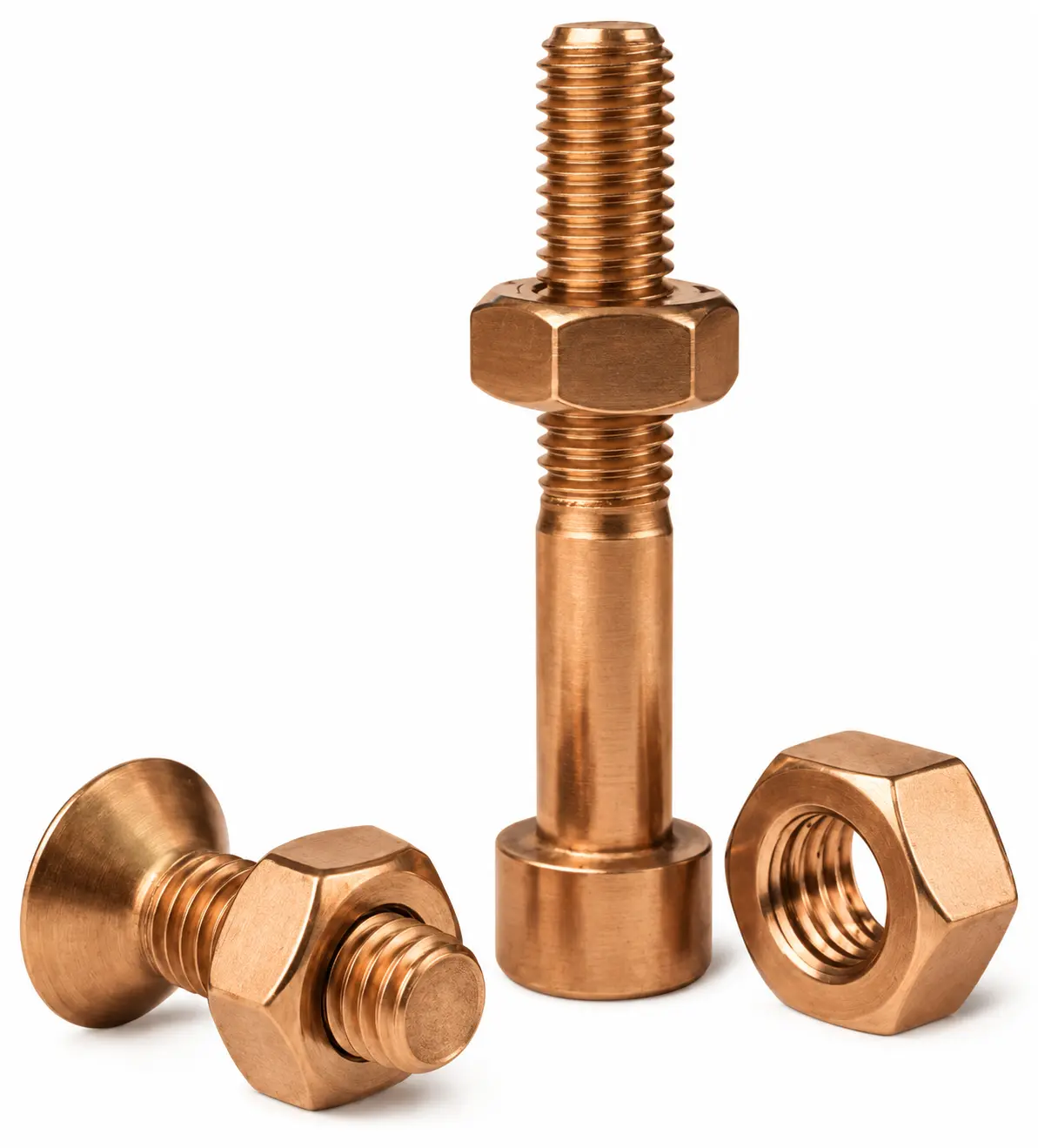
Phosphor Bronze C51900 Fasteners
Phosphor Bronze 6%

Phosphor Bronze C51900 Fasteners

Phosphor bronze C51900 is the 6% tin grade — copper with 5.0–7.0% tin and 0.03–0.35% phosphorus, bridging C51000 and C52100. Its distinguishing feature is documentation: CDA publish every cold-worked temper together with its stress-relieved HR counterpart, which no other grade on this hub offers.

That makes C51900 the clearest demonstration of what stress relief actually does to a phosphor bronze. At extra spring temper the alloy runs 765 MPa with 2% elongation; after a stress-relief anneal the HR10 condition runs the same 765 MPa with 9% elongation and a 0.2% yield reduced from 731 to 669 MPa. The same pattern holds at half hard, hard, extra hard and spring. Residual tension — the driver of both distortion in service and ammonia stress-corrosion cracking — is removed at essentially no cost in strength. It also carries the widest annealing range on this hub at 371–732 °C. CDA list ASTM B103 as its only applicable specification. Exotic Alloy supplies C51900 strip, sheet and formed spring components.

Request a Quote
Product Range

Phosphor Bronze C51900 Fasteners Available

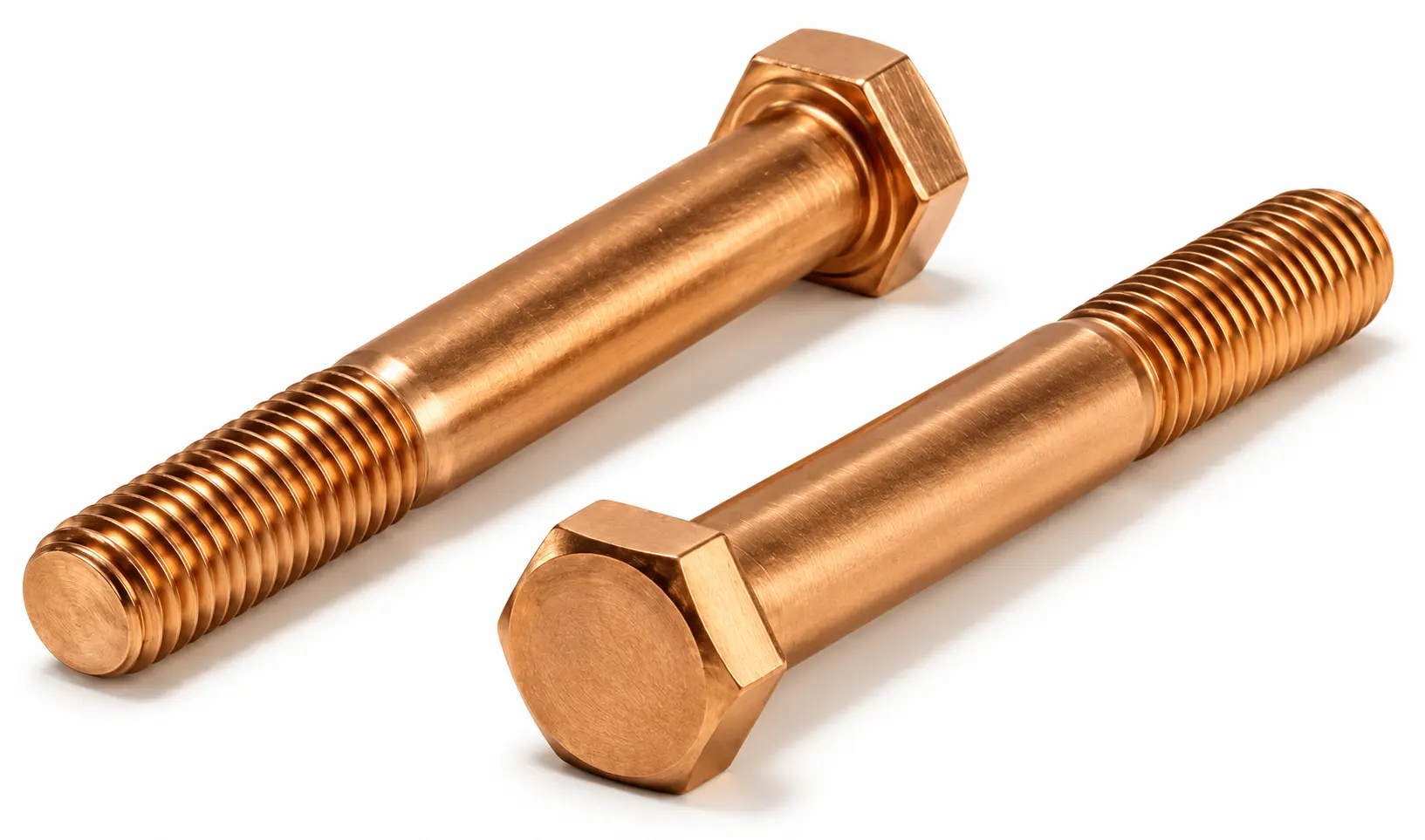
Phosphor Bronze C51900 Hex Bolts
Phosphor Bronze C51900
Hex Bolts
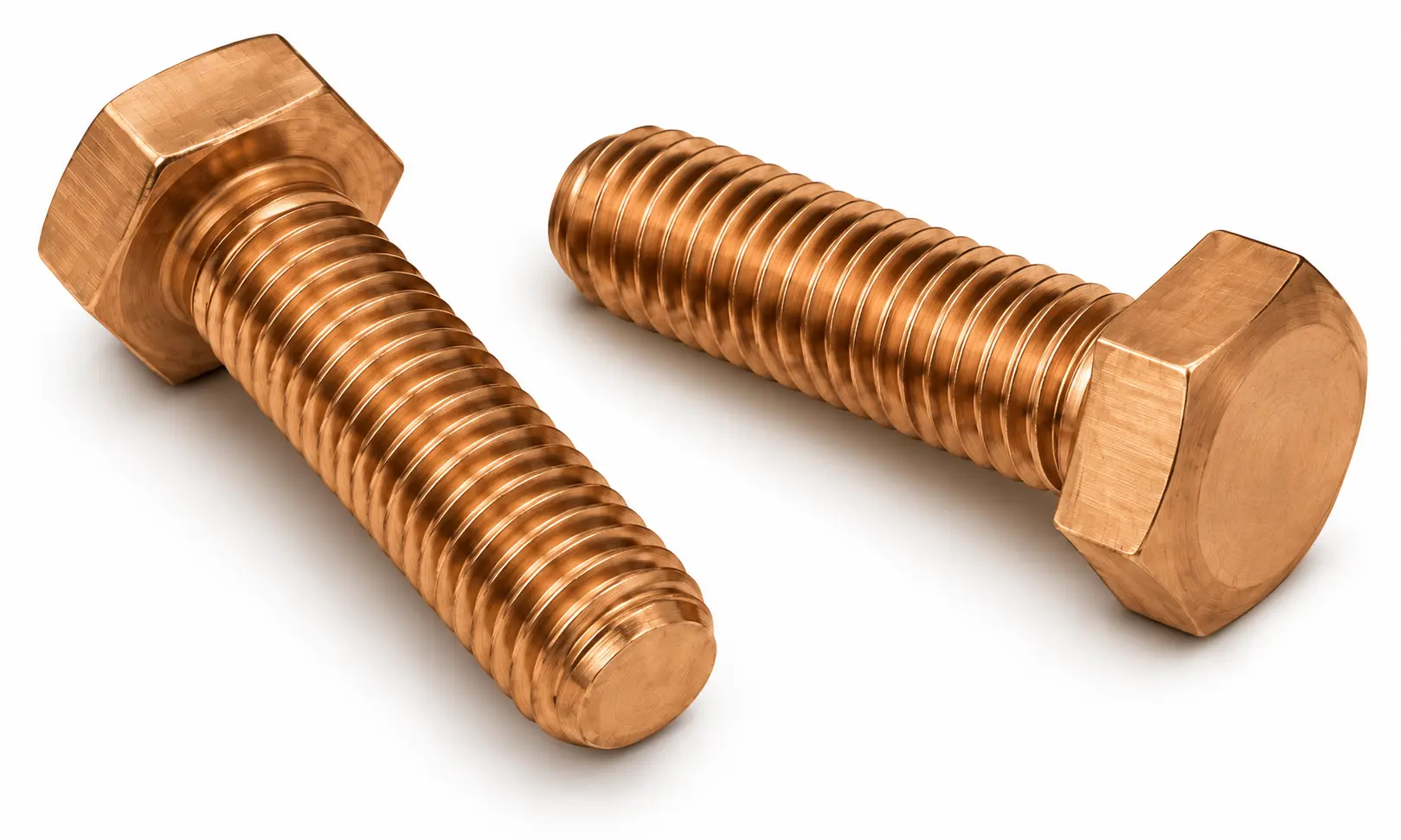
Phosphor Bronze C51900 Heavy Hex Bolts
Phosphor Bronze C51900
Heavy Hex Bolts
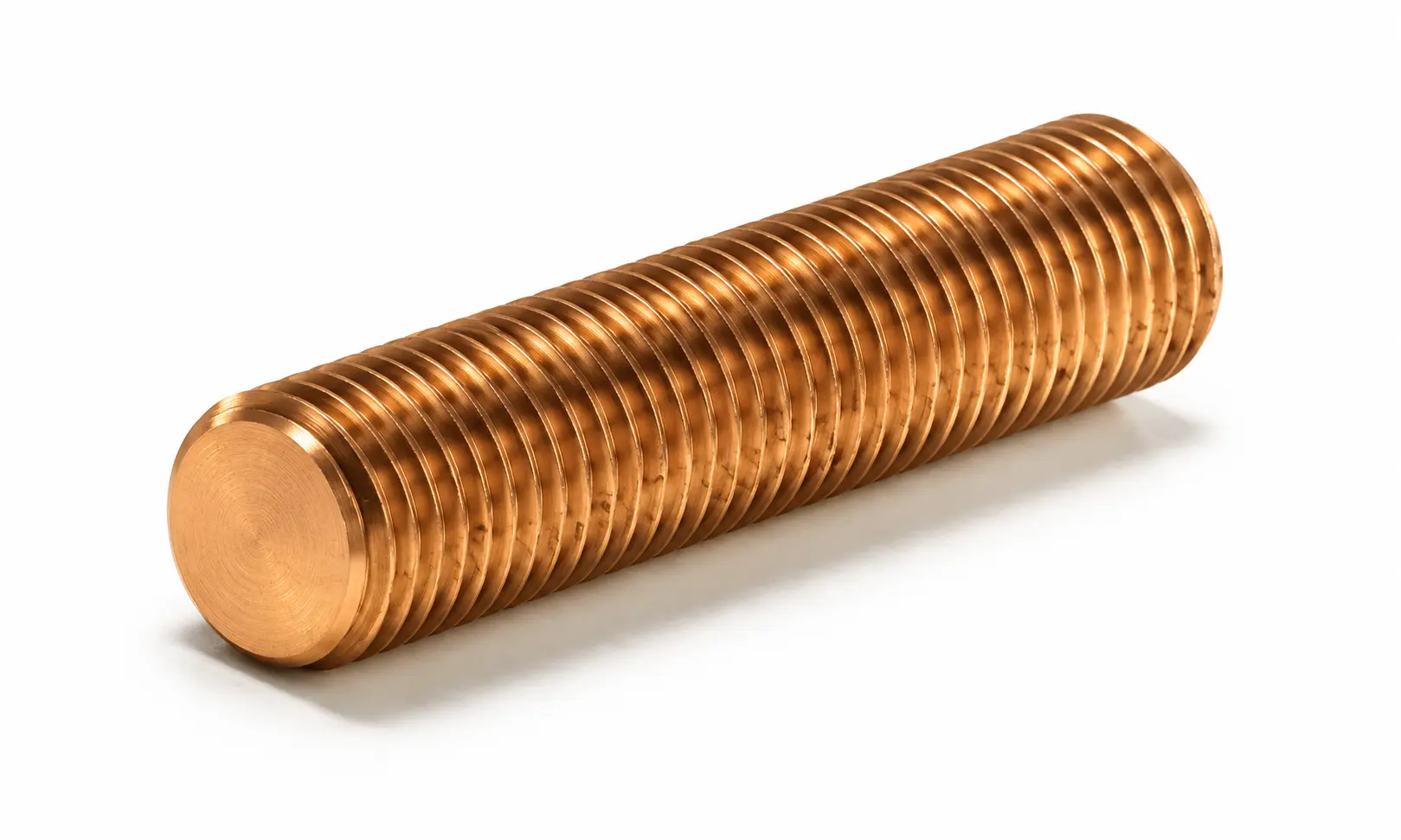
Phosphor Bronze C51900 Stud Bolts
Phosphor Bronze C51900
Stud Bolts
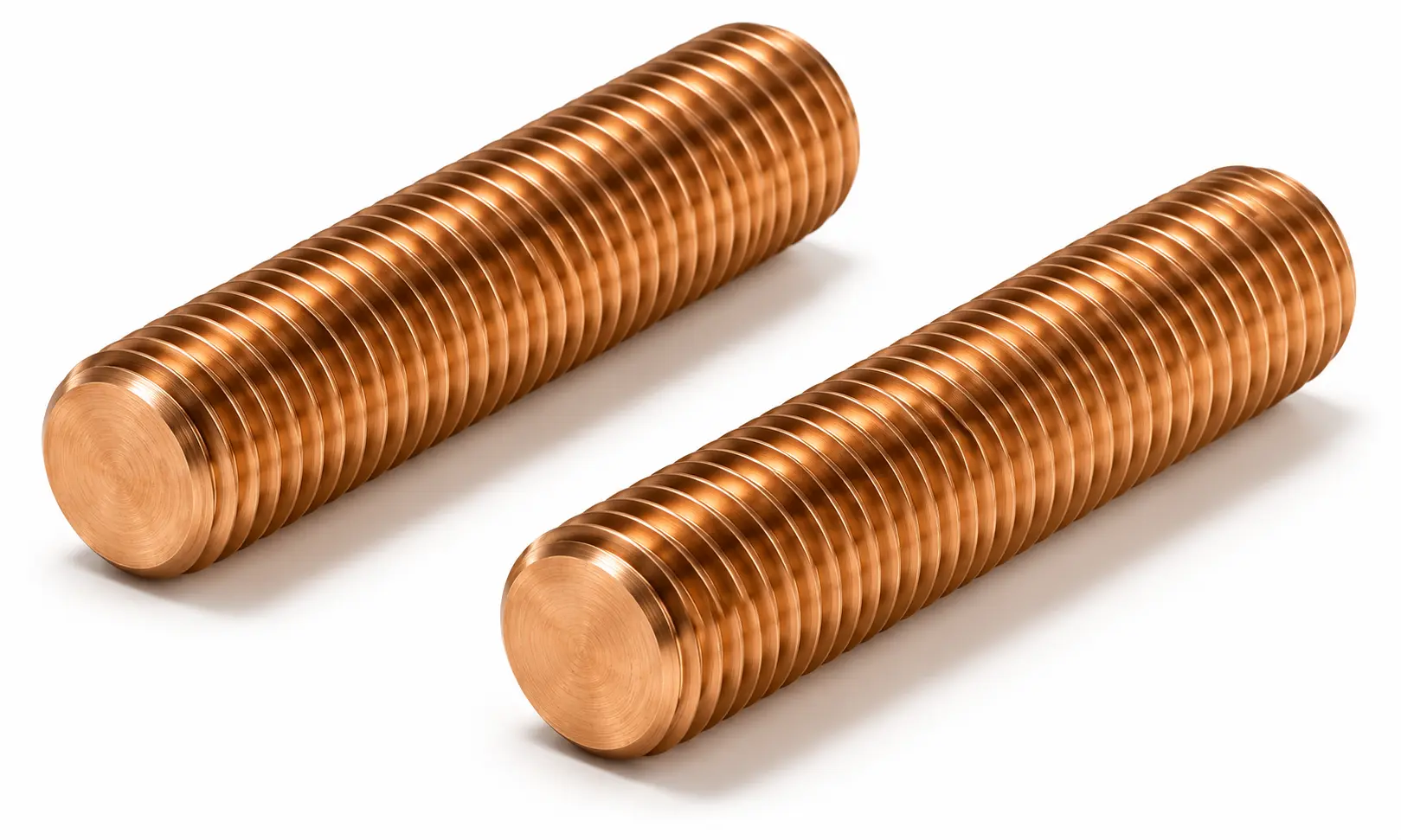
Phosphor Bronze C51900 Threaded Rods
Phosphor Bronze C51900
Threaded Rods
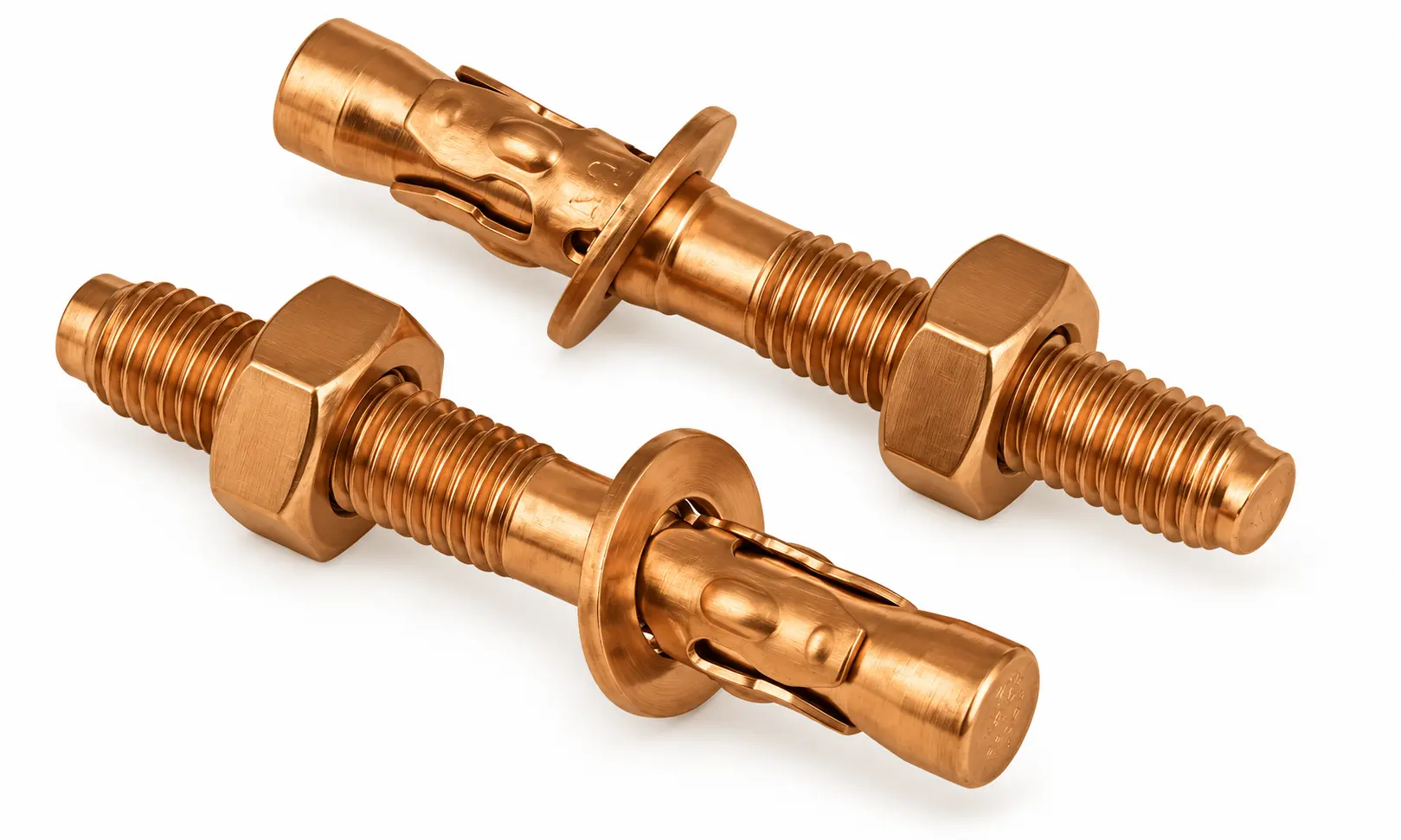
Phosphor Bronze C51900 Anchor Bolts
Phosphor Bronze C51900
Anchor Bolts
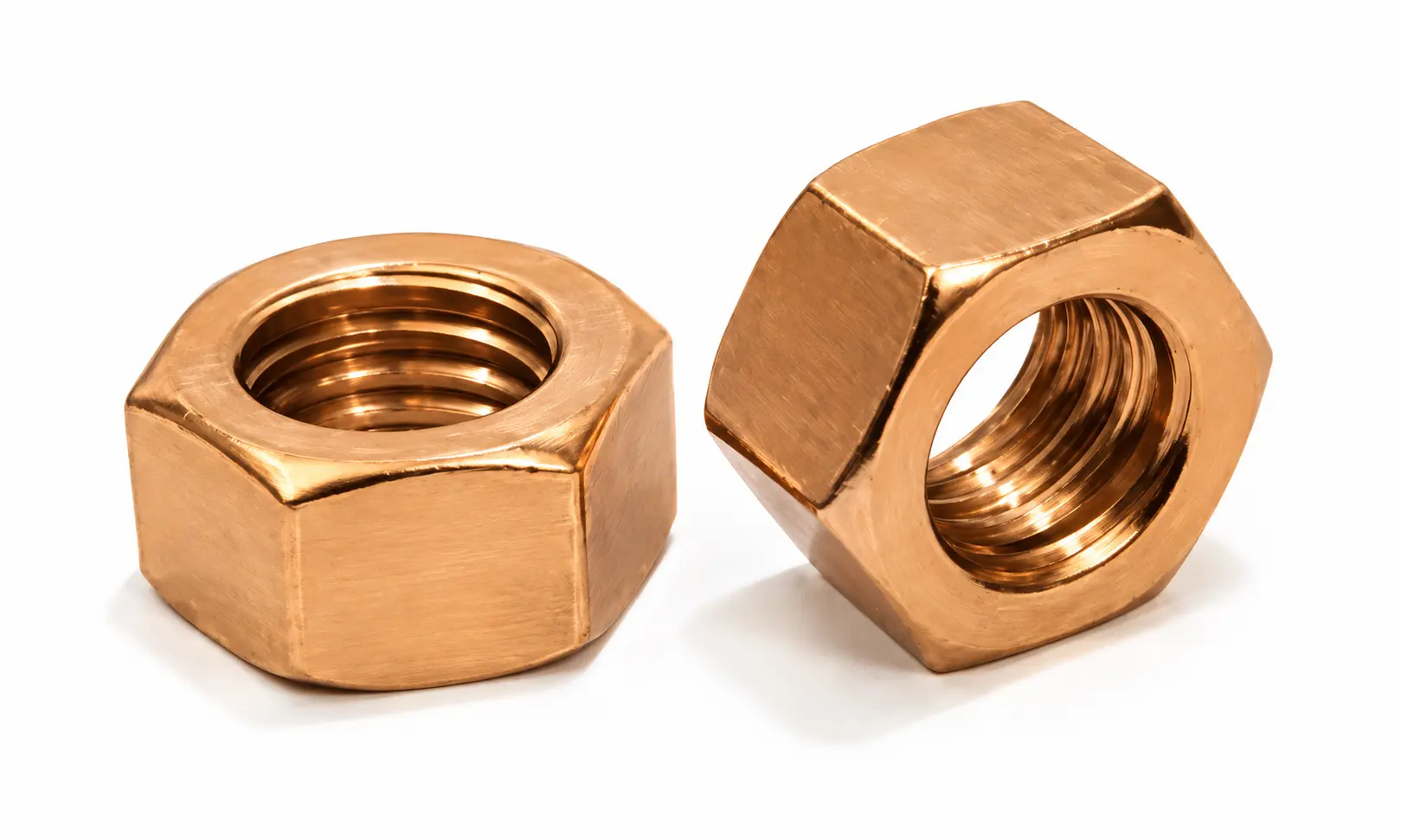
Phosphor Bronze C51900 Hex Nuts
Phosphor Bronze C51900
Hex Nuts
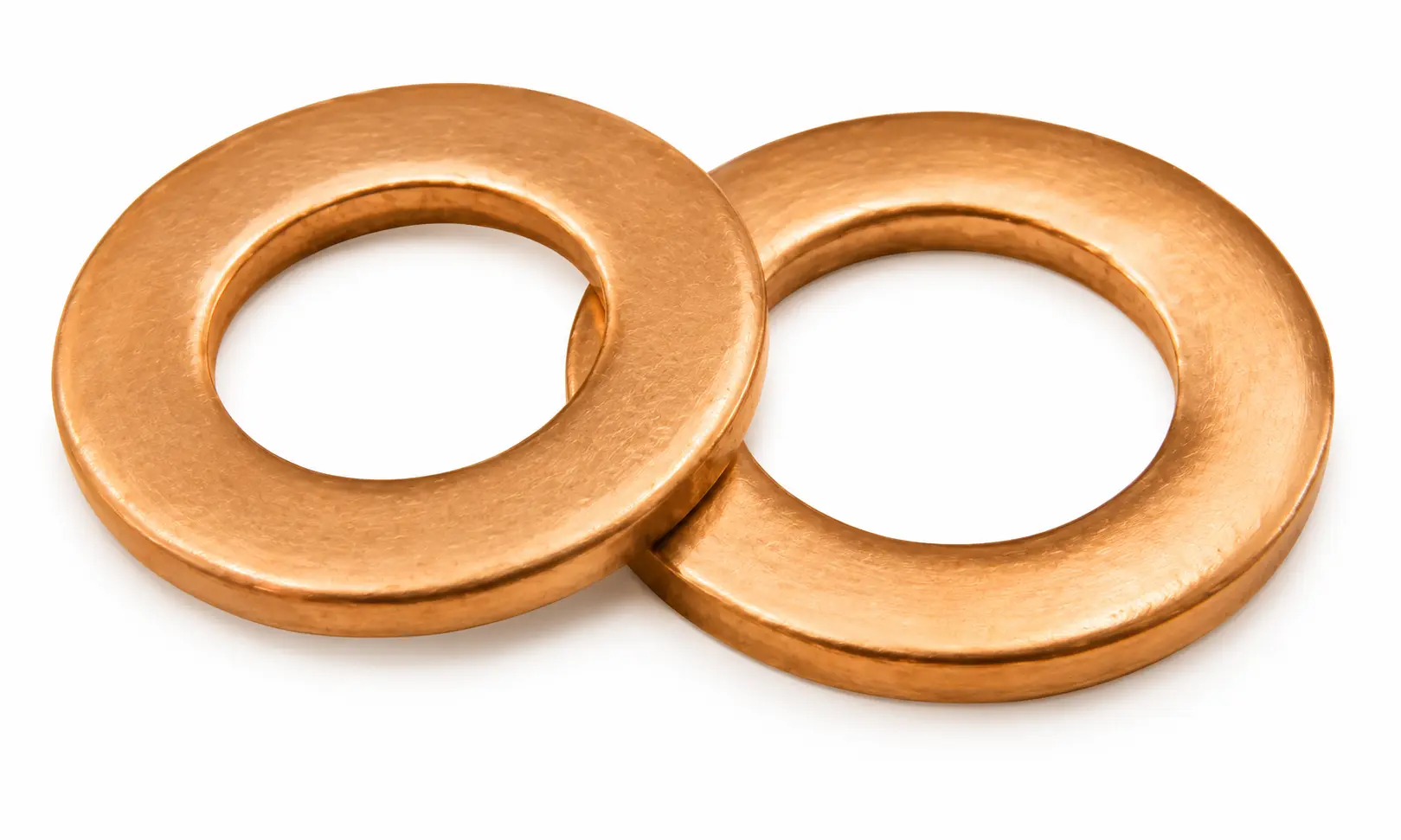
Phosphor Bronze C51900 Washers
Phosphor Bronze C51900
Washers
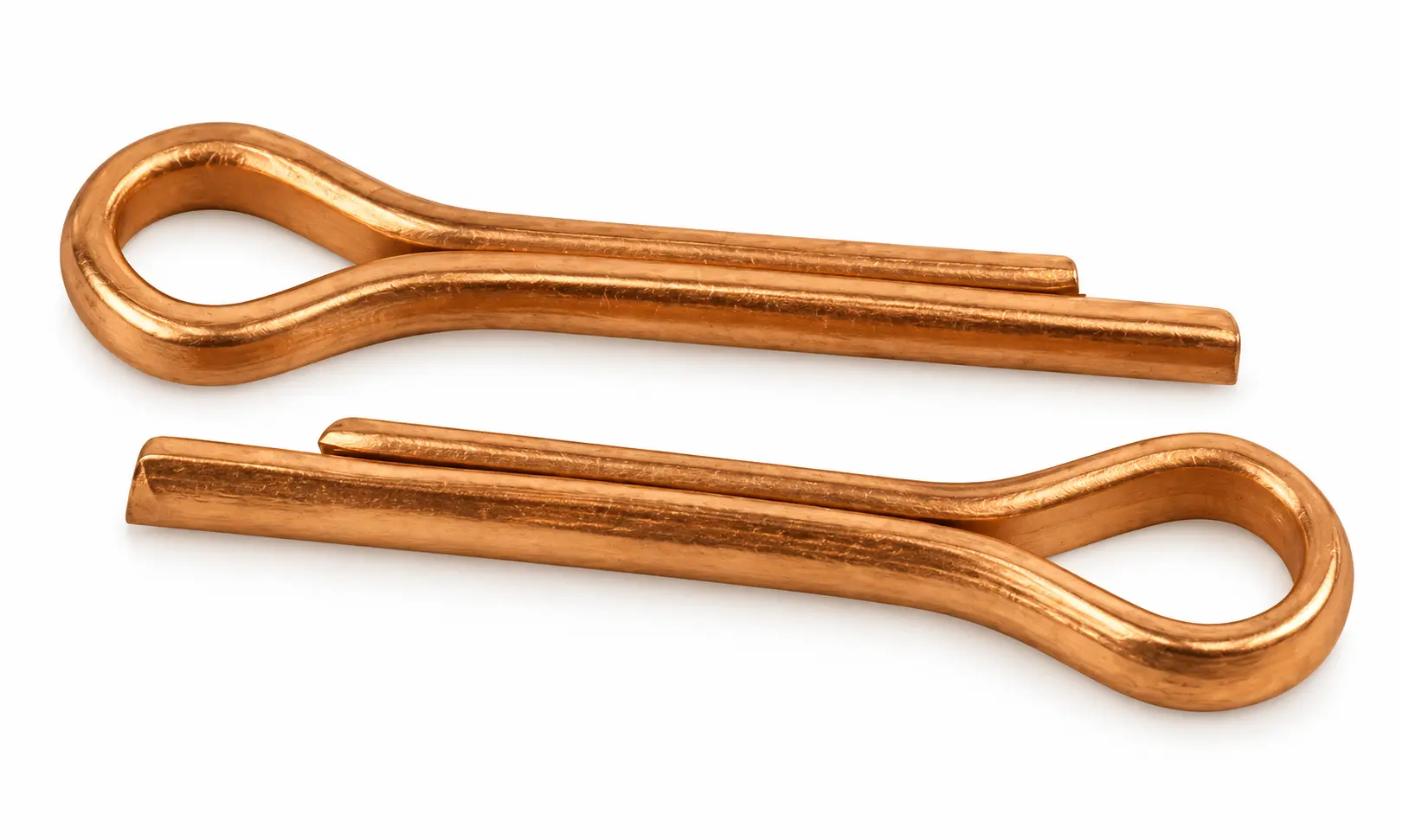
Phosphor Bronze C51900 Cotter Pins
Phosphor Bronze C51900
Cotter Pins
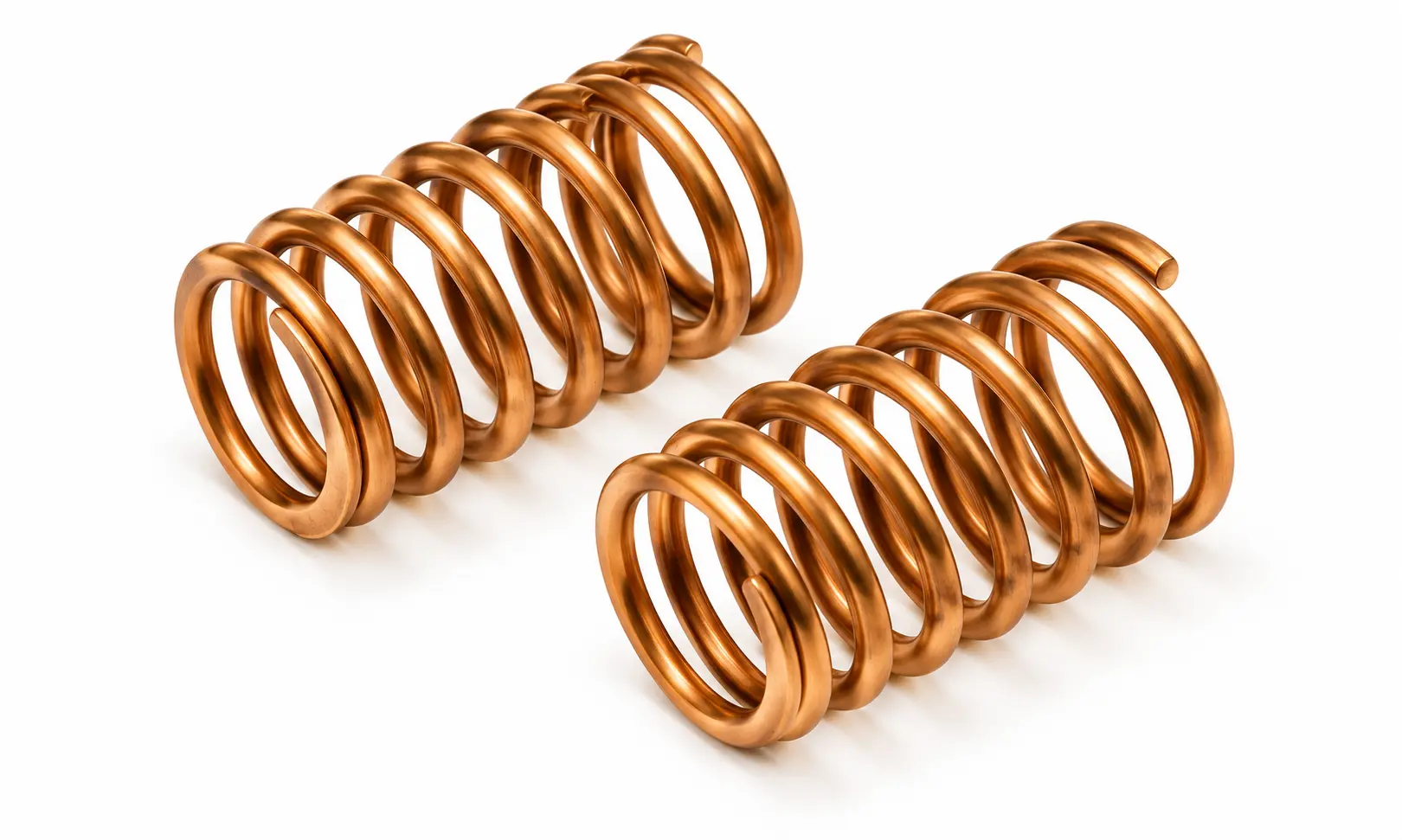
Phosphor Bronze C51900 Springs
Phosphor Bronze C51900
Springs
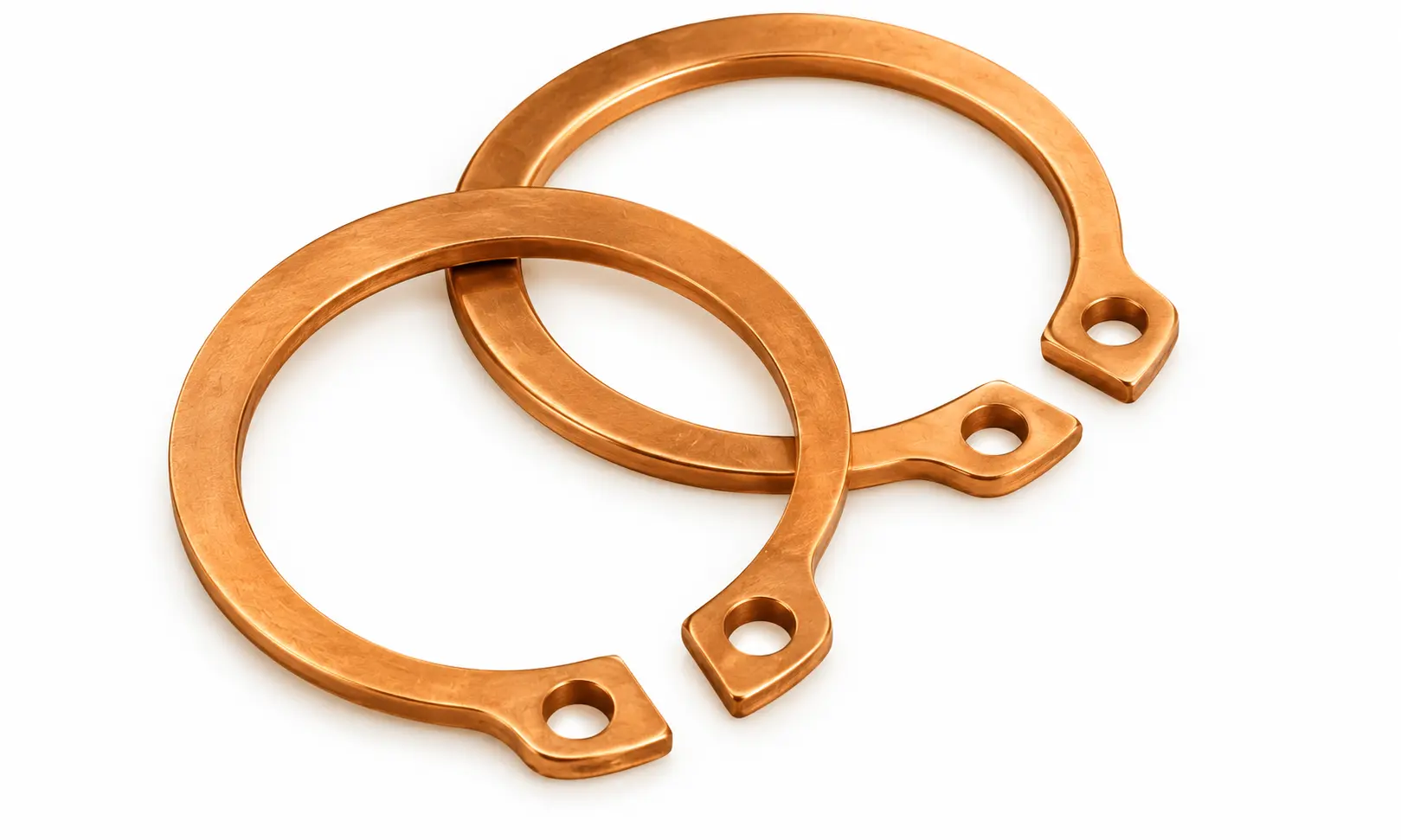
Phosphor Bronze C51900 Circlips
Phosphor Bronze C51900
Circlips
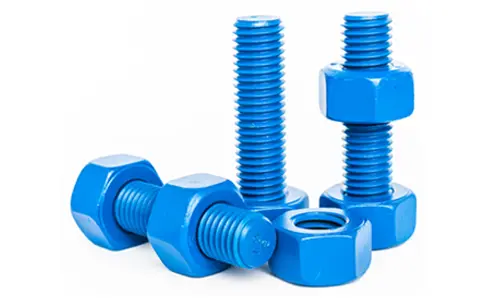
Phosphor Bronze C51900 Coated Fasteners
Phosphor Bronze C51900
Coated Fasteners
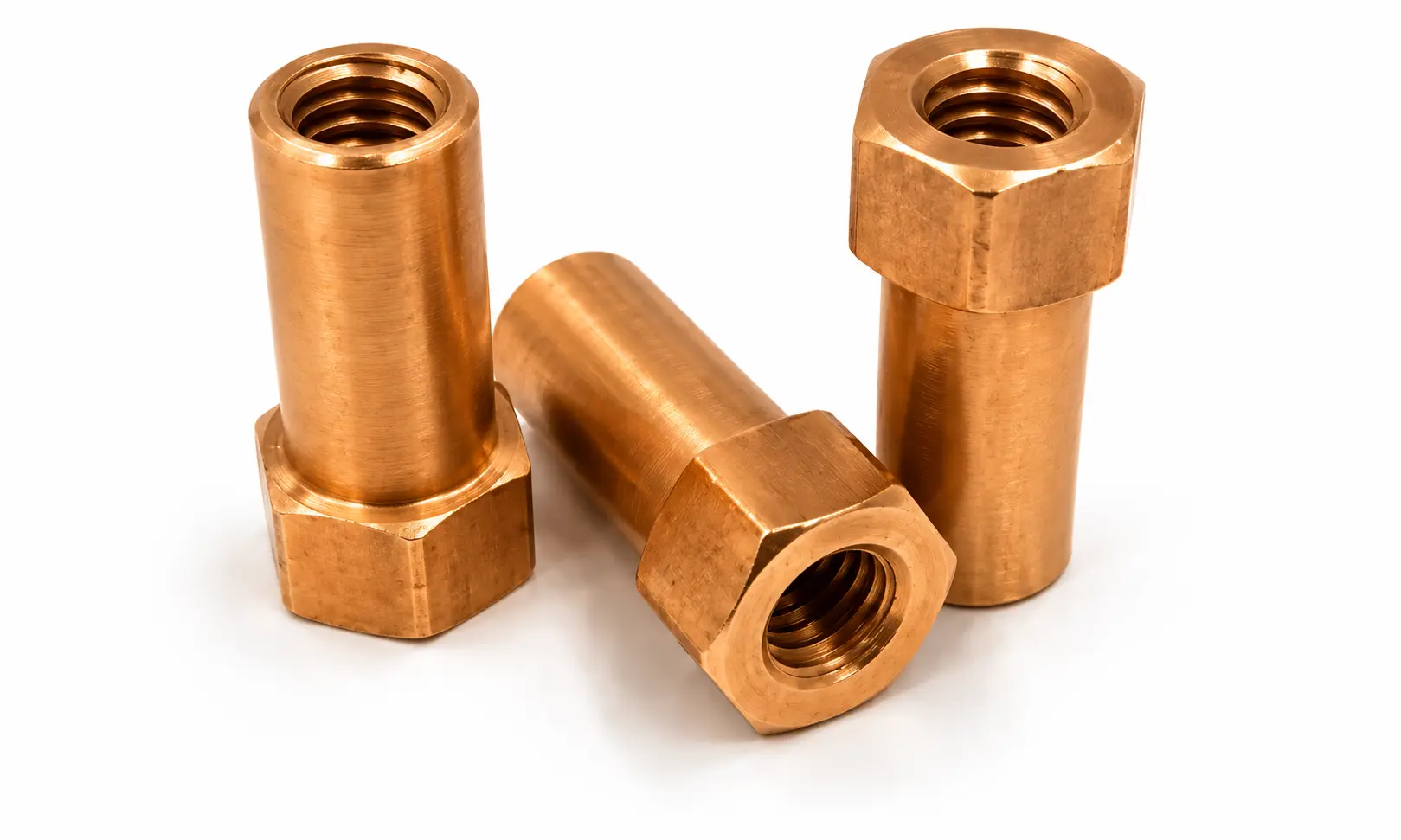
Phosphor Bronze C51900 Custom Spacers
Phosphor Bronze C51900
Custom Spacers
Technical Data

Phosphor Bronze C51900 Specifications

Chemical Composition — Phosphor Bronze C51900 (wt. %)
ElementMinimum %Maximum %
Copper (Cu)Remainder—
Tin (Sn)5.07.0
Phosphorus (P)0.030.35
Zinc (Zn)—0.30
Iron (Fe)—0.10
Lead (Pb)—0.05
Copper + sum of named elements99.5—
Mechanical Properties — Phosphor Bronze C51900
ConditionUTS (MPa)YS 0.2% Offset (MPa)Elongation (%)Hardness
Flat, 0.050 mm grain OS05034517966—
Flat, 0.035 mm grain OS03535918661—
Flat, 0.015 mm grain OS01538620045—
Flat, 1/2 hard H0249643425—
Flat, 1/2 hard and stress relieved HR0249640030—
Flat, hard H0460758613—
Flat, hard and stress relieved HR0460753117—
Flat, extra hard H066906626—
Flat, extra hard and stress relieved HR0669061412—
Flat, spring H087387104—
Flat, spring and stress relieved HR0873865510—
Flat, extra spring H107657312—
Flat, extra spring and stress relieved HR107656699—
Physical Properties
Density8.83 g/cm³
Melting Range927–1038 °C (1700–1900 °F)
Freezing Range111 °C
Electrical Conductivity14% IACS at 20 °C
Thermal Conductivity66 W/m·K at 20 °C
Coefficient of Thermal Expansion18.0 × 10⁻⁶ /°C
Specific Heat Capacity377 J/kg·K at 20 °C
Modulus of Elasticity110 GPa
Modulus of Rigidity41 GPa
StructureSingle-phase alpha copper-tin — cold worked, not heat treatable
Machinability Rating20 (C36000 = 100)
Capacity for Cold WorkingExcellent
Capacity for Hot FormingPoor
SolderingExcellent
BrazingExcellent
Gas Shielded Arc WeldingGood
Annealing Temperature371–732 °C (700–1350 °F)
Hardenable by Heat TreatmentNo — strength from cold work only
Magnetic ResponseNon-magnetic
Equivalent Grades & Standards
UNSCDA NumberCDA Alloy NameCommon Name
C51900 CDA 519 Not registered by CDA Phosphor Bronze 6%, CDA 519

Key Specifications: ASTM B103/B103M.

CDA publish no hardness data for C51900. Compare each H temper with its HR counterpart to see the effect of stress relief: unchanged tensile strength, lower 0.2% offset yield, and substantially higher elongation.

Note on fastener standards: C51000 is the phosphor bronze in the ASTM nonferrous fastener standards. ASTM F468 and F467 list C51000 as Cu 510, mechanical property marking F 468E, specified for full-size bolting at 414–621 MPa (60–90 ksi) tensile with 241 MPa minimum yield at 60–95 HRB, and on machined specimens at 379 MPa tensile and 207 MPa yield minimum with 15% minimum elongation. Set that against the other certified copper alloys: Cu 630 at 690–896 MPa, Cu 642 and Cu 613 in the 517–758 range, and Cu 464 naval brass at 345 MPa.

Cu 510 sits at the lower-strength, higher-resilience end of that group. It is specified less for load capacity than for fatigue resistance, low stress relaxation, corrosion resistance and non-sparking behaviour — which is exactly the profile wanted for spring washers, lock washers, retaining clips, fasteners carrying vibration, and electrical hardware that must stay tight and stay conductive. C51000 is also covered by AMS 4510, AMS 4625, AMS 4720, ASTM B103, B139, B159 and B888, MIL-B-13501, MIL-T-3595 and MIL-W-6712. The other seven grades here are supplied to their mill product standards — ASTM B103 for plate, sheet, strip and rolled bar, B139 for rod, bar and shapes, B159 for wire, B105 and B9 for trolley and telegraph wire, B508 for strip for electrical connectors — with thread conformance to the relevant ASME or ISO standard and acceptance criteria agreed on the order.

Every phosphor bronze order ships with EN 10204 3.1 certification giving the heat analysis, the temper, and the mechanical test results for the product form and section supplied. Tin, phosphorus and lead are reported explicitly — tin sets the strength, conductivity and freezing range, phosphorus confirms proper deoxidation, and lead governs both machinability and regulatory acceptability under the Safe Drinking Water Act and RoHS. Grain-size verification on annealed tempers, stress-relief treatment to the specified HR condition, hardness and electrical conductivity testing and positive material identification can all be added at order stage.

Machining: the unleaded phosphor bronzes are hard work. All six rate 20 on the CDA scale — the same as pure copper, and the lowest figure anywhere on this site's copper-alloy hubs. The tough, ductile copper-tin matrix smears rather than shearing cleanly, producing long continuous swarf and built-up edge. C36000 free-cutting brass is the 100 on that scale.

The answer, when a part is machining-intensive, is to specify a leaded grade. C53400 at 70 and C54400 at 80 cut three to four times more freely, and C54400 in particular is the standard free-cutting phosphor bronze bar for turned bearings and bushings. Where an unleaded grade is required — for weldability, for drinking-water or RoHS compliance, or for spring properties — use sharp positive-rake tooling with generous chip breakers, high surface speed with light-to-moderate feed, flood coolant, and plan for frequent tool changes. Do not let the tool dwell; these alloys work harden quickly.

On the forming side the picture inverts entirely. CDA rate cold working Excellent on C50500, C51000, C51100 and C51900 and Good on the rest — these alloys blank, draw, form, bend, stamp, coil, upset and roll-thread extremely well in the annealed condition. Hot working is Poor on every grade except C50500, because of the wide freezing range and the resulting hot shortness. Form cold, then stress relieve.

Heat treatment: phosphor bronzes are not hardenable. There is no precipitation reaction and no quench-and-temper response, so all strength comes from cold work and the temper designation records the degree of reduction — O61 annealed and the OS grain-size tempers at the soft end, then H01 quarter hard, H02 half hard, H03 three-quarter hard, H04 hard, H06 extra hard, H08 spring and H10 extra spring. Across that span tensile strength roughly doubles while elongation collapses.

Two thermal treatments matter. Annealing restores the soft formable condition, and on flat product it is specified by resulting grain size rather than by temperature — hence OS010, OS015, OS025, OS035 and OS050, where the number is the nominal grain size in millimetres. A coarser grain anneals softer and draws better but leaves a rougher surface after forming, so the grain size is chosen against the forming severity and the finish required. CDA give annealing ranges of 482–677 °C for most grades on this hub, with C51900 the widest at 371–732 °C.

Stress-relief annealing at a lower temperature is the treatment that matters most in practice, and on this family CDA publish the resulting properties as named HR tempers. The effect is consistent: unchanged tensile strength, a somewhat lower 0.2% offset yield, and substantially higher elongation — on C51900 at extra spring temper, 2% becomes 9% at the same 765 MPa. The residual tension that drives both distortion in service and ammonia stress-corrosion cracking is removed. Specify an HR temper for formed springs, contacts and clips.

Welding and joining: the unleaded phosphor bronzes join well, and this is a real advantage over the aluminium bronzes. CDA rate soldering, brazing and butt welding as Excellent on all six unleaded grades, gas shielded arc welding as Good, spot welding Good on most, and oxyacetylene welding Fair. There is no refractory alumina film to contend with, so ordinary copper-alloy joining practice applies. Soldering in particular is excellent, which matters for electrical connectors and contacts.

C54400 is the exception and is effectively unweldable. CDA rate oxyacetylene, gas shielded arc, coated metal arc, spot and seam welding all Not Recommended and butt welding only Fair; the 3.0–4.0% lead makes the alloy hot short and causes liquation cracking in the heat-affected zone. Soldering remains Excellent and brazing Good. C53400, at a third the lead, is intermediate: gas shielded arc welding Fair, coated metal arc and oxyacetylene Poor. If the part must be welded, specify an unleaded grade.

Phosphor bronze is copper and tin, and the tin content decides everything else. These are the oldest engineering alloys in use — copper-tin is bronze in the original sense — and the six unleaded grades on this hub form a clean ladder from 1.25% tin to 10% tin. As tin rises, four things happen together and they are worth reading as one trend.

Strength and spring properties rise sharply. C50500 at 1.0–1.7% tin reaches 517 MPa at spring temper; C52400 at 9.0–11.0% reaches 883 MPa in strip and 1014 MPa in hard wire, the highest figure on this hub. Electrical conductivity collapses. C50500 carries 48% IACS and 208 W/m·K, better than many brasses; by C52400 that has fallen to 11% IACS and 50 W/m·K. Tin in solid solution scatters conduction electrons severely, and the drop is roughly fourfold across the range.

The solidus falls and the freezing range widens. C50500 freezes between 1038 and 1077 °C — a 39-degree range; C52400 between 843 and 999 °C, a range of 156 degrees. That wide mushy zone is why the high-tin grades are prone to coring and inverse segregation, and it is the direct reason CDA rate hot forming Poor on every grade here except C50500. These are cold-worked alloys. And thermal expansion rises, from 17.8 to 18.4 × 10⁻⁶/°C — small, but it matters where a phosphor bronze spring works against a steel or brass housing over a temperature range.

The phosphorus in phosphor bronze is there because of how the alloy is melted, and it stays because it is useful. Molten copper-tin readily forms tin oxide, which would leave the casting gassy and the metal dirty. Phosphorus is added as a deoxidiser: it scavenges oxygen, the products float off, and the melt pours clean. What is left behind is a residue of 0.03–0.35% phosphorus in every grade here — C54400 is the one exception, registered at 0.01–0.50%.

That residue is not inert. Phosphorus increases strength and hardness, raises the elastic limit, improves wear resistance and significantly improves the fluidity of the melt. It is the reason the alloy is named for it rather than simply being called a tin bronze, and it is why a phosphor bronze outperforms a plain copper-tin alloy of the same tin content as a spring and as a bearing. The range is tight at both ends for a reason: too little and the deoxidation is incomplete, too much and the alloy becomes hot short and the low-melting phosphide network embrittles it.

Phosphor bronze is the classic spring and contact material, and the reasons are specific rather than general. It combines a high elastic limit, excellent fatigue strength — CDA publish endurance limits of 152–207 MPa for the spring tempers — good corrosion resistance, low stress relaxation, and the ability to be formed soft and then hardened entirely by cold work. There is no precipitation reaction and no quench and temper: every temper on this hub is a cold-work temper, running O61 and the OS grain-size anneals at the soft end through H01, H02, H04, H06, H08 and H10 as reduction increases. Across that span tensile strength roughly doubles while elongation falls from 50–70% to 1–3%.

Stress relief after forming is standard practice on this family, and CDA publish the numbers that show why. The HR tempers — HR02, HR04, HR06, HR08, HR10 — are the corresponding cold-worked conditions after a low-temperature stress-relief anneal, and the published data shows a consistent pattern: the same tensile strength, a somewhat lower 0.2% offset yield, and markedly higher elongation. On C51900 at extra spring temper, elongation goes from 2% to 9% at an unchanged 765 MPa tensile. The residual tension that drives distortion and stress-corrosion cracking is removed, and the part becomes far more tolerant of handling and assembly. Specify a stress-relieved temper for formed springs, contacts and clips going into service.

Two grades here carry lead, and they exist because the unleaded phosphor bronzes are difficult to machine. Every unleaded grade on this hub rates 20 on the CDA machinability scale — the same as pure copper, and about as poor as engineering metals get. The tough, ductile copper-tin matrix smears and produces long stringy swarf. Lead is essentially insoluble in it, so it sits as discrete soft globules that break the chip mechanically.

C53400, CDA's Phosphor Bronze B-1, carries 0.8–1.2% lead and rates 70. C54400, Phosphor Bronze B-2, carries 3.0–4.0% lead and rates 80 — the free-cutting phosphor bronze, and the standard bar stock for machined bearings, bushings, thrust washers and valve parts. C54400 is also unusual in carrying a deliberate 1.5–4.5% zinc addition, which makes it a leaded tin-zinc bronze in composition as much as a phosphor bronze.

The lead costs weldability and carries regulatory exposure. CDA rate C54400 Not Recommended for oxyacetylene, gas shielded arc, coated metal arc, spot, seam and butt welding alike — essentially unweldable — where the unleaded grades are rated Good for gas shielded arc welding and Excellent for soldering, brazing and butt welding. And lead in drinking-water-contact components is restricted under the US Safe Drinking Water Act (0.25% weighted average of wetted surfaces) and under the European Drinking Water Directive, with RoHS restricting it in electrical equipment. Confirm the regulatory position for your market before committing a design to C53400 or C54400.

Phosphor bronze has a broadly good corrosion record, and one specific advantage over brass. With little or no zinc in the unleaded grades there is no dezincification — the characteristic failure mode of the brasses simply does not apply. The alloys resist seawater and brackish water, non-oxidising acids, neutral salt solutions, many organic chemicals and industrial and marine atmospheres, and the tin contributes to a protective surface film. They are also non-sparking and essentially non-magnetic.

The caveats matter and should be designed around. Like every copper alloy, phosphor bronze is susceptible to stress-corrosion cracking in ammonia, ammonium compounds, amines and nitrites when it carries residual tensile stress — which is precisely the condition a cold-formed spring is in. This is the practical reason stress relief is standard on formed parts, not merely a dimensional-stability measure. Oxidising acids attack it. In a galvanic couple it is cathodic to steel, aluminium and zinc. And where the part will see sustained load at temperature, note that phosphor bronze relaxes: a spring held under preload above about 100 °C will lose force over time, and the higher-tin grades do better than the lower-tin ones.

How eight grades divide. Six are unleaded and form a tin ladder; two are leaded for machining.

C50500 at 1.0–1.7% tin is the electrical grade — CDA's Phosphor Bronze 1.25% E — carrying 48% IACS, four times the conductivity of the 10% grade, and it is the only one CDA rate Good for hot forming. C51100 at 3.5–4.9% and C51000 at 4.2–5.8% are the general-purpose spring and contact grades; C51000, Phosphor Bronze 5% A, is the most widely specified phosphor bronze there is and the ASTM F468 Cu 510 fastener alloy. C51900 at 5.0–7.0% has the most completely documented temper ladder of any grade here, including every stress-relieved HR condition.

C52100 at 7.0–9.0% (Phosphor Bronze 8% C) and C52400 at 9.0–11.0% (10% D) are the high-strength grades — C52400 reaches 1014 MPa in hard wire, the highest figure on this hub — bought for heavy springs, wear plates and bridge expansion plates. Finally the leaded pair: C53400 (B-1, 0.8–1.2% Pb, machinability 70) and C54400 (B-2, 3.0–4.0% Pb, machinability 80), the free-cutting bearing and bushing bar grades.
Key Characteristics

  • The 6% tin grade — between C51000 and C52100.
  • Every temper published with its stress-relieved HR counterpart.
  • HR10: same 765 MPa as H10 but 9% elongation against 2%.
  • Widest annealing range here at 371–732 °C.
  • 345 MPa annealed rising to 765 MPa at extra spring.
  • Cold working Excellent; hot forming Poor.
  • 14% IACS electrical conductivity.
  • ASTM B103 is the only applicable specification CDA list.

Typical Applications

  • Formed and stress-relieved springs.
  • Spring contacts and clips.
  • Electrical connectors and switch parts.
  • Stamped strip components.
  • Diaphragms and bellows.
  • Fuse clips and terminals.
  • Vibration-resistant formed hardware.
  • Precision flat springs.