+91 97734 41022 sales@exoticalloy.com
Material Specification

Silicon Bronze C66100

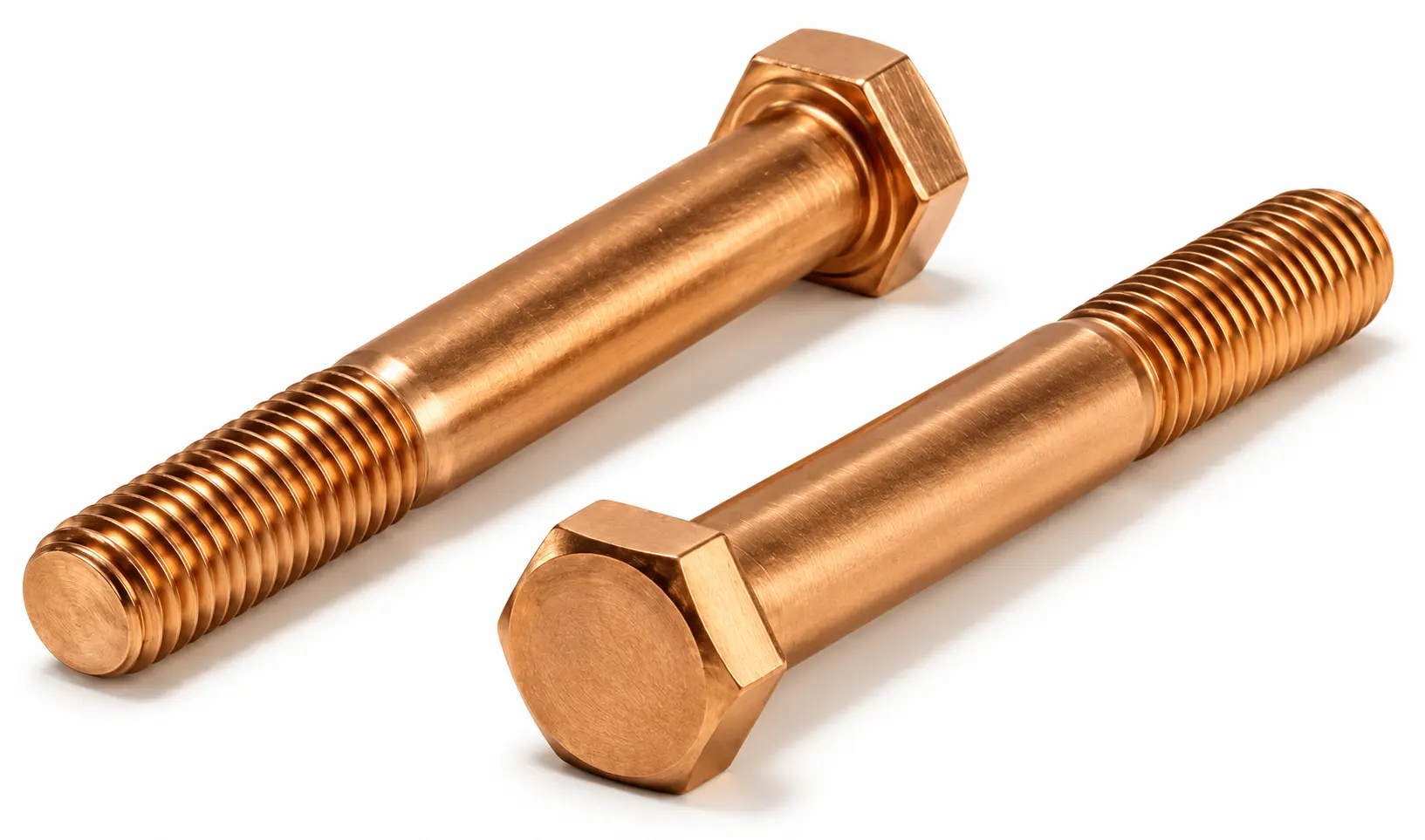
Silicon Bronze C66100 Fasteners
Leaded Silicon Bronze

Silicon Bronze C66100 Fasteners

Silicon bronze C66100 is the free-machining grade — copper with 2.8–3.5% silicon, manganese to 1.5% and a deliberate 0.20–0.8% lead addition. The silicon range sits inside C65500's; the lead is the difference, and it is there for one reason, because C65500 and C65100 hold lead to 0.05% as an impurity and machine at a rating of only 30.

C66100 is ASTM F468 and F467 Cu 661, marking F468M, specified at 483–690 MPa with 241 MPa minimum yield at 75–95 HRB and 15% minimum elongation in all diameters. That is an unusually good position in the standard: the same tensile range as Cu 651 but nearly twice its 8% elongation, with a free-machining addition on top. For turned bronze fasteners and machined marine hardware it is frequently the right answer.

CDA register the composition, a density figure of 8.53 g/cm³ and the specification list for this alloy and nothing else — no mechanical, thermal or fabrication data, and no machinability rating. The mechanical table below is therefore taken from ASTM F468 rather than from typical-property data, and we have not substituted figures from C65500 despite the overlapping silicon range: the lead changes the machining, welding and hot-working behaviour, which is the entire point of the designation. Exotic Alloy supplies C66100 rod, bar, fasteners and machined components.

Request a Quote
Product Range

Silicon Bronze C66100 Fasteners Available

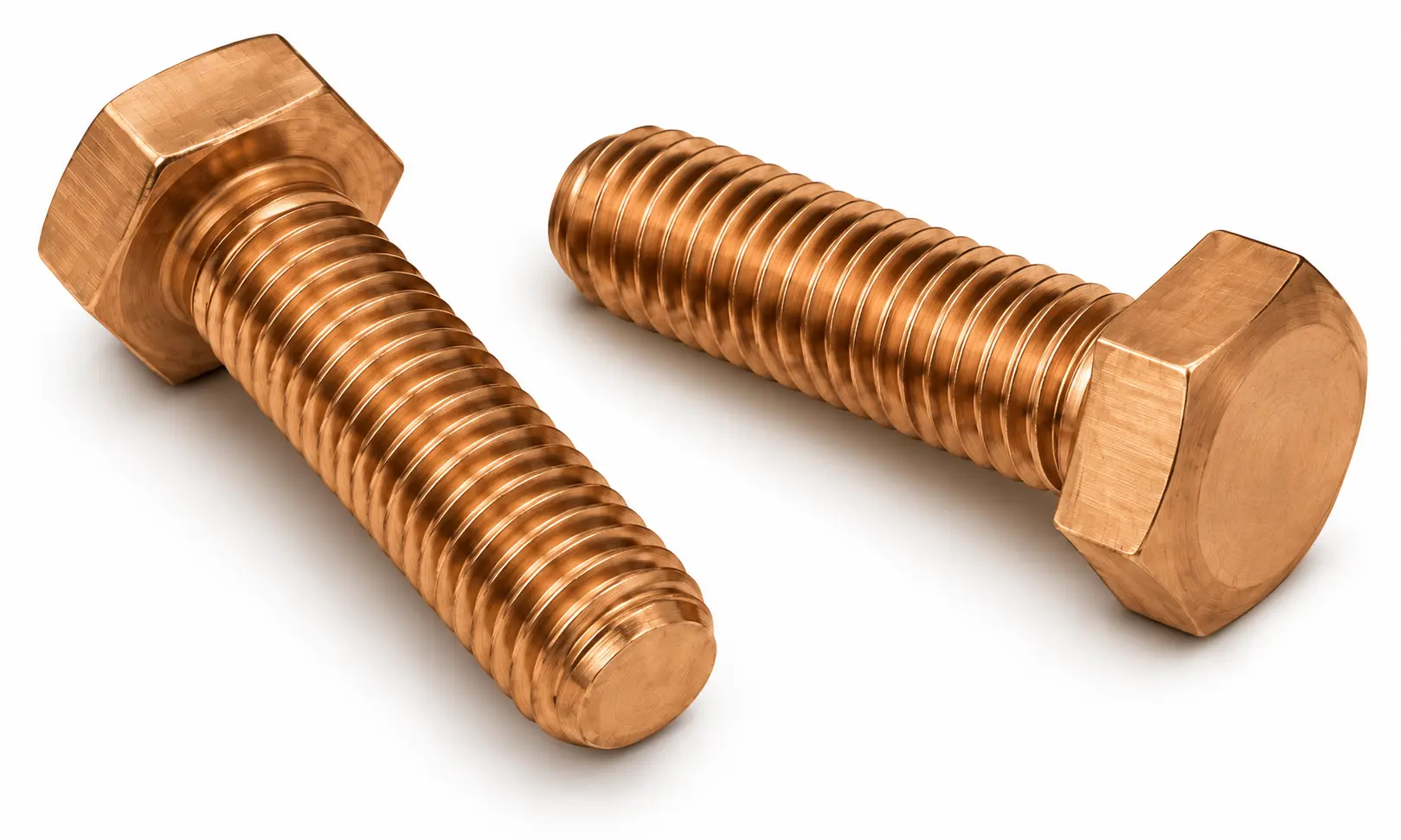
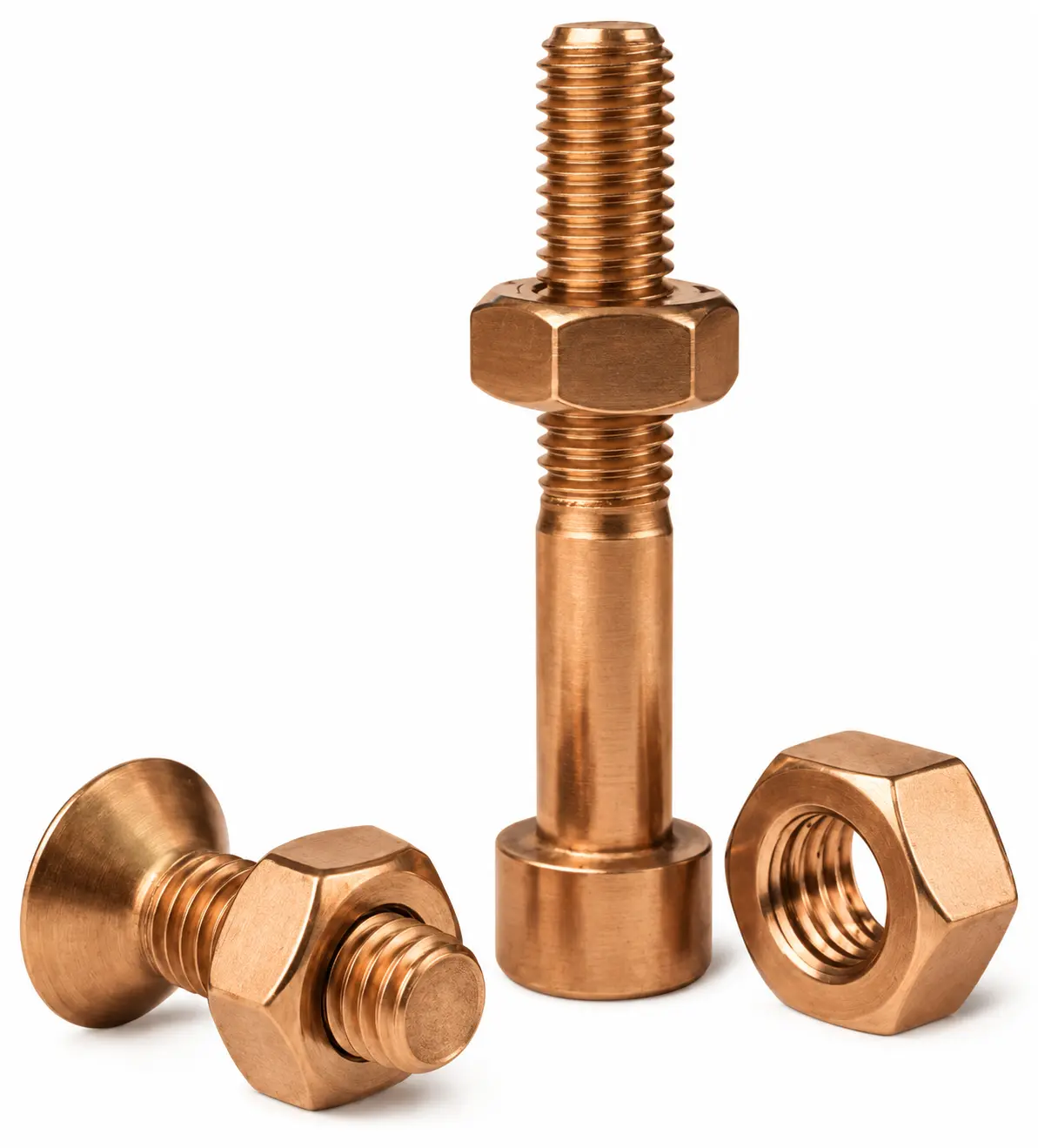
Silicon Bronze C66100 Hex Bolts
Silicon Bronze C66100
Hex Bolts
Silicon Bronze C66100 Heavy Hex Bolts
Silicon Bronze C66100
Heavy Hex Bolts
Silicon Bronze C66100 Stud Bolts
Silicon Bronze C66100
Stud Bolts
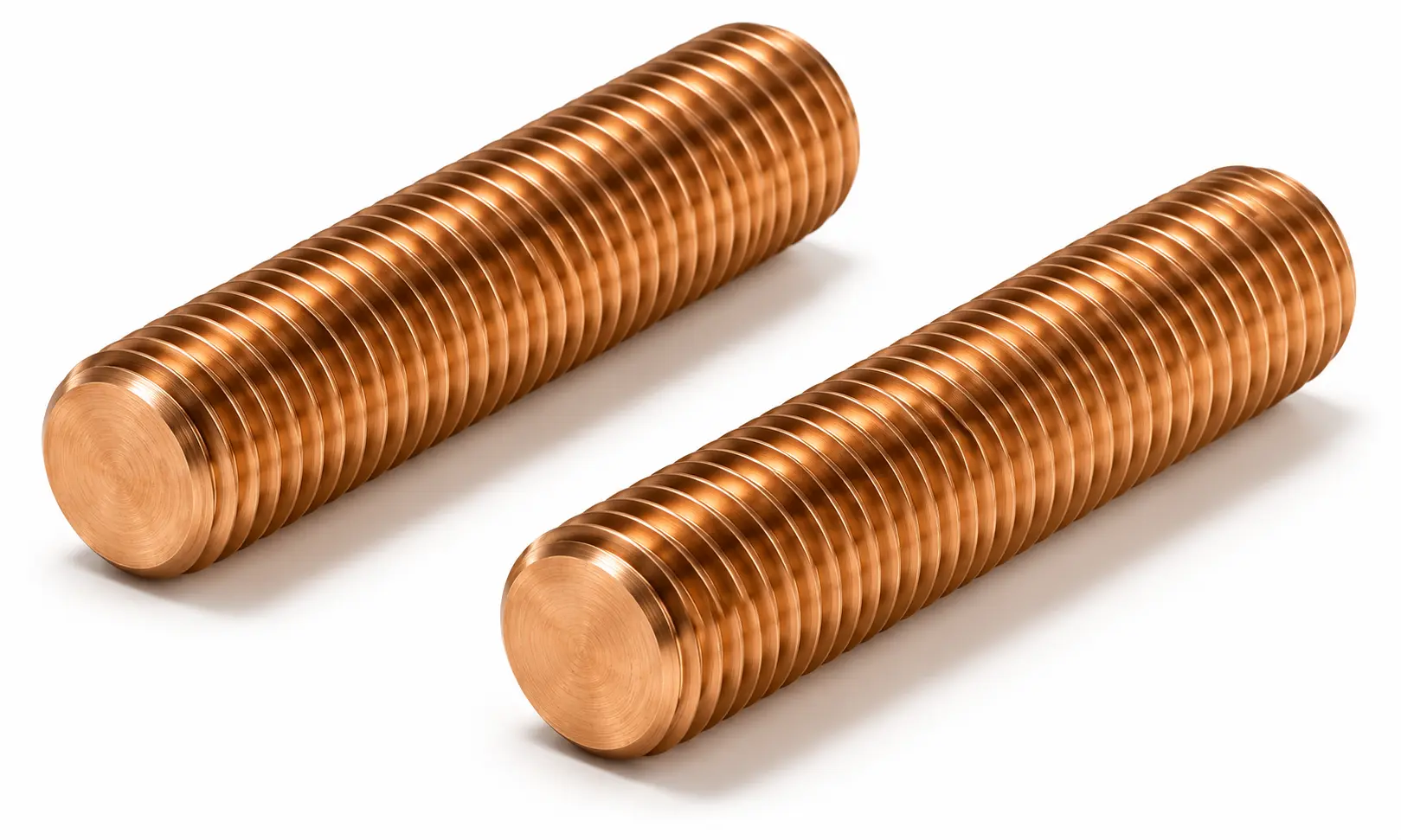
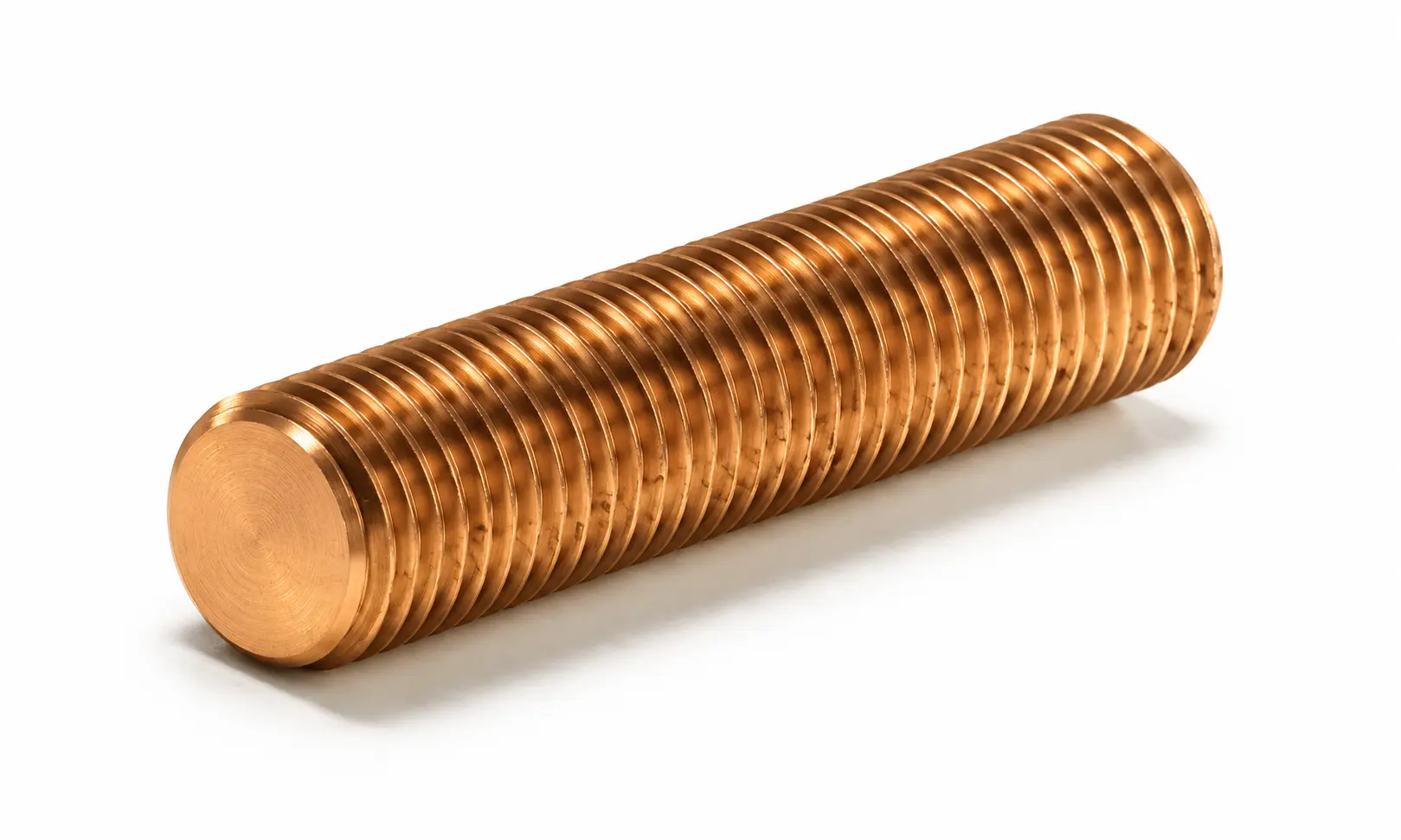
Silicon Bronze C66100 Threaded Rods
Silicon Bronze C66100
Threaded Rods
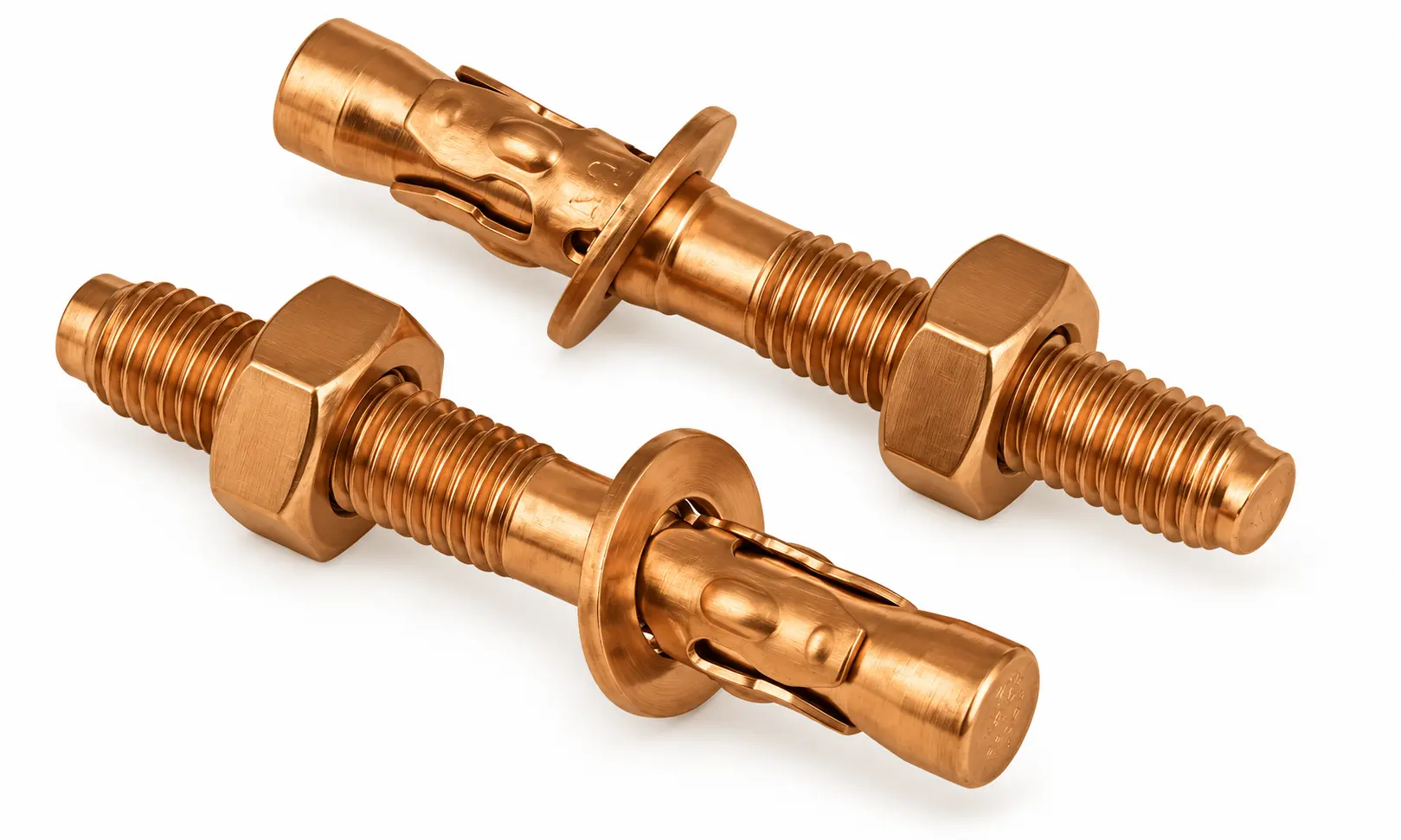
Silicon Bronze C66100 Anchor Bolts
Silicon Bronze C66100
Anchor Bolts
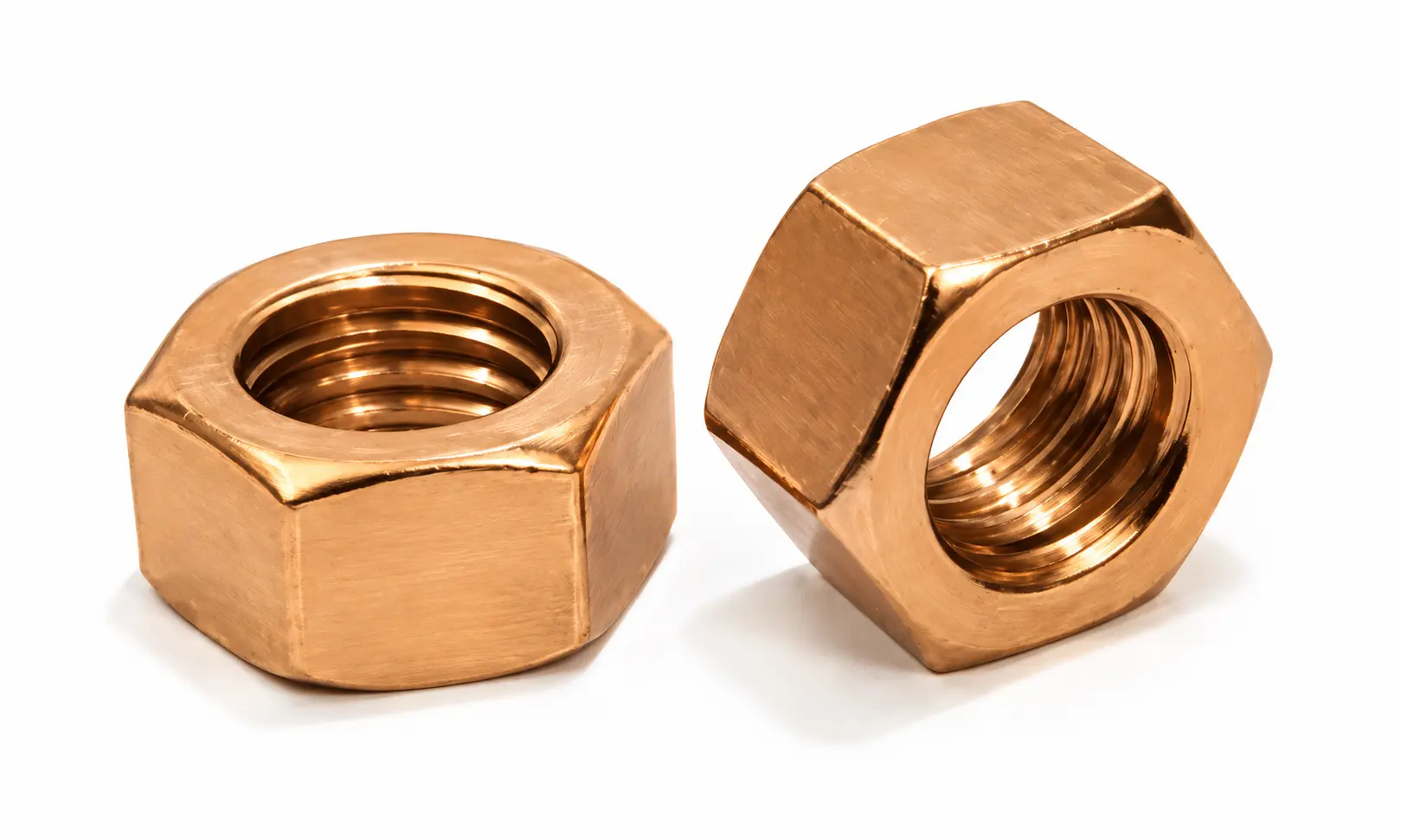
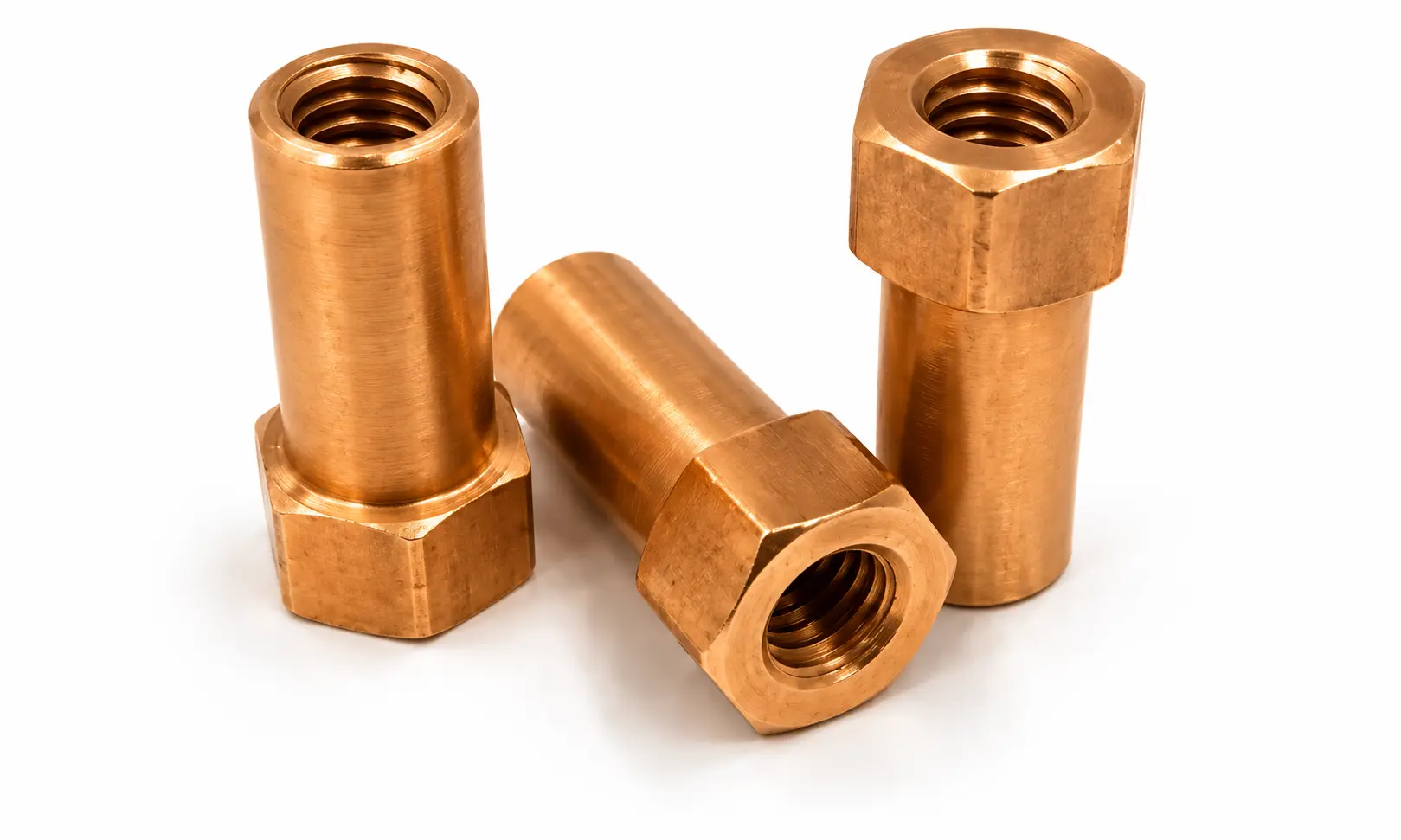
Silicon Bronze C66100 Hex Nuts
Silicon Bronze C66100
Hex Nuts
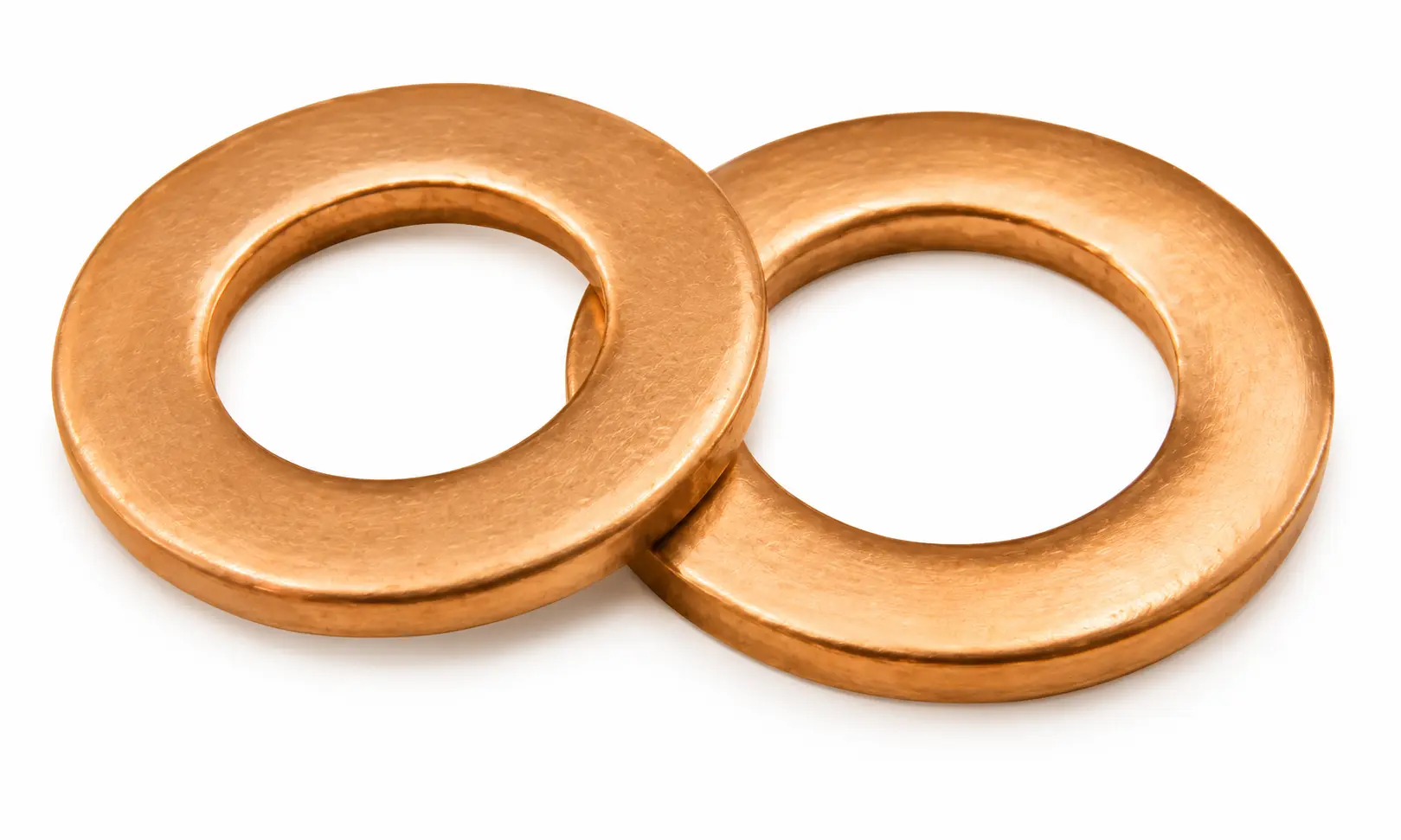
Silicon Bronze C66100 Washers
Silicon Bronze C66100
Washers
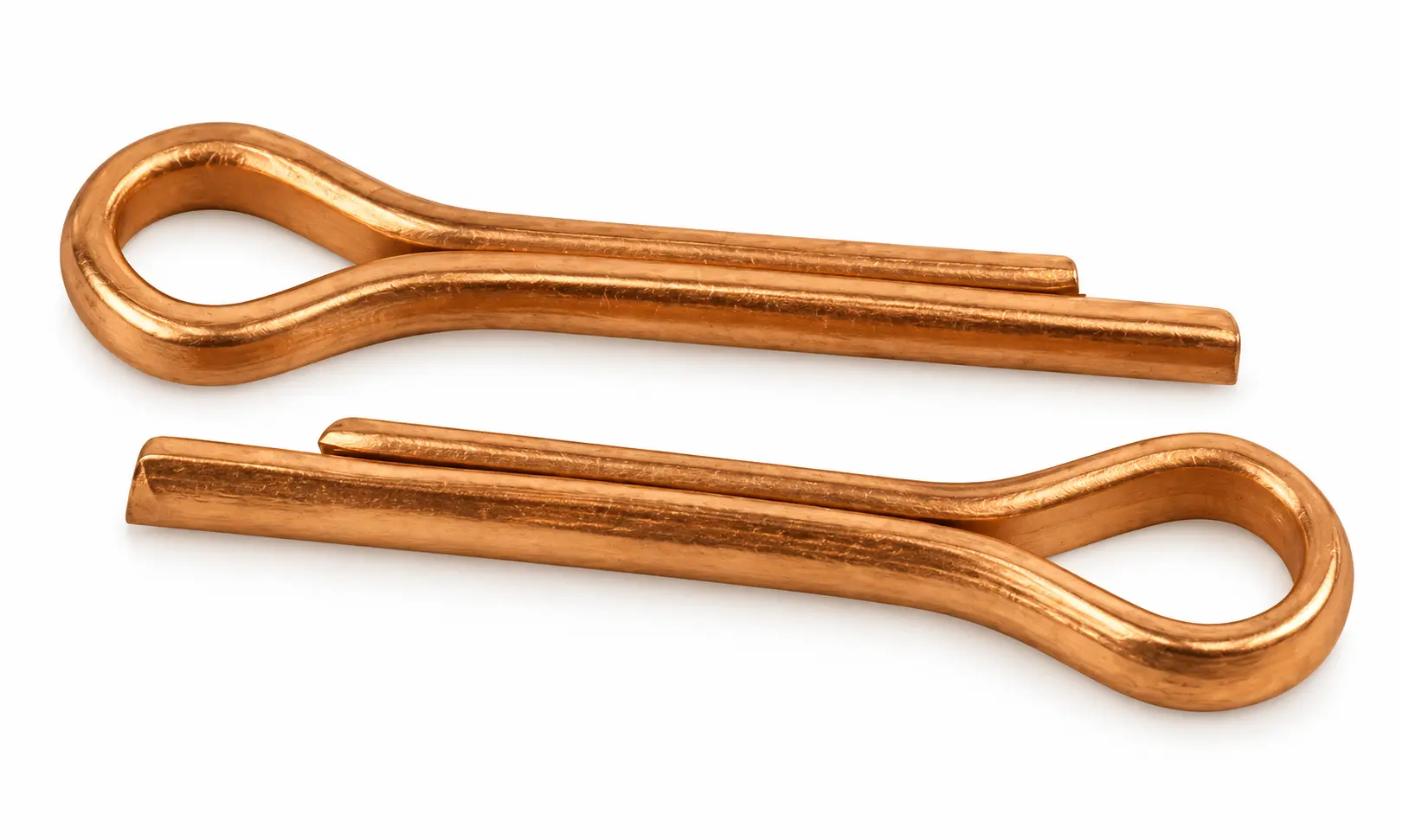
Silicon Bronze C66100 Cotter Pins
Silicon Bronze C66100
Cotter Pins
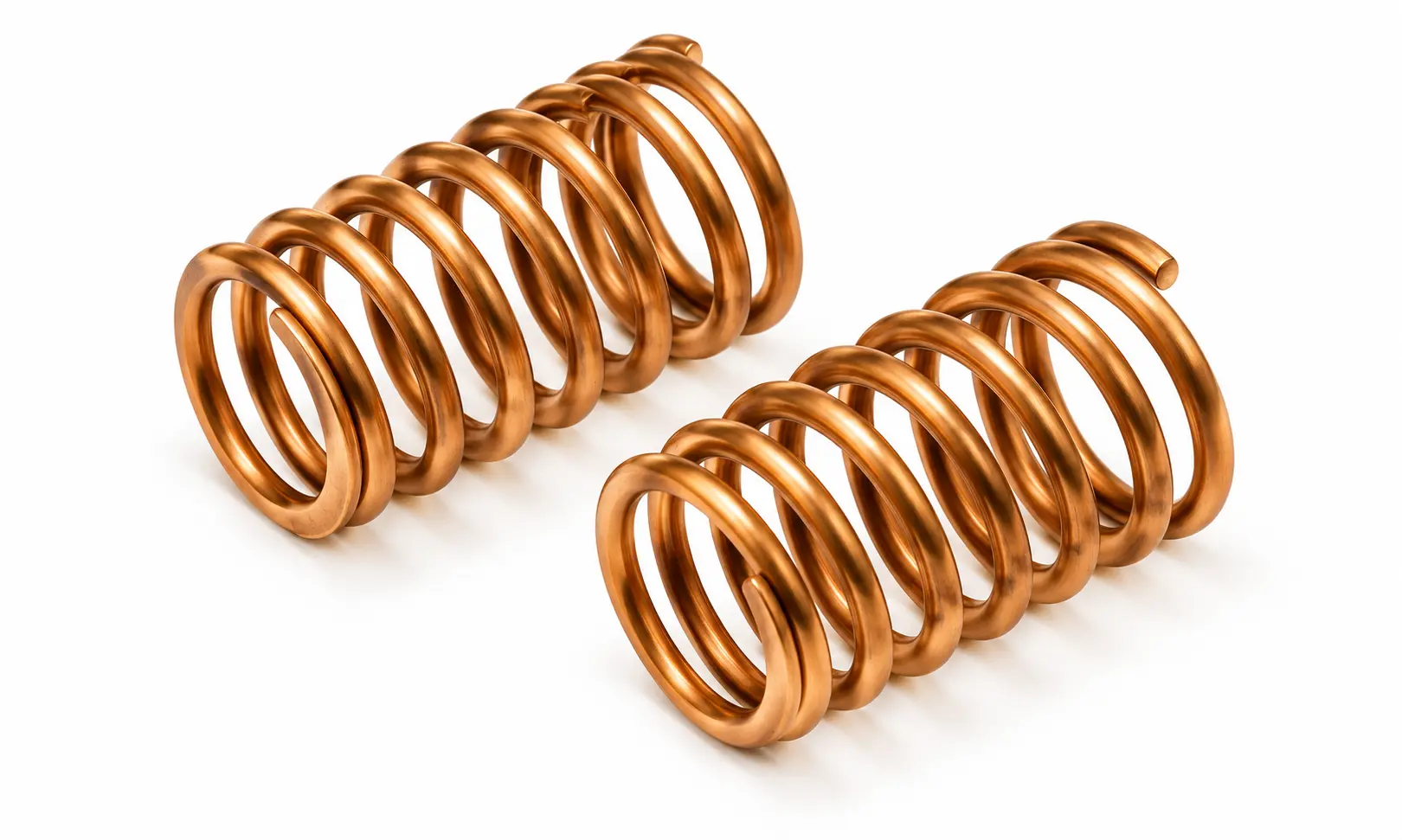
Silicon Bronze C66100 Springs
Silicon Bronze C66100
Springs
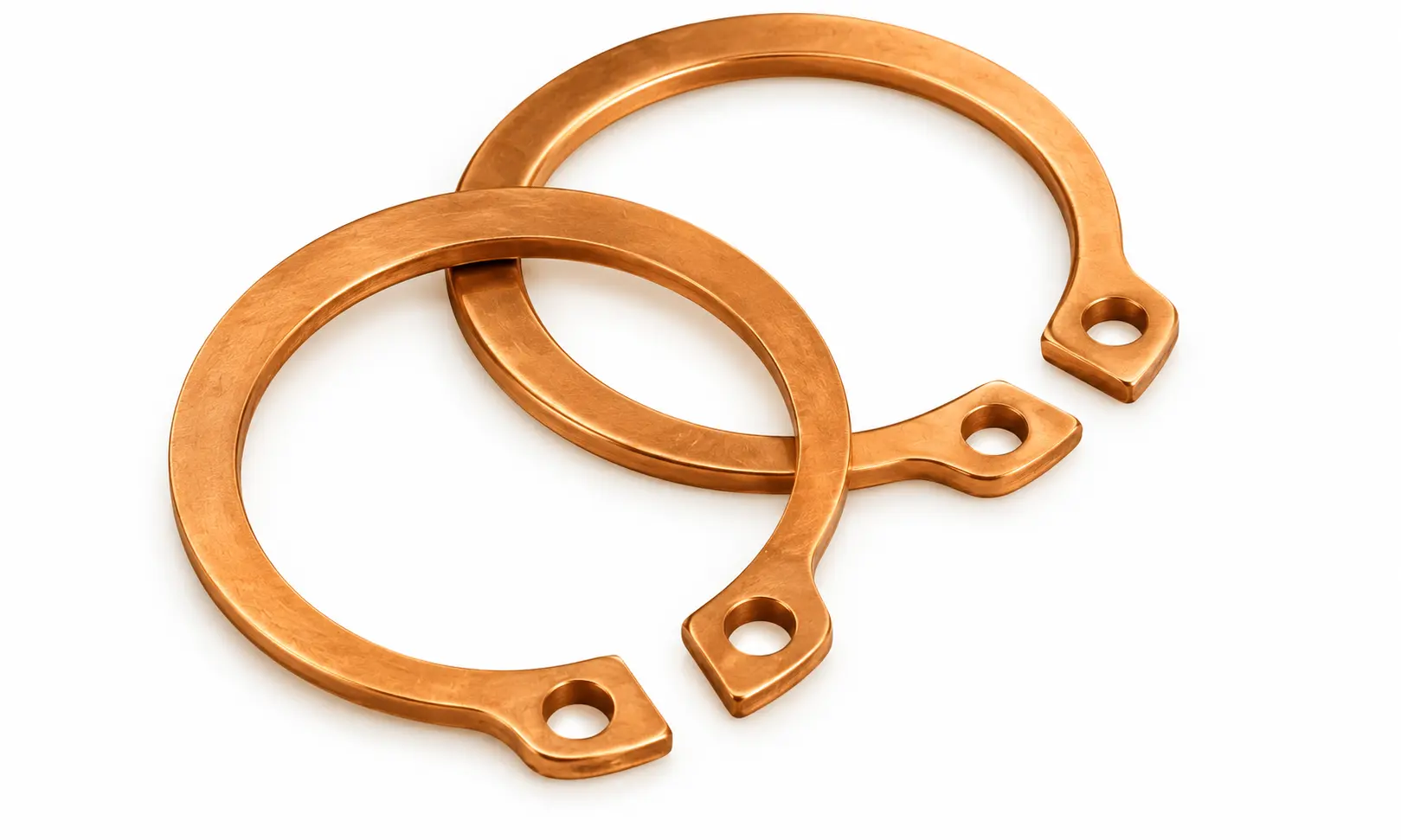
Silicon Bronze C66100 Circlips
Silicon Bronze C66100
Circlips
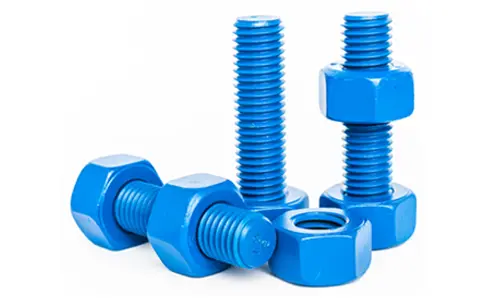
Silicon Bronze C66100 Coated Fasteners
Silicon Bronze C66100
Coated Fasteners
Silicon Bronze C66100 Custom Spacers
Silicon Bronze C66100
Custom Spacers
Technical Data

Silicon Bronze C66100 Specifications

Chemical Composition — Silicon Bronze C66100 (wt. %)
ElementMinimum %Maximum %
Copper (Cu) *Remainder—
Silicon (Si)2.83.5
Lead (Pb)0.200.8
Manganese (Mn)—1.5
Zinc (Zn)—1.5
Iron (Fe)—0.25
Copper + sum of named elements99.5—
Mechanical Properties — Silicon Bronze C66100
ConditionUTS (MPa)YS, min (MPa)Elongation (%)Hardness
ASTM F468 Cu 661 bolting, full-size test483–690241 min—75–95 HRB
ASTM F468 Cu 661 bolting, machined specimen483 min241 min15 min75–95 HRB
Physical Properties
CDA publish only a density of 8.53 g/cm³ for C66100 — no melting range, electrical or thermal conductivity, thermal expansion, specific heat, modulus, machinability or forgeability rating, no annealing or hot working temperatures, and no fabrication ratings. Values should not be assumed from C65500: although the silicon ranges overlap, the 0.20–0.8% lead addition changes the machining, welding and hot-working behaviour, which is the reason the separate designation exists. Contact Exotic Alloy for data established on the specific material supplied.
Equivalent Grades & Standards
UNSCDA NumberCDA Alloy NameCommon Name
C66100 CDA 661 Not registered by CDA ASTM F468 Cu 661, Free-Machining Silicon Bronze, CDA 661

Key Specifications: ASTM F468 / ASTM F467 / ASTM B98/B98M / ASME SB98.

*The copper value includes silver. ASTM F468 additionally specifies a copper minimum of 94.0% for Cu 661, where CDA give copper as the remainder.

The mechanical table on this page gives ASTM F468 fastener requirements. CDA publish no typical mechanical property data for C66100, and no thermal or fabrication data either. Values from C65500 are not transferable: the 0.20–0.8% lead addition changes machining, welding and hot-working behaviour, which is why the separate designation exists.

Note on fastener standards: All three grades on this hub are listed in ASTM F468 and F467. No other alloy family on this site can say that, and it is not an accident: silicon bronze is the traditional bronze fastener material, and has been the default for marine, architectural and boat-building fastening for a century.

C65100 is Cu 651, marking F 468K, and is the only alloy in the standard whose requirement is split by diameter: 483–690 MPa with 379 MPa minimum yield at 75–95 HRB for 6–19 mm, dropping to 379–621 MPa with 276 MPa minimum yield at 70–95 HRB for 22–38 mm, both at 8% minimum elongation. C65500 is Cu 655, marking F 468L, at 345–552 MPa with 138 MPa minimum yield, 60–80 HRB and 20% minimum elongation in all diameters. C66100 is Cu 661, marking F468M, at 483–690 MPa with 241 MPa minimum yield, 75–95 HRB and 15% minimum elongation.

Read those three against each other and the selection falls out. Cu 655 is the ductile choice — 20% minimum elongation, more than double Cu 651's 8%, which is why it dominates marine and architectural fastening where a bolt must yield rather than snap. Cu 651 and Cu 661 are the strong choices at the same 483–690 MPa range, with Cu 661 offering nearly twice Cu 651's elongation but carrying lead. Across the wider standard, Cu 655 sits close to Cu 464 naval brass on strength while being far more corrosion resistant, and Cu 651 and Cu 661 sit between the aluminium bronzes Cu 614 and Cu 630.

ASTM F468 additionally sets copper minimums that CDA give only as the remainder: 96.0% for Cu 651, 94.8% for Cu 655 and 94.0% for Cu 661. Beyond the fastener standards the grades are supplied under ASTM B96 and B97 for plate and sheet, B98 for rod, bar and shapes, B99 for wire, B105 for trolley wire, B124 and B283 for forgings, B315 for pipe and tube and B432 for clad plate, with thread conformance to the relevant ASME or ISO standard.

Every silicon bronze order ships with EN 10204 3.1 certification giving the heat analysis, the temper, and the mechanical test results for the product form and section supplied. Silicon, manganese and lead are reported explicitly — silicon sets the strength and conductivity, manganese is a deliberate addition in C65500 at 0.50–1.3%, and lead distinguishes C66100 from the two unleaded grades and governs regulatory acceptability under the Safe Drinking Water Act and RoHS. Where fasteners are supplied to ASTM F468 or F467, the copper minimum set by that standard is verified in addition to the CDA composition limits. Grain-size verification on annealed tempers, stress-relief treatment, hardness testing and positive material identification can all be added at order stage.

Machining: both documented grades rate 30 on the CDA scale. That is modest — C36000 free-cutting brass is the 100 — but it is half again better than the unleaded phosphor bronzes at 20 and comparable with the wrought nickel aluminium bronzes. The copper-silicon matrix is tough and work hardens, so use sharp positive-rake tooling, generous chip breakers, firm feed and flood coolant, and do not let the tool dwell or rub.

Where machining dominates, C66100 is the grade to look at — it carries a deliberate 0.20–0.8% lead addition for exactly that purpose, where C65100 and C65500 hold lead to 0.05% maximum as an impurity. CDA register no machinability rating for C66100, however, so we are not quoting one; the lead addition is a documented fact and the resulting rating is not.

Forming is where this family excels. CDA rate C65100 and C65500 Excellent for cold working and Excellent for hot forming — a combination almost nothing else on this site offers — and list blanking, drawing, forming and bending, heading and upsetting, hot forging and pressing, roll threading and knurling, shearing, squeezing and swaging among their common fabrication processes. That list is essentially a description of fastener manufacture, which is why silicon bronze cold heads and roll threads so well and why it has been the traditional bronze bolt, screw and nail material for a century.

Heat treatment: silicon bronzes are not hardenable. There is no precipitation reaction and no quench-and-temper response, so strength comes from cold work alone and the temper designation records the degree of reduction — the OS grain-size anneals at the soft end, then H00, H01, H02, H04, H06 and H08 as cold work increases, and H80 for hard-drawn tube. Across that span tensile strength roughly doubles while elongation falls from 50–70% to 3–5%.

Annealing restores the soft, formable condition and on flat product is specified by resulting grain size rather than temperature — hence OS015, OS035, OS050 and OS070, where the number is the nominal grain size in millimetres. CDA give annealing ranges of 482–677 °C for C65100 and 482–704 °C for C65500.

Hot working is where the two grades differ, and it is worth noting carefully. CDA register a hot working range of 704–871 °C for C65500, but for C65100 they register a single temperature — the minimum and maximum are both 704 °C (1300 °F). Whether that reflects a genuinely narrow hot working window or an incomplete record, it is what is registered, and we have reproduced it rather than inventing a range. Confirm the hot working practice with the mill for the section concerned.

Stress-relief annealing at a lower temperature removes the residual tension left by cold forming while keeping most of the cold-worked strength. On this family it matters for the same reason it matters on every copper alloy: residual tensile stress plus ammonia or amines causes stress-corrosion cracking. Specify stress relief on cold-headed fasteners and heavily formed parts going into service.

Joining: this is the best-joining alloy family on this site, and it is the main reason silicon bronze is specified over an aluminium bronze for fabricated work. CDA rate both documented grades Excellent for gas shielded arc welding, spot welding, butt welding and brazing, Good for oxyacetylene welding and seam welding, and C65100 Excellent for soldering as well, with C65500 Good. Only coated metal arc welding is merely Fair.

Compare that with the alternatives. Every aluminium bronze on this site is Not Recommended for oxyacetylene welding because the refractory alumina film cannot be reduced by the flame, and most are only Fair for soldering and brazing. Silicon bronze has no such film, so ordinary copper-alloy practice applies throughout and no special oxide removal is needed at the joint.

Silicon bronze is also a major welding consumable in its own right. Silicon bronze filler is widely used for MIG brazing of galvanised and coated steel sheet in automotive body repair, for joining dissimilar metals, and for overlaying — the low melting point relative to steel lets the joint be made without melting the parent metal or burning off the zinc coating. Where the part is to be welded and machined, note that C66100's 0.20–0.8% lead will make it hot short in the heat-affected zone; CDA publish no fabrication ratings for that grade, and an unleaded grade is the safer choice for a welded assembly.


Silicon bronze is copper alloyed with roughly 1–4% silicon, and it occupies a position no other copper alloy quite matches: high strength, excellent corrosion resistance, and — unusually — outstanding behaviour in every fabrication process at once. Most copper alloys force a trade. A leaded brass machines superbly and welds badly. An aluminium bronze resists seawater superbly but fights the alumina film at every joint. A phosphor bronze makes a fine spring but hot works Poorly and machines at a rating of 20. Silicon bronze declines most of those trades.

CDA rate both documented grades here Excellent for cold working and Excellent for hot forming — a combination almost nothing else on this site manages. They are rated Excellent for gas shielded arc welding, spot welding, butt welding and brazing, Good for oxyacetylene welding, and C65100 Excellent for soldering too. There is no refractory oxide film to remove before joining, which is precisely what makes the aluminium bronzes difficult. Machinability at 30 is modest but still half again better than a phosphor bronze.

Silicon does the strengthening by solid solution, and the price is conductivity. C65100 at 0.8–2.0% silicon carries 12% IACS; C65500 at 2.8–3.8% carries only 7% IACS and 36 W/m·K. Silicon in solution scatters conduction electrons hard. These are not electrical alloys — for that see C50500 at 48% IACS — they are structural and fastening alloys that happen to be copper-based.

Silicon bronze has one of the best all-round corrosion records of any copper alloy, and two specific advantages worth naming. The first is that dezincification does not apply — zinc is an incidental element here, capped at 1.5%, so the characteristic failure mode of the brasses is off the table. The second is that there is no gamma-2 phase and therefore no dealuminification risk either, which is the corresponding weakness of the aluminium bronzes. Silicon bronze simply does not have a selective-leaching failure mode.

In service it resists seawater and brackish water, fresh water, neutral salt solutions, non-oxidising acids, alkalis, organic acids and industrial and marine atmospheres. It weathers to a stable brown-bronze patina rather than the green of a high-copper alloy, which is why it is specified for exposed architectural metalwork, and it carries the copper matrix's natural biofouling resistance. It is non-sparking and essentially non-magnetic, and it retains strength and toughness well at low temperature.

The limits are the normal copper-alloy ones. Oxidising acids, notably nitric, attack it. Ammonia, ammonium compounds and amines will cause stress-corrosion cracking in material carrying residual tensile stress, so stress relieve heavily cold-formed and cold-headed parts before service. In a galvanic couple it is cathodic to steel, aluminium and zinc — which is exactly why silicon bronze fasteners are specified with bronze and copper hardware and against steel only with deliberate isolation.

How three grades divide — and silicon content is only half the story.

C65100, CDA's Low-Silicon Bronze B, carries 0.8–2.0% silicon. Less silicon means more conductivity (12% IACS against C65500's 7%) and better cold formability, and it is the grade CDA rate Excellent for soldering. As ASTM F468 Cu 651 it is specified at up to 690 MPa in small diameters but at only 8% minimum elongation — the strong, less forgiving fastener choice. It reaches 724 MPa in extra hard wire.

C65500, High-Silicon Bronze A, carries 2.8–3.8% silicon plus a deliberate 0.50–1.3% manganese addition. It is the most widely used silicon bronze in the world and the one most people mean by the term: sixteen listed specifications, 1000 MPa in spring wire, and as ASTM F468 Cu 655 a fastener requirement of 345–552 MPa at 20% minimum elongation — two and a half times Cu 651's. That ductility is why it dominates marine and architectural fastening.

C66100 is the free-machining grade, at 2.8–3.5% silicon with a deliberate 0.20–0.8% lead addition where the other two hold lead to 0.05% as an impurity. As ASTM F468 Cu 661 it is specified at 483–690 MPa with 15% minimum elongation — Cu 651's strength with nearly twice its ductility. CDA register composition, a density figure and the specification list for it and nothing else, so its mechanical table here comes from ASTM F468 rather than from typical-property data.
Key Characteristics

  • The free-machining silicon bronze — 0.20–0.8% lead.
  • Silicon 2.8–3.5%, inside C65500's range; the lead is the difference.
  • ASTM F468 / F467 Cu 661 — 483–690 MPa, 241 MPa min yield.
  • 15% minimum elongation — nearly twice Cu 651's at the same strength.
  • The other two grades hold lead to 0.05% as an impurity.
  • CDA publish composition, density and specifications only.
  • No CDA machinability rating is registered, so none is quoted here.
  • Lead restricted in potable water and RoHS applications.

Typical Applications

  • Turned and machined bronze fasteners.
  • Screw-machine products in marine service.
  • Machined marine and architectural hardware.
  • Nuts, studs and threaded components to ASTM F468.
  • Valve stems and pump components.
  • Electrical hardware requiring machining.
  • Precision turned bronze parts.
  • Fittings and adaptors.