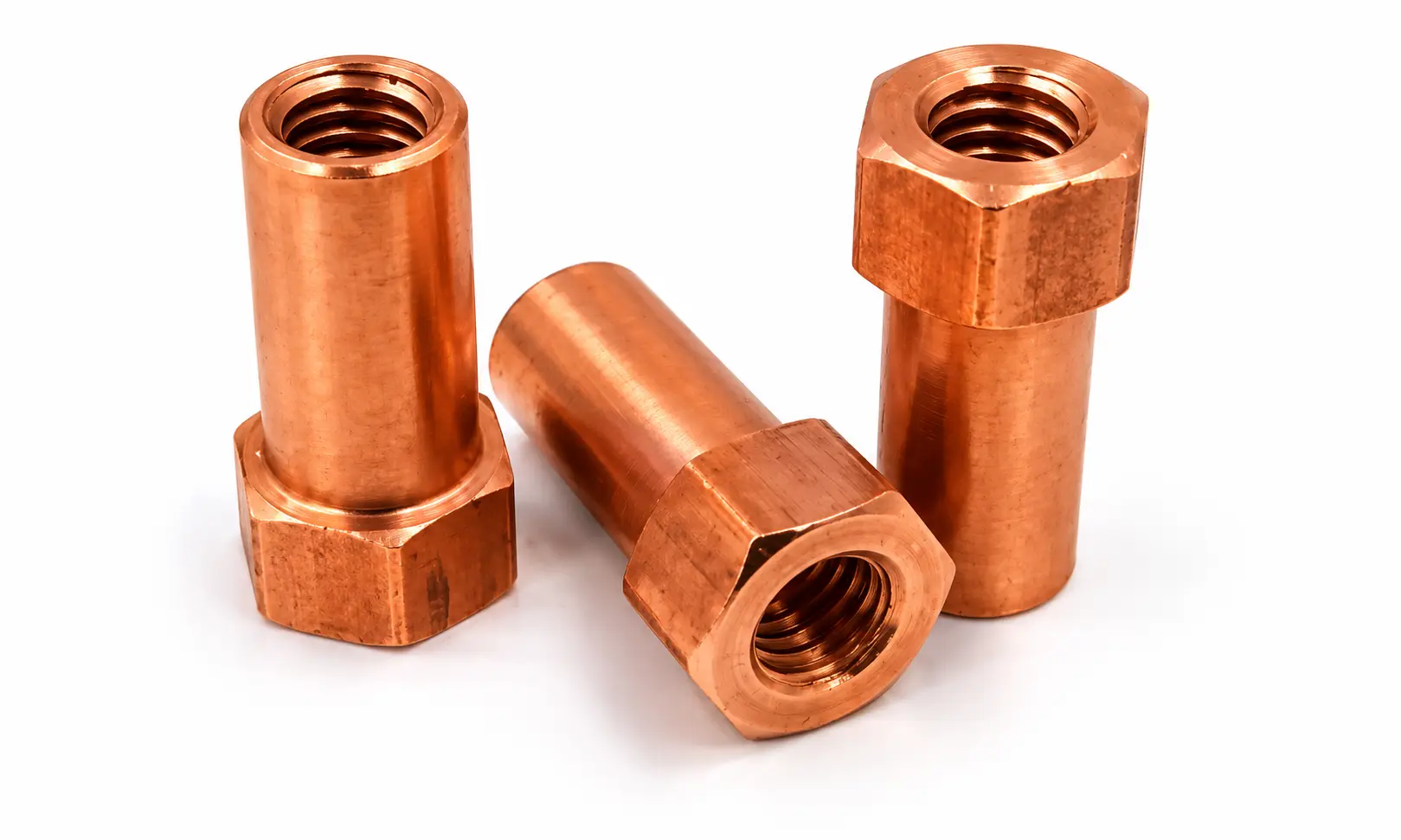
All of the coppers share the same broad corrosion behaviour, which is excellent in the environments copper is actually bought for. Copper resists fresh and potable water, atmospheric exposure — where it develops the familiar adherent patina and then corrodes at a negligible rate, which is why copper roofing lasts a century — non-oxidising acids free of dissolved oxygen, neutral and alkaline salt solutions, and seawater at moderate flow velocity. It is biostatic, which is the basis of its use in potable plumbing and in antimicrobial touch surfaces.
Its limits are equally consistent. Copper is attacked by oxidising acids — nitric acid rapidly, and sulfuric or hydrochloric acid as soon as oxygen or an oxidising contaminant such as ferric iron is present. It is attacked by oxidising salts, by sulfides and by hydrogen sulfide, which is the limit on copper in sour service and in polluted harbour water. It suffers erosion-corrosion and impingement attack in fast or aerated water — conventionally about 1.2 m/s is the design ceiling for copper tube in seawater, well below what a copper-nickel will take — and it will pit under deposits. Elevated-temperature oxidation in air becomes significant above roughly 200°C.
C19400’s general corrosion resistance is close to that of pure copper, and at 2.1 to 2.6% the iron addition is not enough to compromise it meaningfully in atmospheric, fresh water or mild process exposure. It performs well in the automotive and electronics environments it is normally used in, and ASTM B543 and B956 list it for welded heat exchanger and finned condenser tube, which is a demanding water-side duty. As with all coppers, avoid oxidising acids, sulfides and high-velocity aerated water.
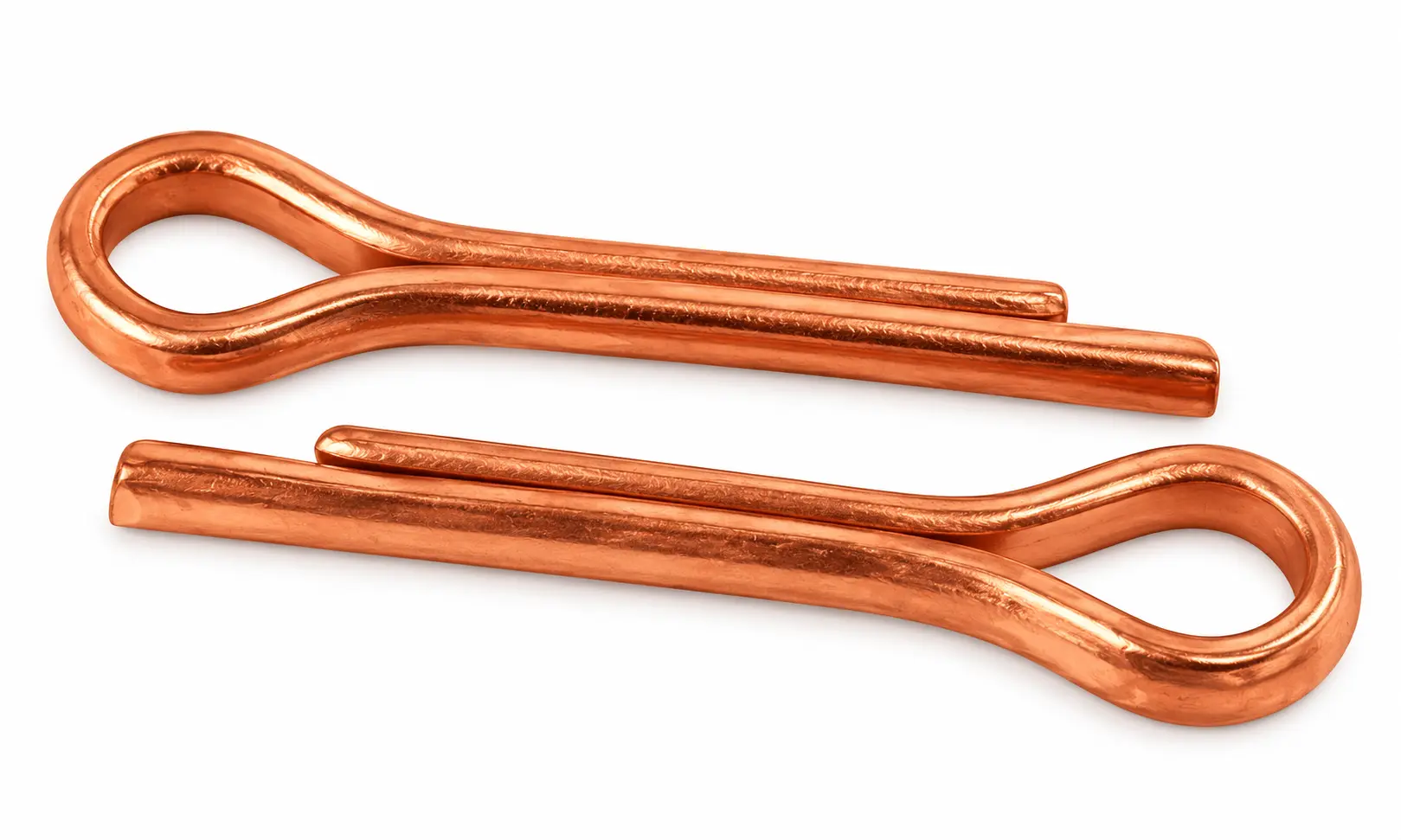
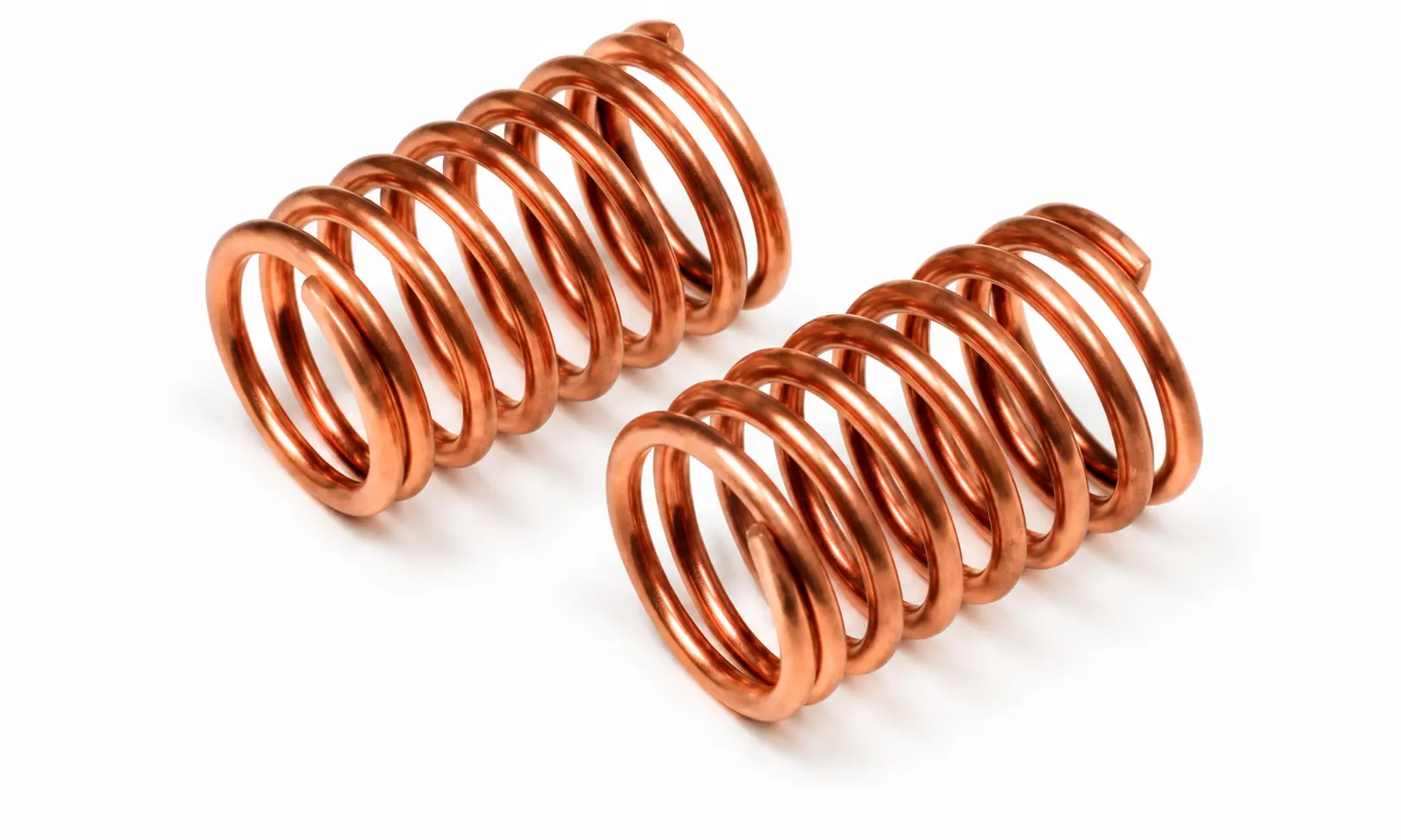
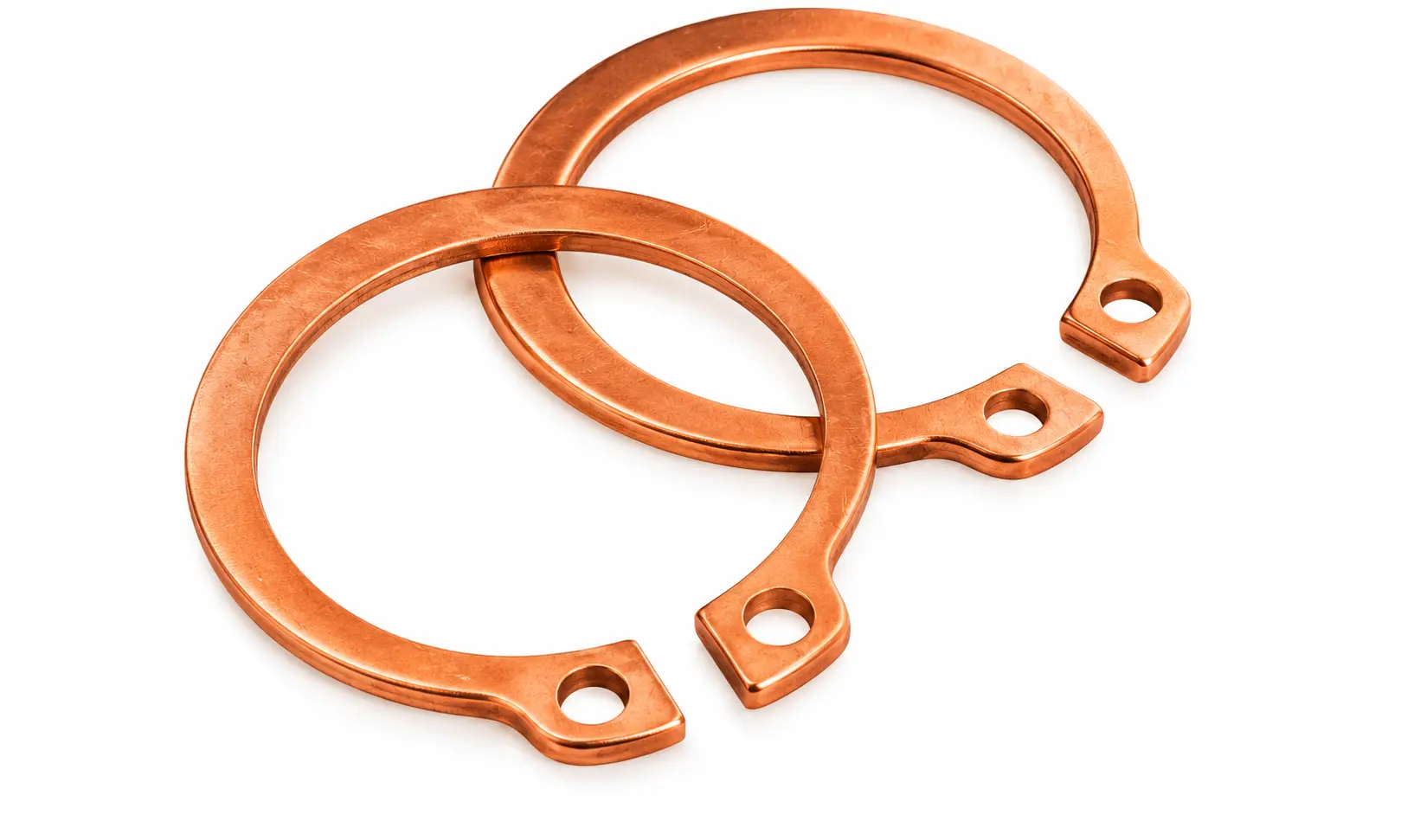
Stress-relaxation resistance is the property that distinguishes this alloy, and it is worth being explicit about why it matters. Every other material on this hub creeps under sustained load: a pure copper spring contact or bolted electrical joint loses its contact force over time, and faster when warm. The iron-phosphide dispersion in C19400 pins the grain boundaries and resists the recovery process that drives that relaxation, so the alloy holds its load. This is why C19400 is specified for spring contacts, connector terminals and lead frames that must survive solder reflow and then hold contact force for the life of the assembly, and why it is the right choice for any copper fastener or clip whose job is to stay tight.
Ammonia and amines cause stress-corrosion cracking in copper, and this is the one corrosion mechanism that will fail a copper fastener without warning. A copper component carrying residual or applied tensile stress — and a tightened bolt is exactly that — will crack in moist ammonia, in ammonium compounds, and in the amine corrosion inhibitors used in boiler and steam systems. Nitrites and mercury compounds do the same. The practical consequences are that copper fasteners should not be used in refrigeration plant handling ammonia, in fertiliser service, in amine-treated condensate systems, or anywhere animal waste or decaying organic matter concentrates ammonia; and that where copper has been cold worked and must sit in a borderline environment, a stress-relief anneal to remove residual stress is worthwhile even though it costs some strength.
Copper is galvanically noble, so it damages what it is bolted into. Copper sits well above carbon steel, cast iron, aluminium, zinc and galvanised coatings on the galvanic series. A copper fastener in an aluminium or steel structure will survive, but it will drive rapid corrosion of the surrounding metal, and the small-cathode-is-safe rule works against you here: a small copper bolt in a large aluminium plate is the less damaging geometry, but a copper bolt clamping a thin aluminium or galvanised sheet will eat through it. Copper must be isolated from aluminium and from galvanised steel with insulating washers and sleeves or a barrier coating, which is why aluminium-to-copper electrical connections use bimetallic lugs rather than a direct bolted lap. Copper is, conversely, compatible with the other coppers and bronzes, with the copper-nickels and with Monel.
Temper, not heat treatment, sets the strength here too — but over a much wider range than the plain coppers allow. The sequence runs O60 soft anneal at 310 MPa, O50 light anneal at 345 MPa, then H02, H04, H06, H08, H10 and H14 at 414, 462, 483, 503, 524 and 552 MPa respectively, with elongation falling from 32% to 1% across that span. Specify the temper against the forming the part still has to undergo as well as the strength it has to end up with.
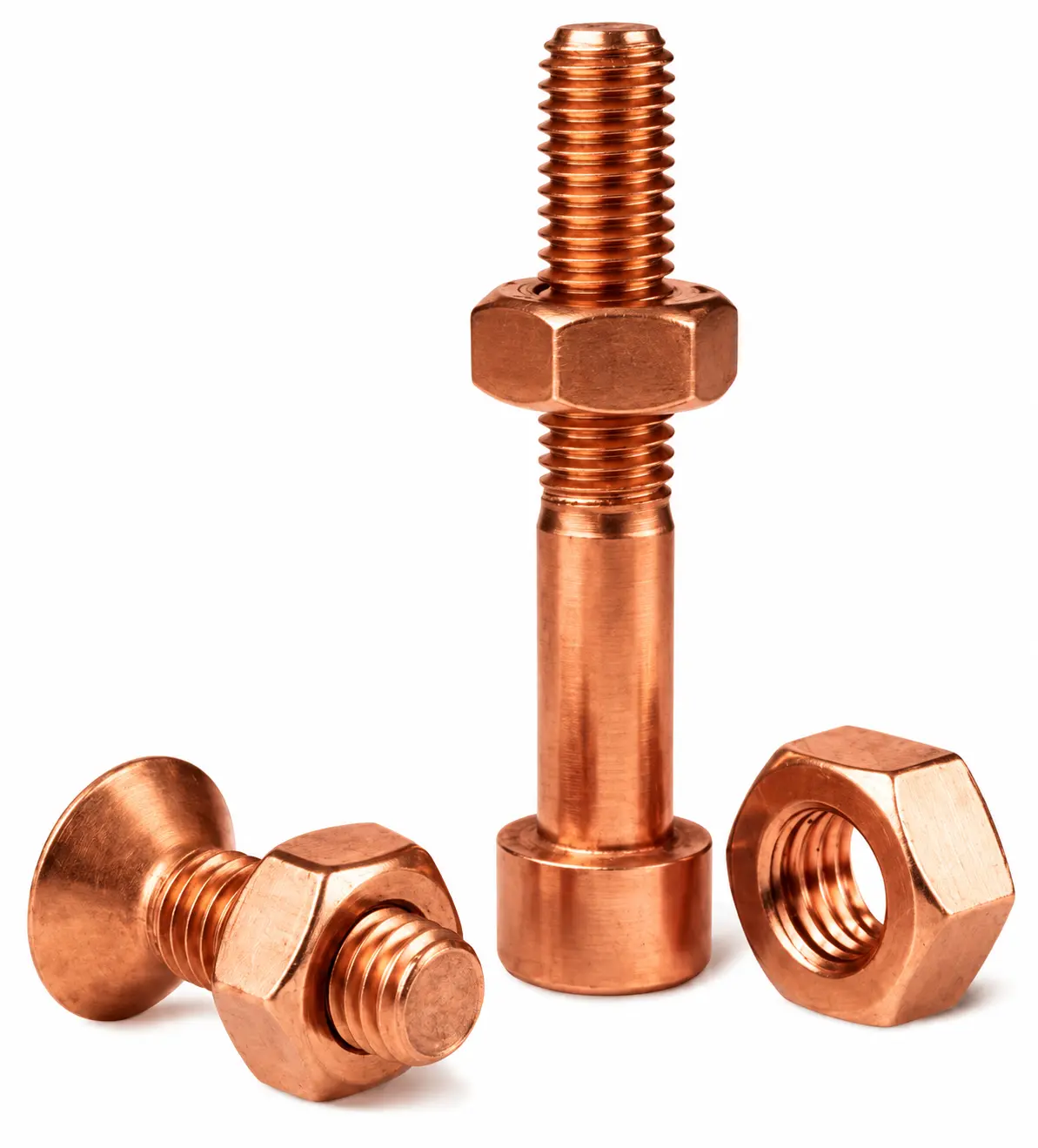
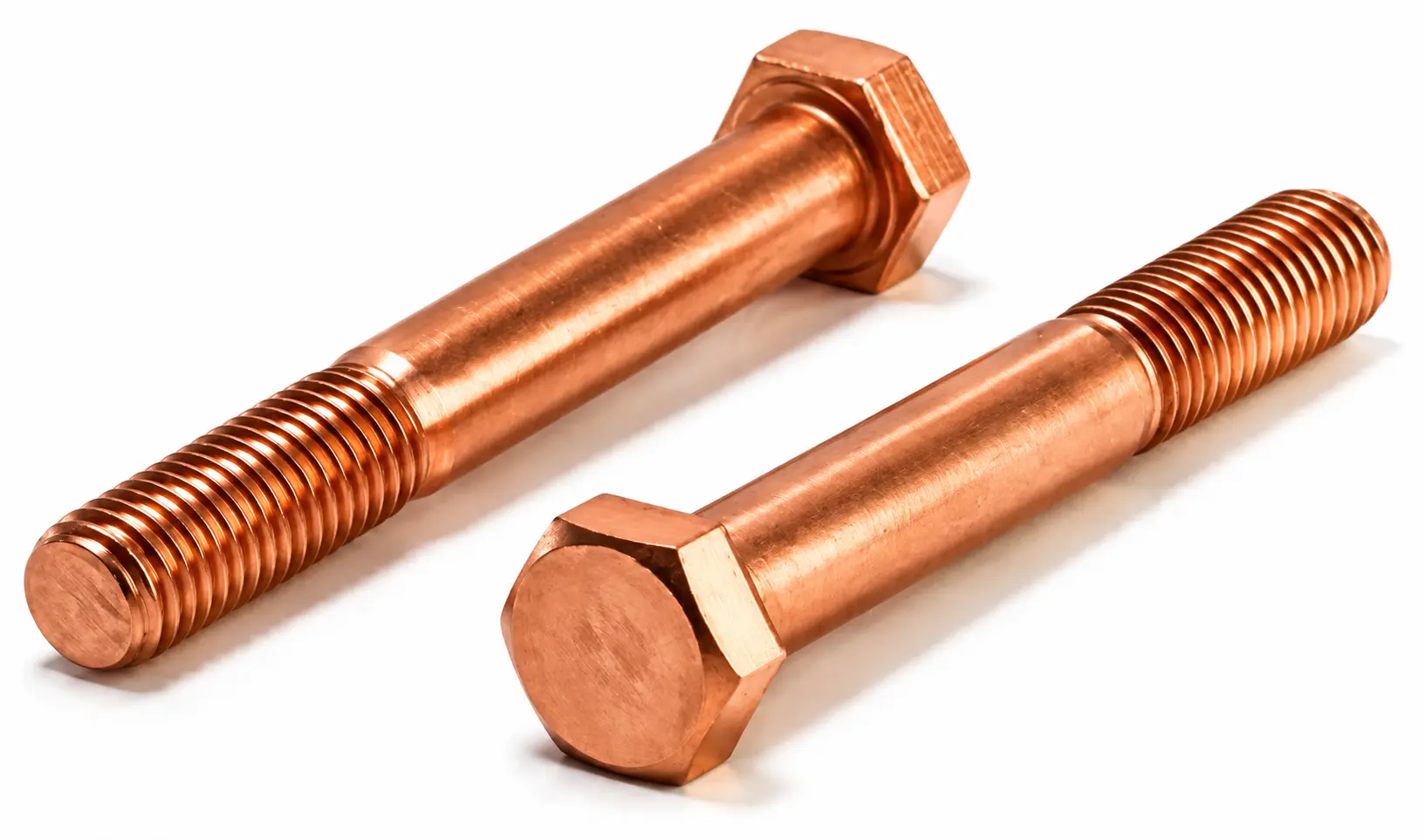
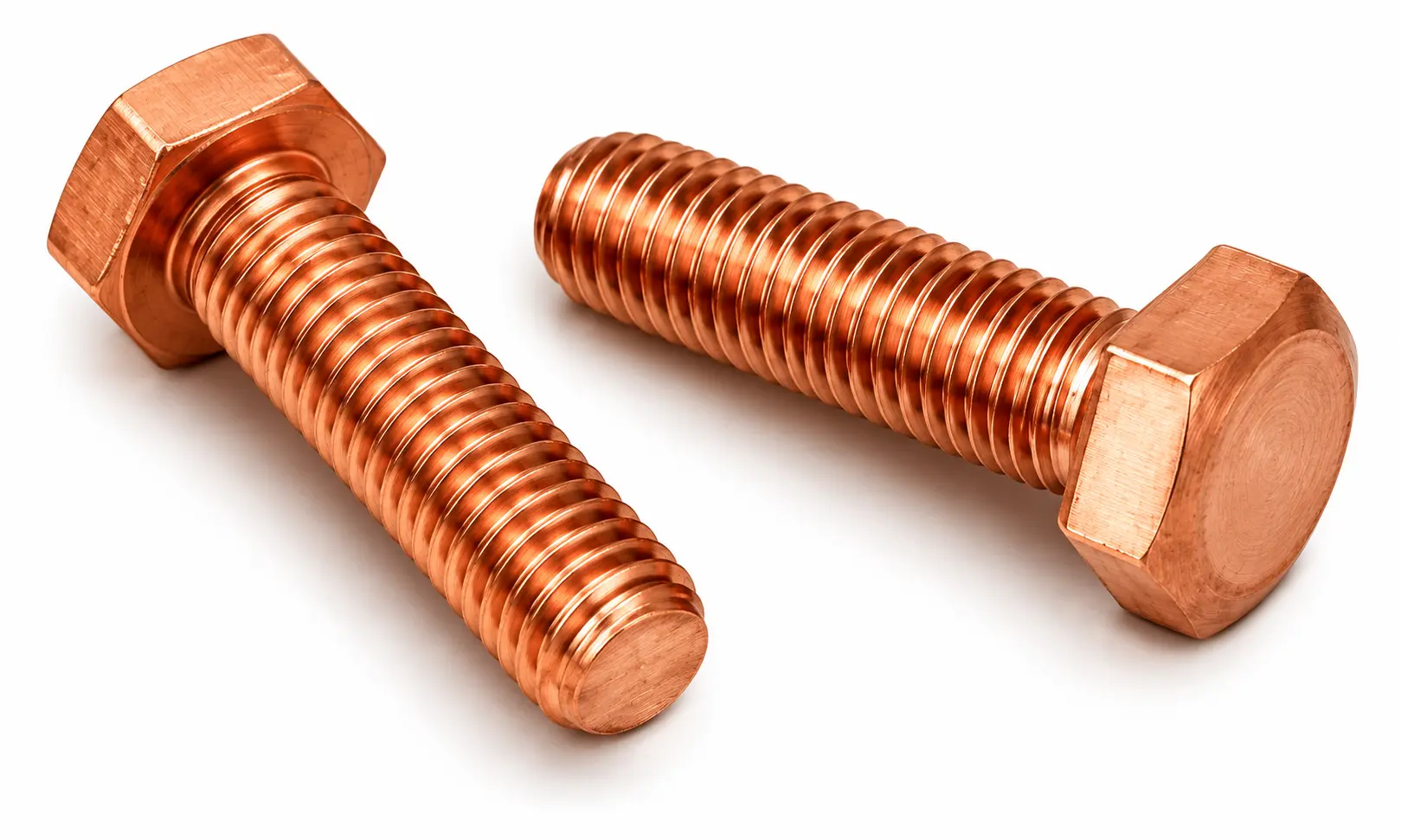
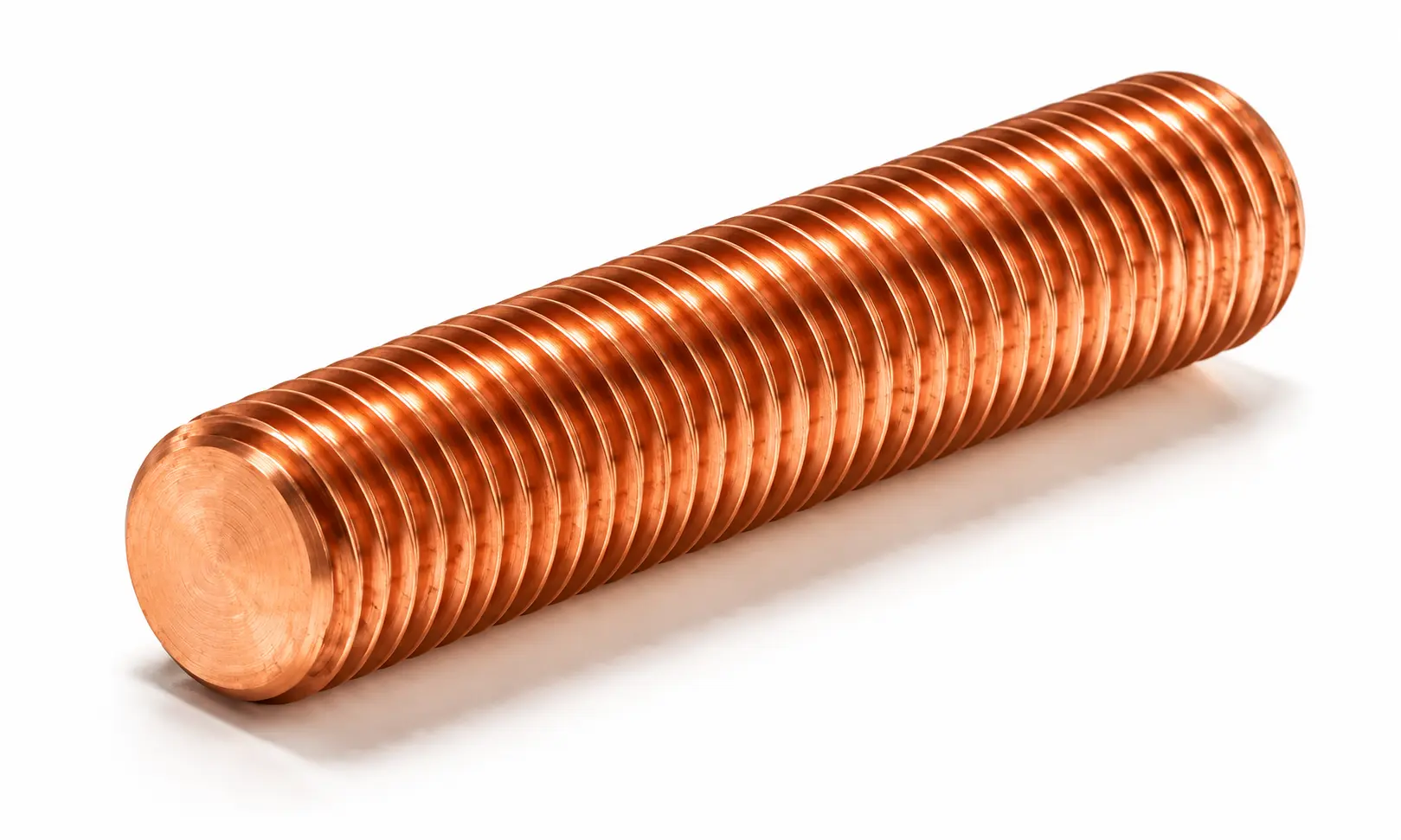
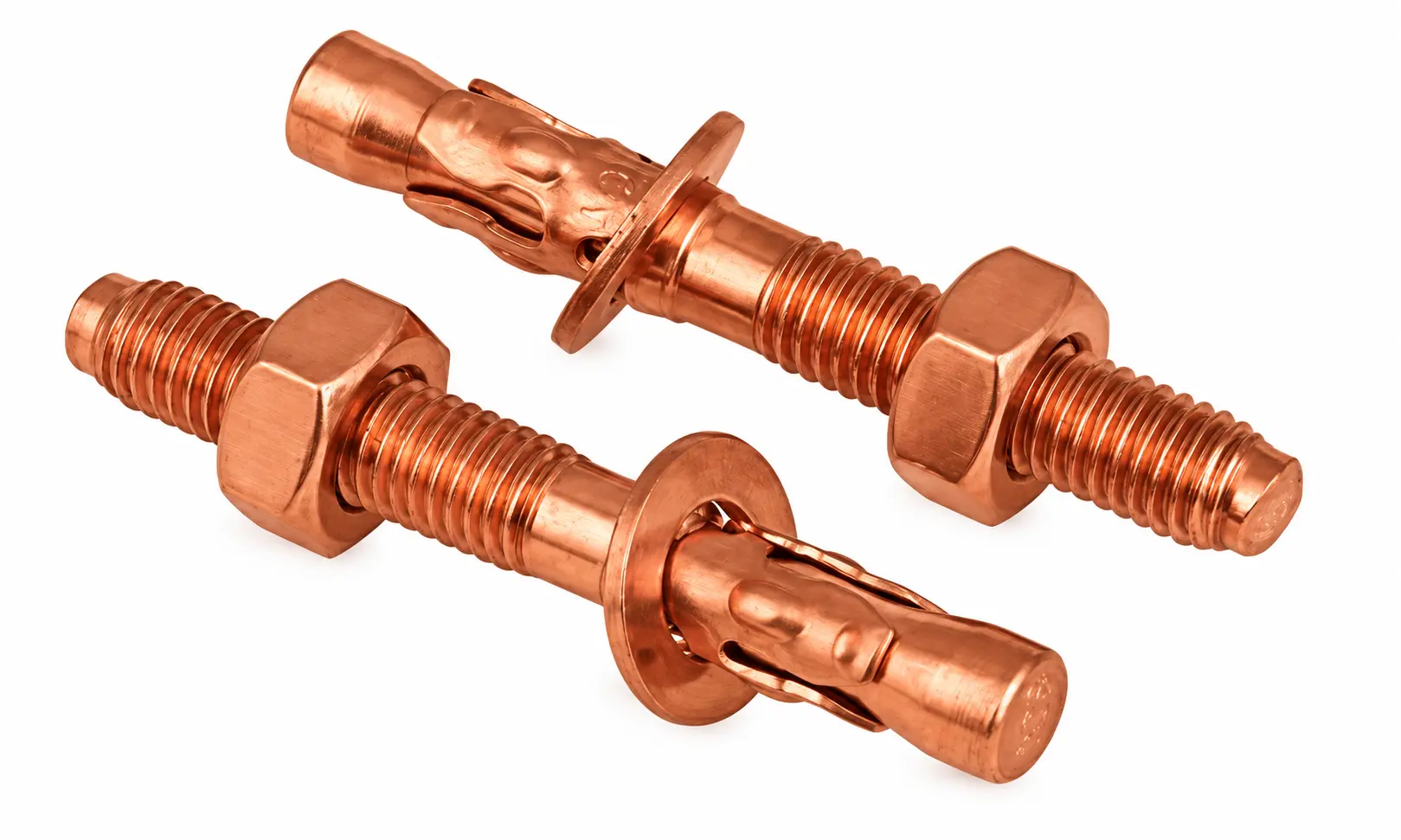
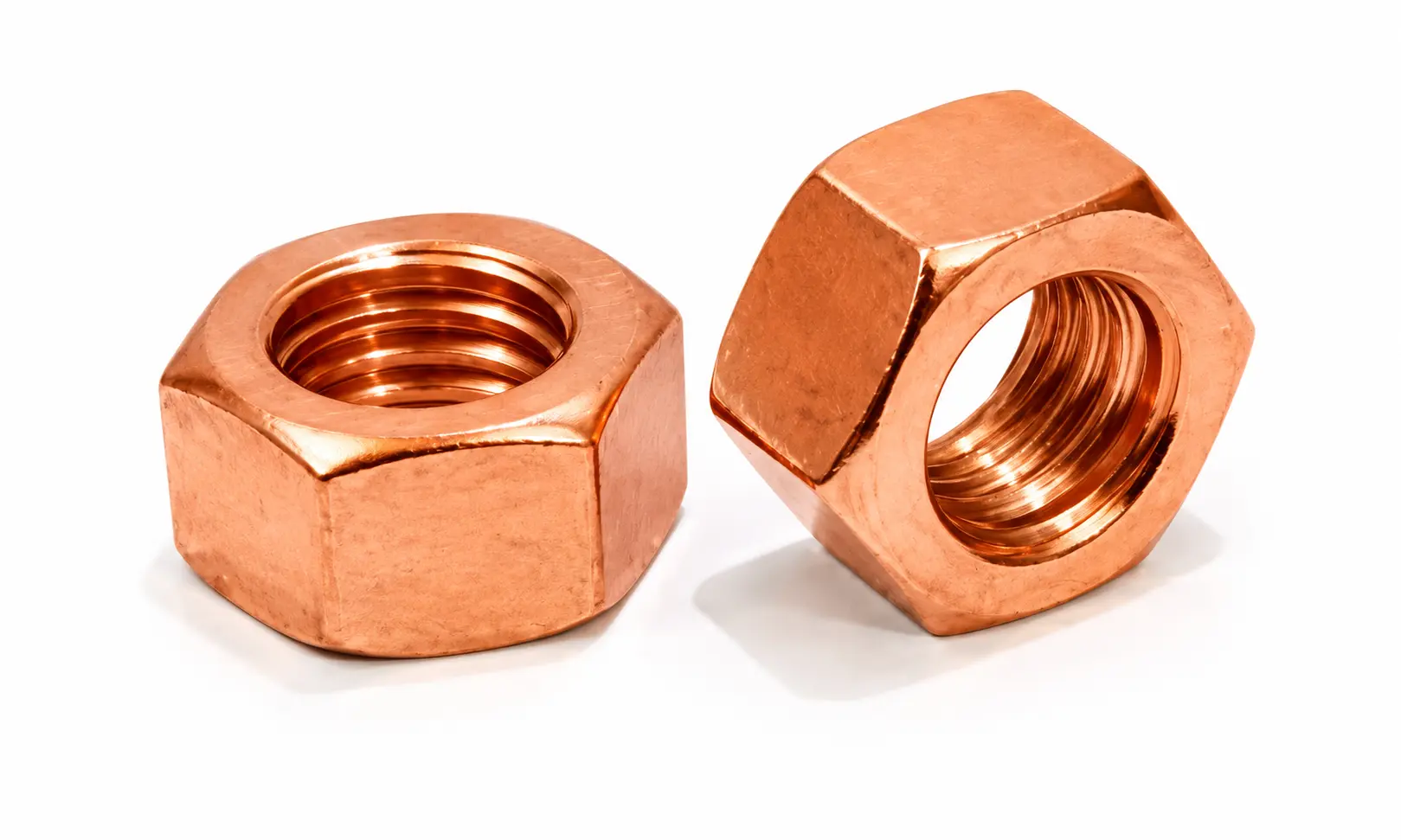
Copper fasteners are not chosen for load. This is the most common specification error in the family, so it is worth stating plainly: even at hard temper a copper bolt develops roughly 330–380 MPa tensile, against 830 MPa for an ordinary ASTM A325 structural bolt and 1040 MPa for a property class 10.9. Copper is specified when the fastener has to carry current, conduct heat, resist a corrosive environment, stay non-magnetic or avoid sparking — and the structural duty is light or carried by something else. C19400 is the partial exception in this family: at 552 MPa it is around 60% stronger than the best a plain copper will reach, and its relaxation resistance means a C19400 joint stays tight. It is still well below a structural steel bolt, so for genuine structural duty in a copper-base material the answer remains a copper alloy — silicon bronze, aluminium bronze or beryllium copper.
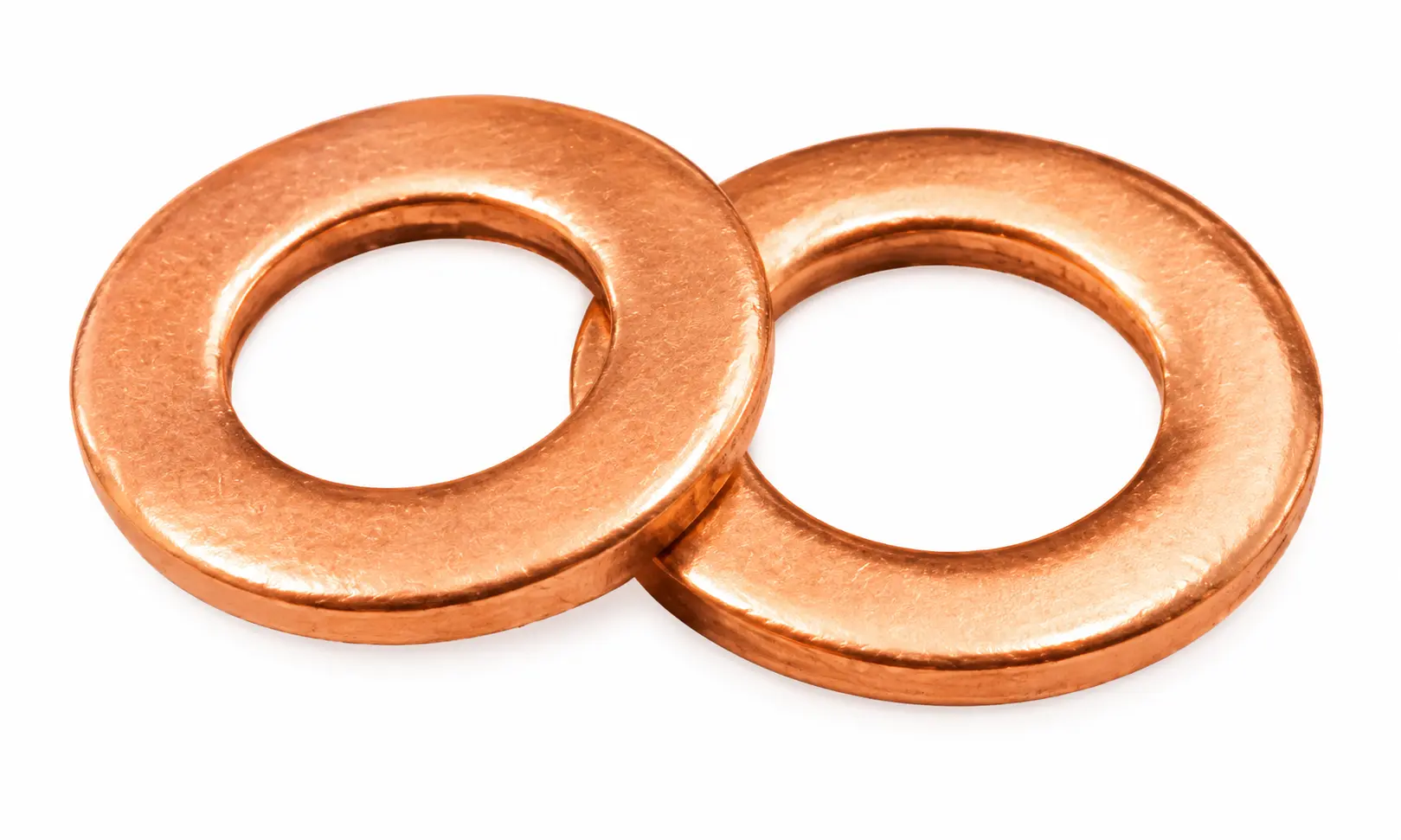
Stress relaxation is the companion problem. Copper creeps at modest temperature and under sustained load, so a bolted copper joint loses preload over time; the softer the temper and the warmer the joint, the faster it goes. Electrical connections in copper are therefore designed either to be re-torqued on a schedule, or to use a spring element (a Belleville or conical washer) that takes up the relaxation, or to use C19400 or a copper alloy whose stress-relaxation resistance is far better than that of a pure copper. A copper busbar bolt torqued once and forgotten is a loose, hot joint later.
How this family divides. The seven coppers Exotic Alloy stocks are not interchangeable grades at different price points; each exists to solve one specific problem, and the trade-off is almost always conductivity against something else.
C10100 and
C10200 are the oxygen-free coppers — buy them for immunity to hydrogen embrittlement and for the highest conductivity, C10100 when electronic-grade purity and vacuum-tightness genuinely matter and C10200 for everything else.
C11000 ETP is the workhorse: the cheapest and most available copper, the standard for busbar and electrical hardware, and the only one in the group covered for bolts and nuts by ASTM F468 and F467 — but it is the grade that embrittles in hydrogen.
C12000 DLP and
C12200 DHP are the phosphorus-deoxidised coppers, bought for weldability and brazeability; C12000 keeps 98% IACS with a low phosphorus residual, while C12200 trades conductivity down to 85% IACS for the best weldability in the family and is the standard plumbing and HVAC copper.
C14500 tellurium copper is the free-machining grade — the only sensible choice for a turned or heavily machined copper part.
C19400 is the odd one out and the strongest: a copper-iron alloy that reaches 550 MPa and resists stress relaxation, at 65% IACS.