+91 97734 41022 sales@exoticalloy.com
Material Specification

Copper C10200

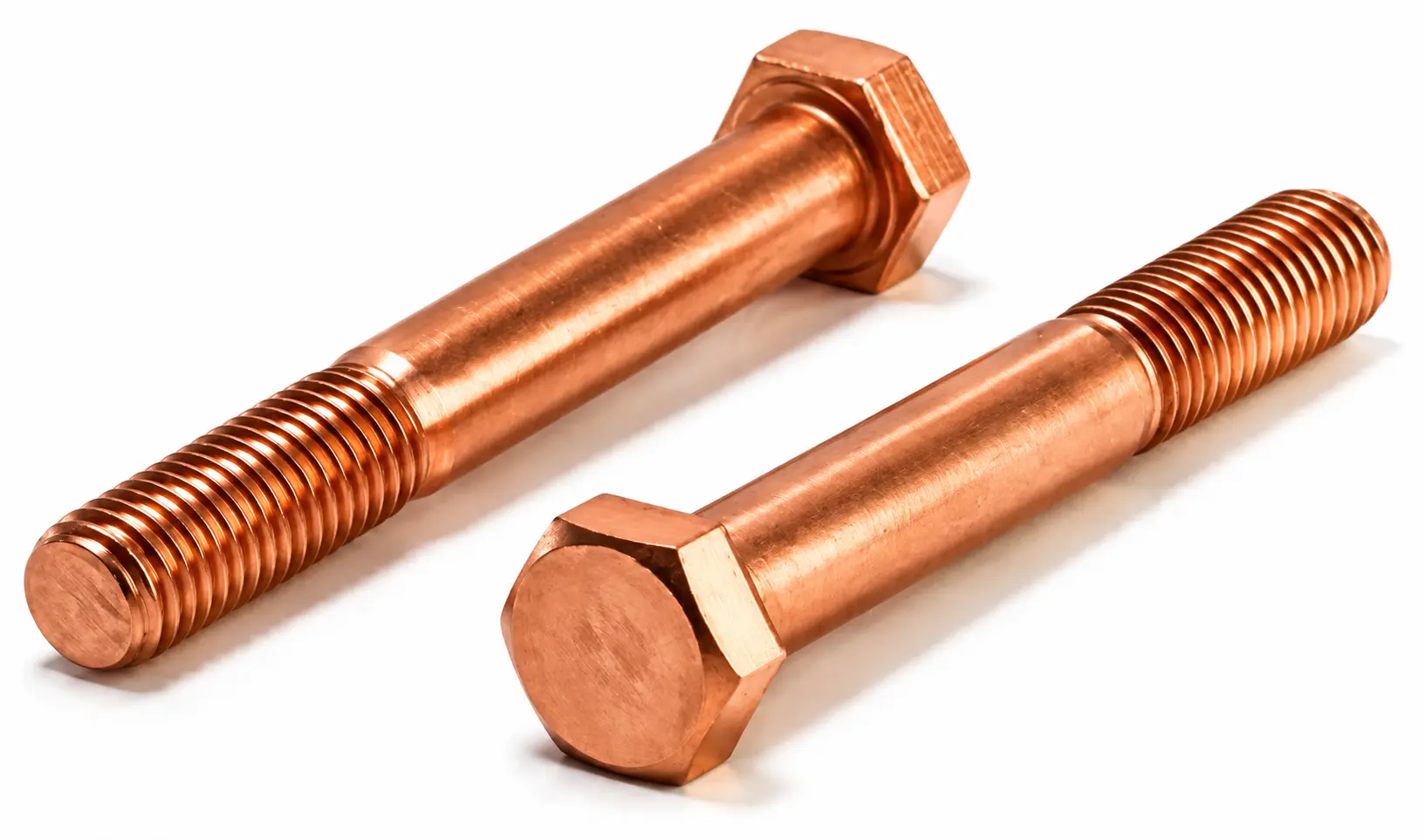
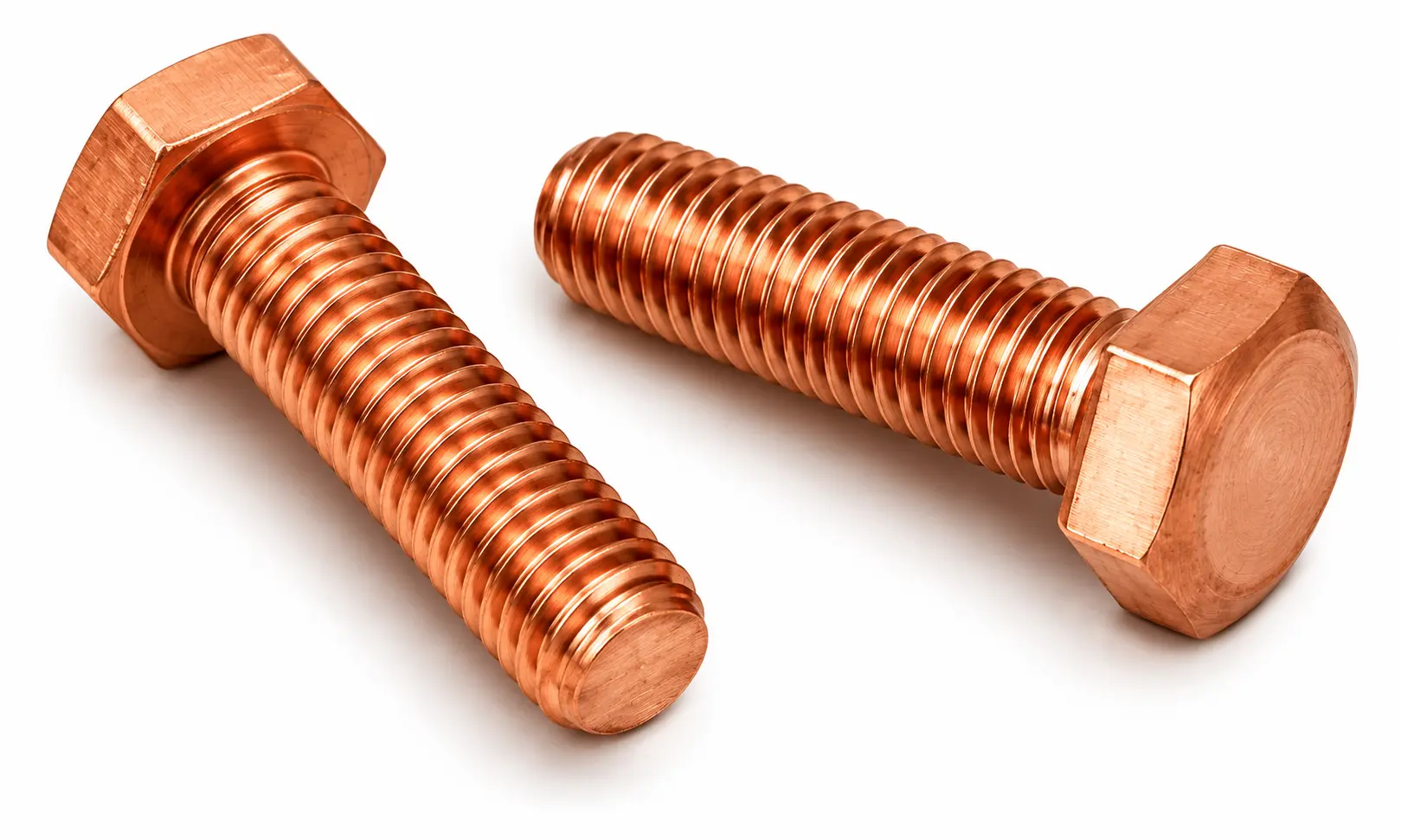
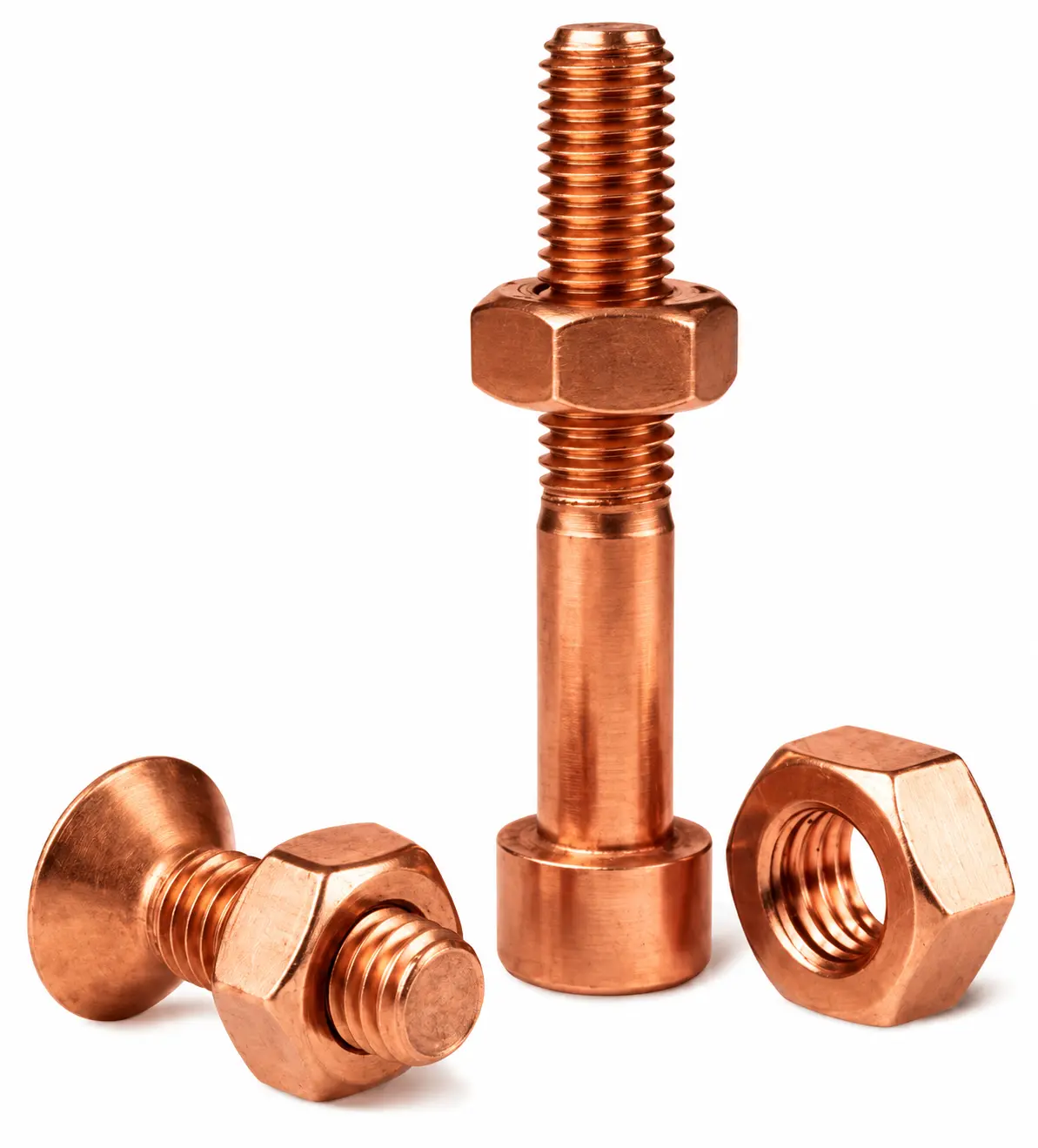
Copper C10200 Fasteners
Oxygen-Free Copper — 99.95% Cu

Copper C10200 Fasteners

Copper C10200 is oxygen-free copper — Cu-OF, CW008A, commonly called simply OF copper. ASTM B152 and B187 set copper at 99.95% minimum including silver, with oxygen held to 0.0010% (10 ppm) maximum. Like C10100 it is melted and cast under a protective atmosphere rather than deoxidised chemically, so the metal contains neither a cuprous oxide dispersion nor a residual deoxidant such as phosphorus.

That gives C10200 the two properties it is bought for: a minimum annealed conductivity of 100% IACS with 101% typical, and complete immunity to the hydrogen embrittlement that limits C11000. It is the practical choice wherever copper must be brazed in a reducing furnace atmosphere or run hot in hydrogen-bearing gas, and it is substantially cheaper and more widely available than C10100, whose electronic-grade purity is rarely the actual requirement. Exotic Alloy manufactures C10200 fasteners, busbar hardware and machined components to ASTM B152/B152M, B187/B187M and AMS 4602.

Request a Quote
Product Range

Copper C10200 Fasteners Available

Copper C10200 Hex Bolts
Copper C10200
Hex Bolts
Copper C10200 Heavy Hex Bolts
Copper C10200
Heavy Hex Bolts
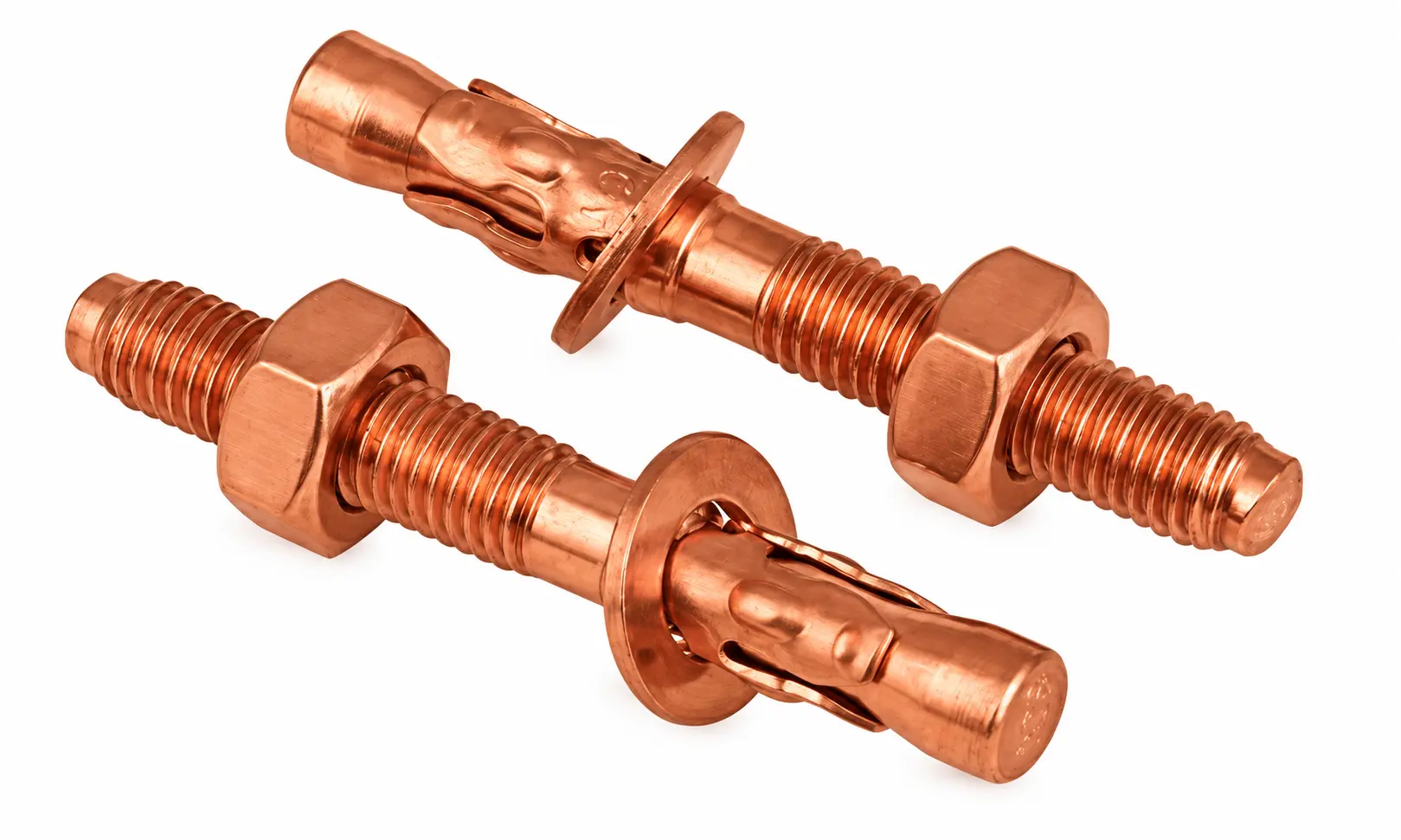
Copper C10200 Stud Bolts
Copper C10200
Stud Bolts
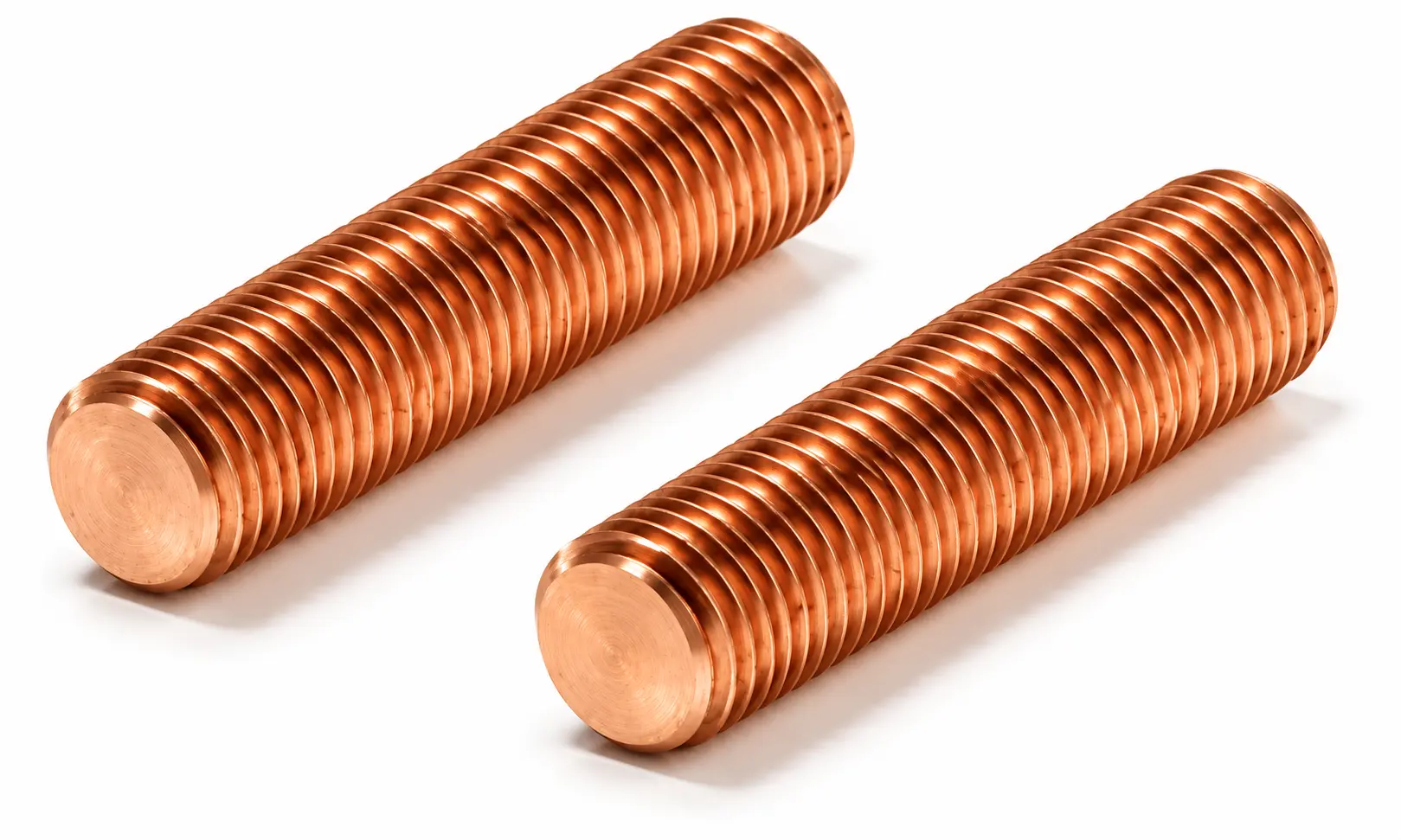
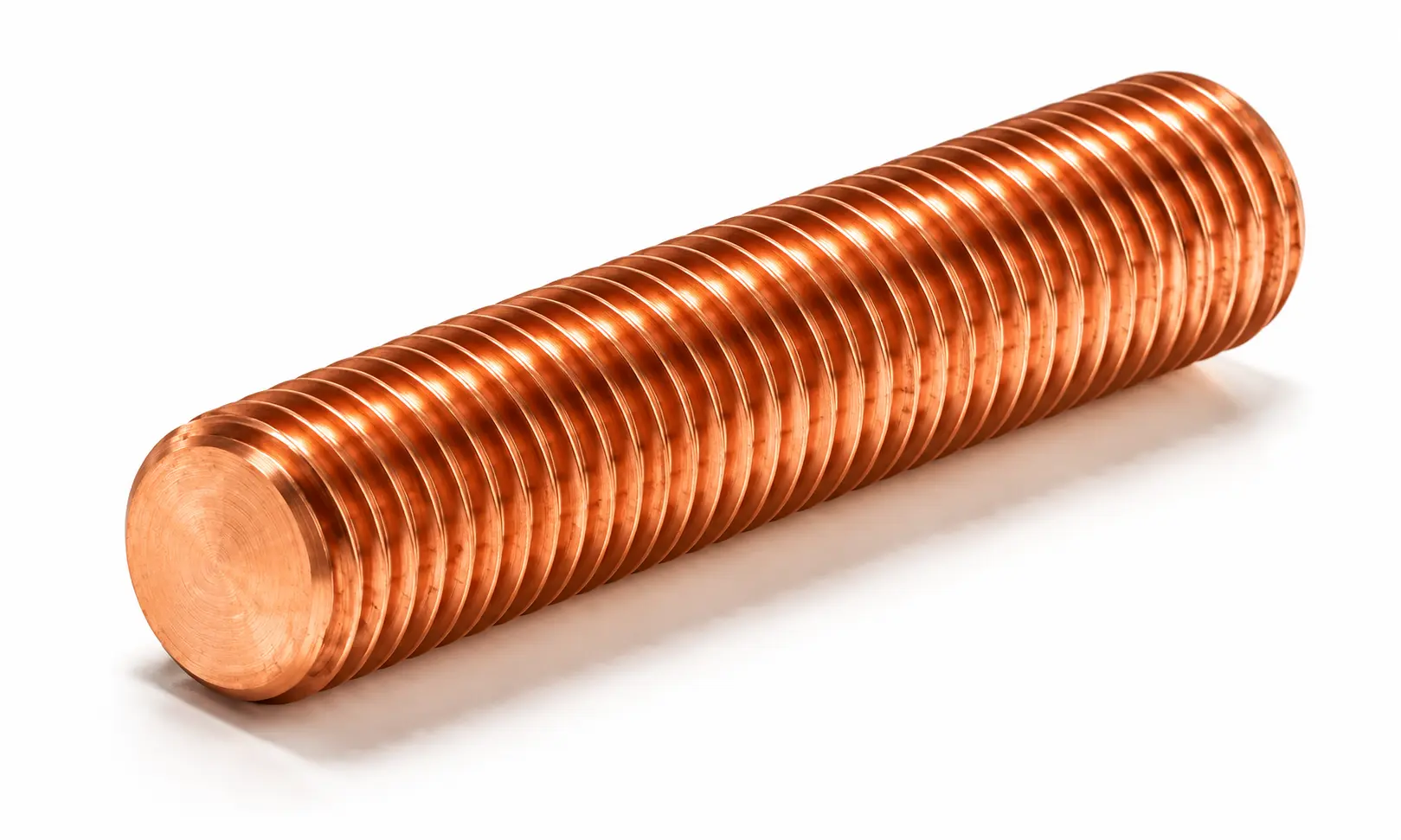
Copper C10200 Threaded Rods
Copper C10200
Threaded Rods
Copper C10200 Anchor Bolts
Copper C10200
Anchor Bolts
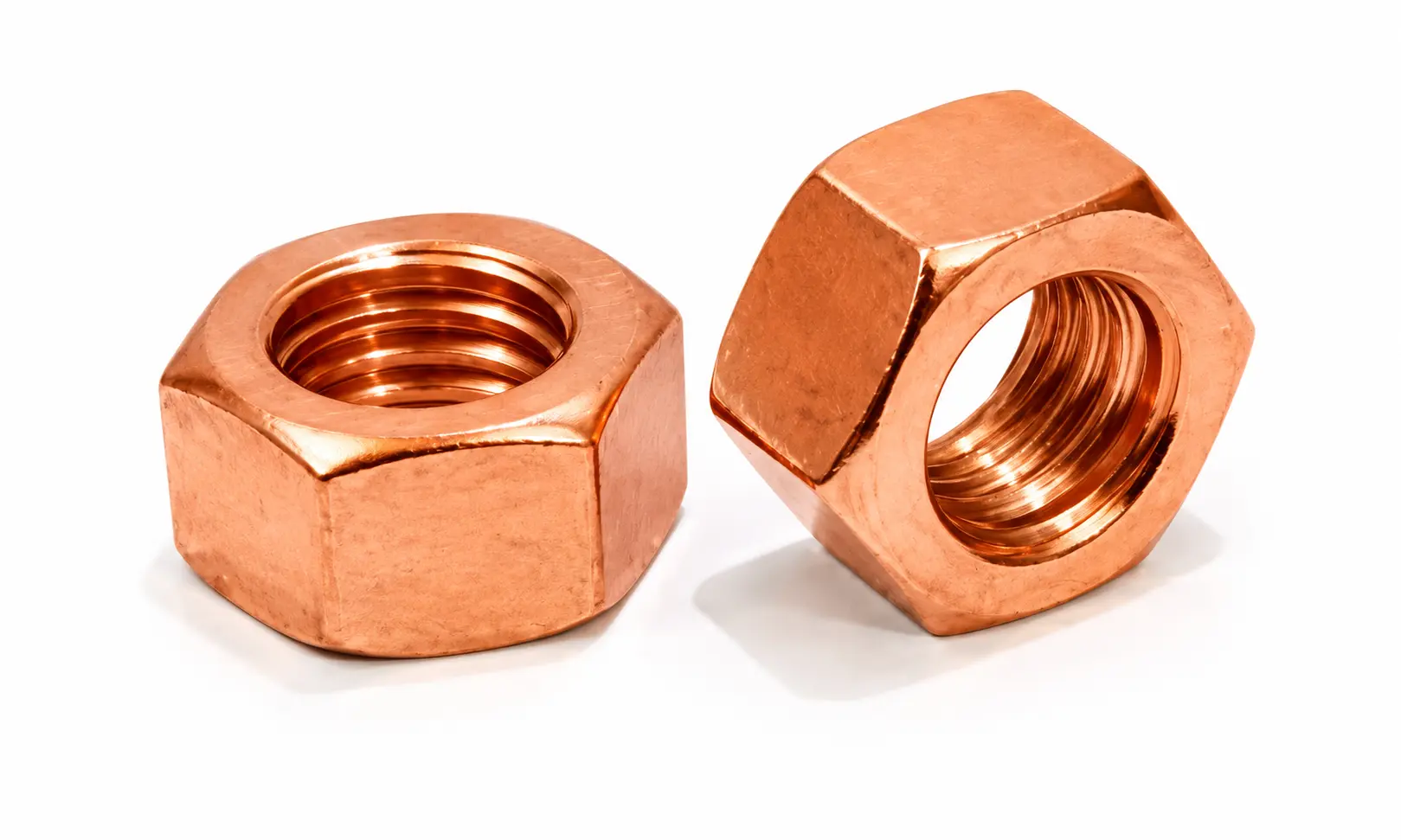
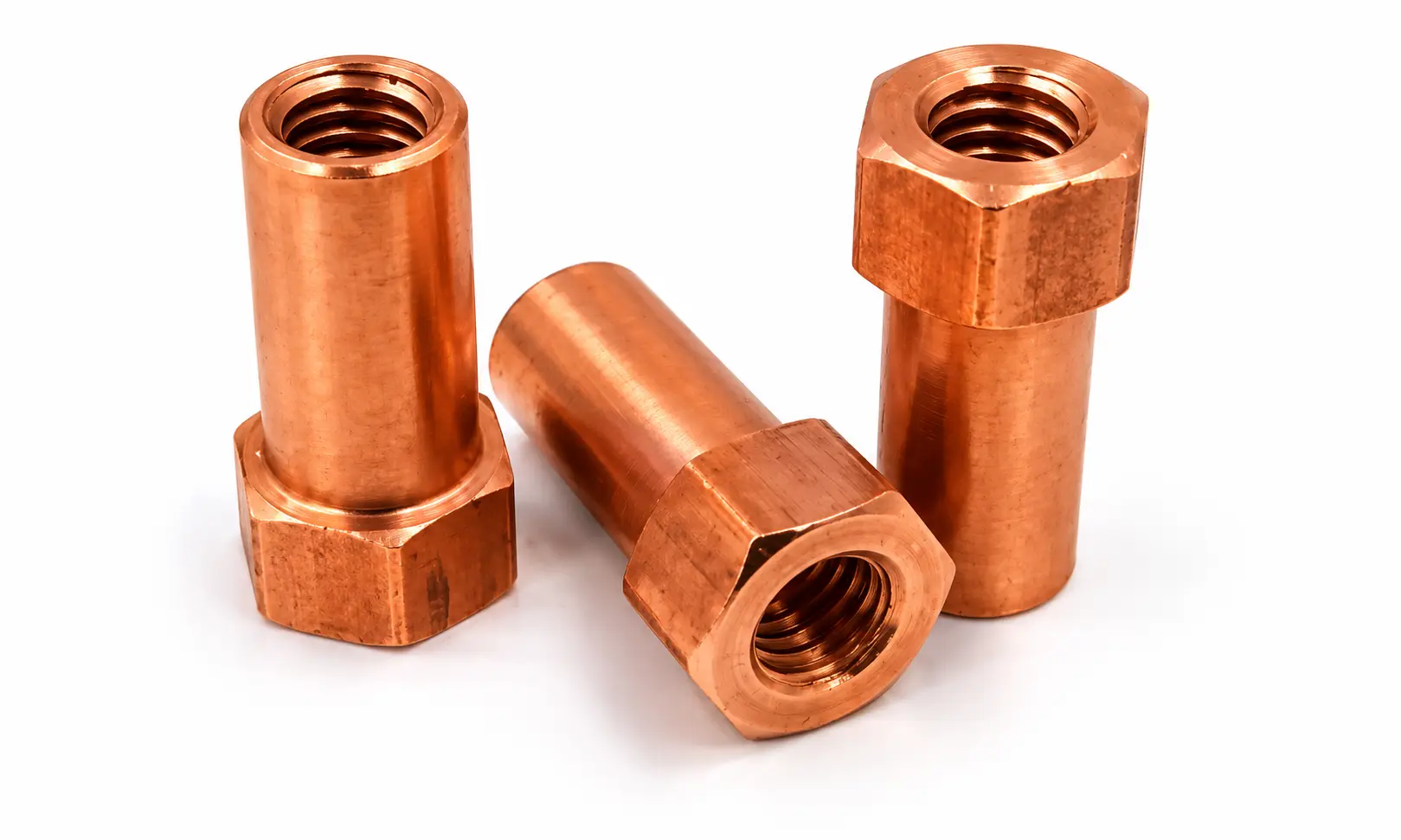
Copper C10200 Hex Nuts
Copper C10200
Hex Nuts
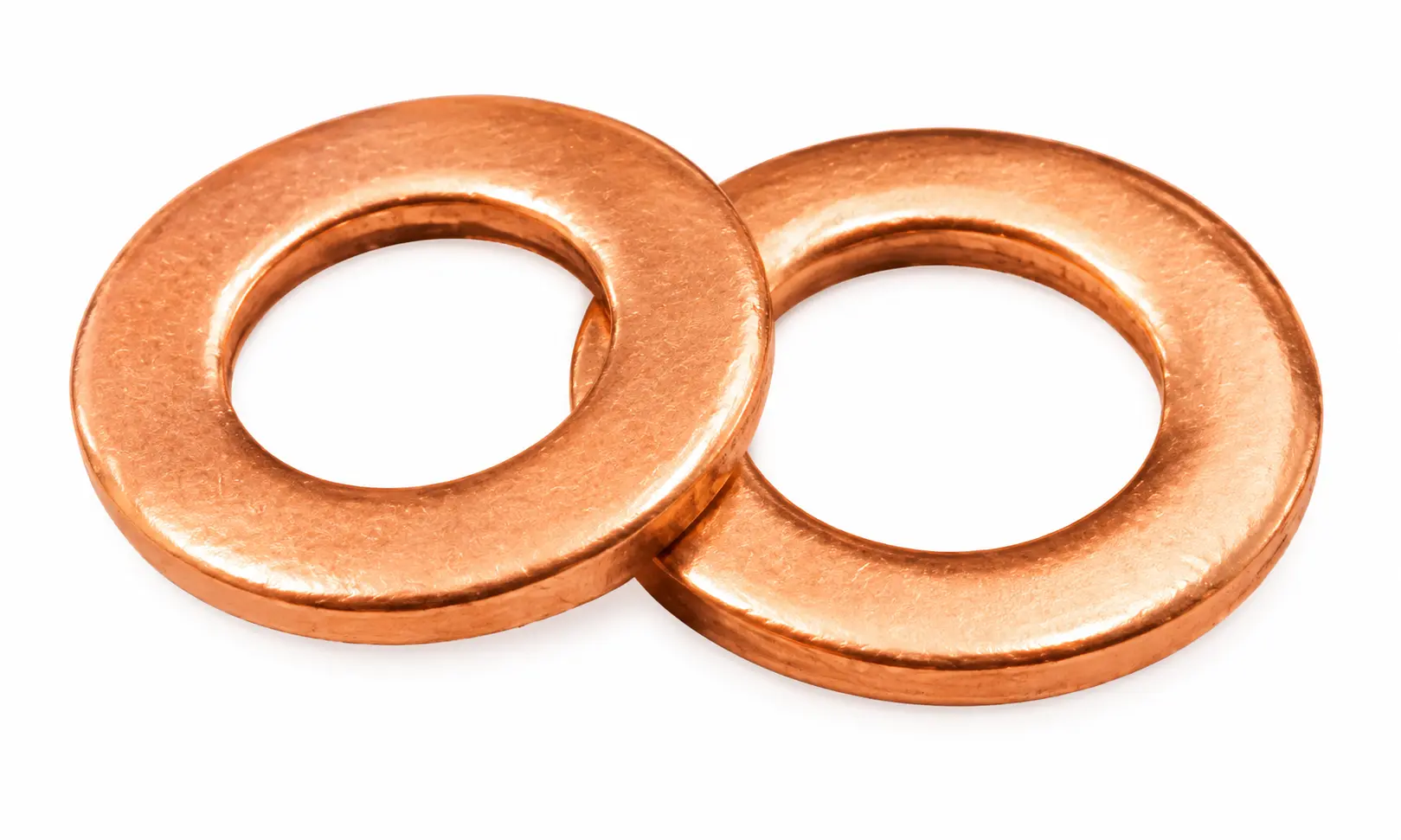
Copper C10200 Washers
Copper C10200
Washers
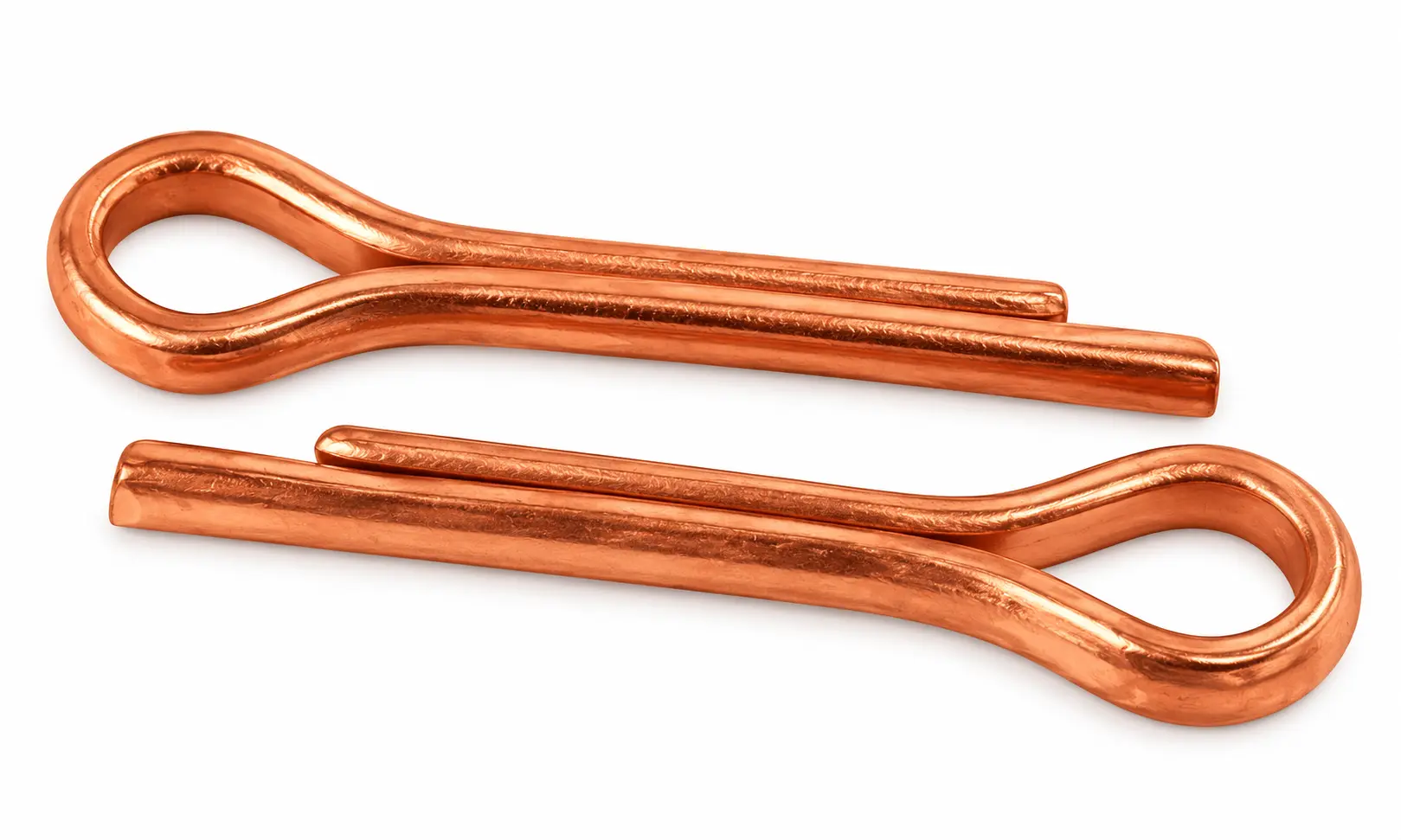
Copper C10200 Cotter Pins
Copper C10200
Cotter Pins
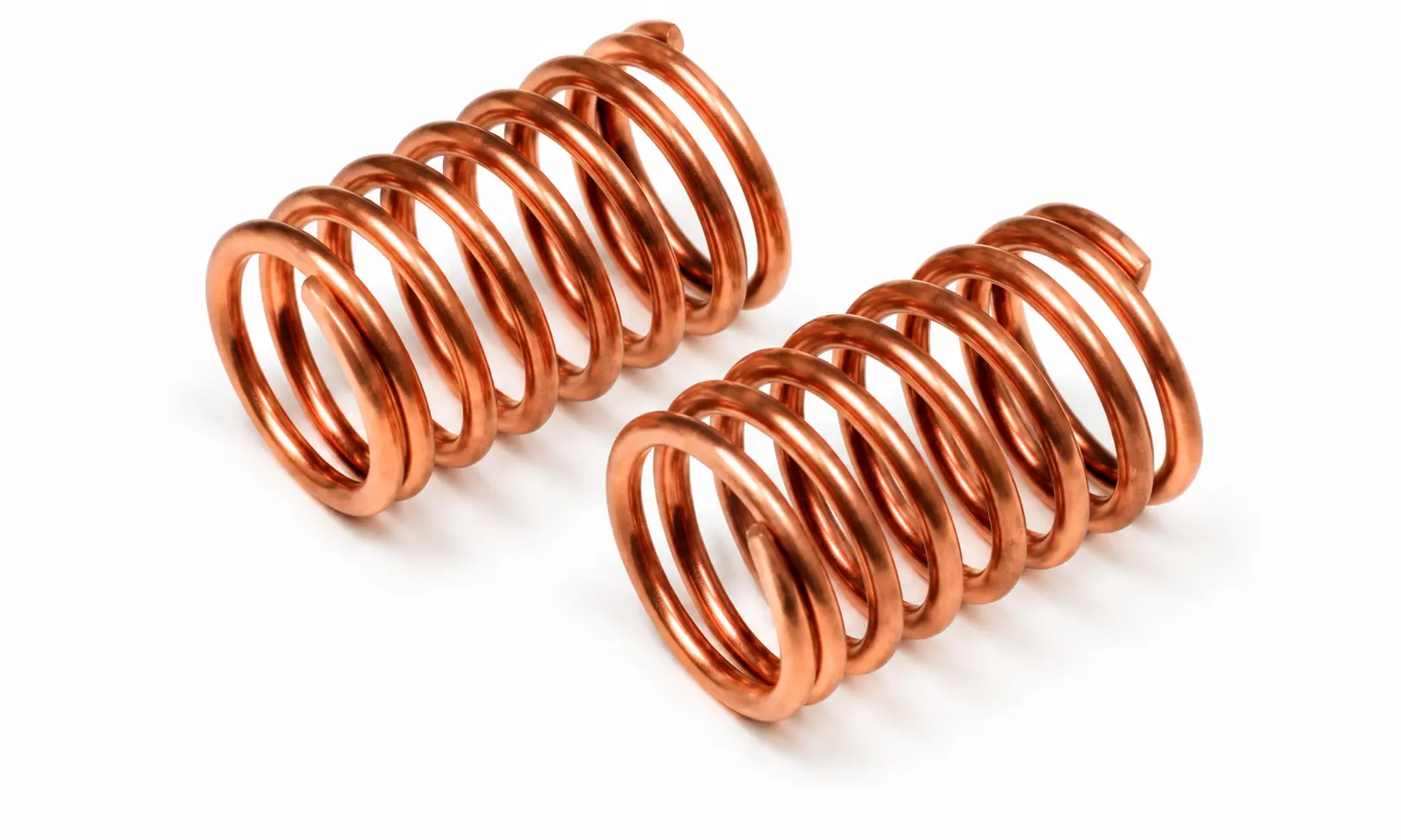
Copper C10200 Springs
Copper C10200
Springs
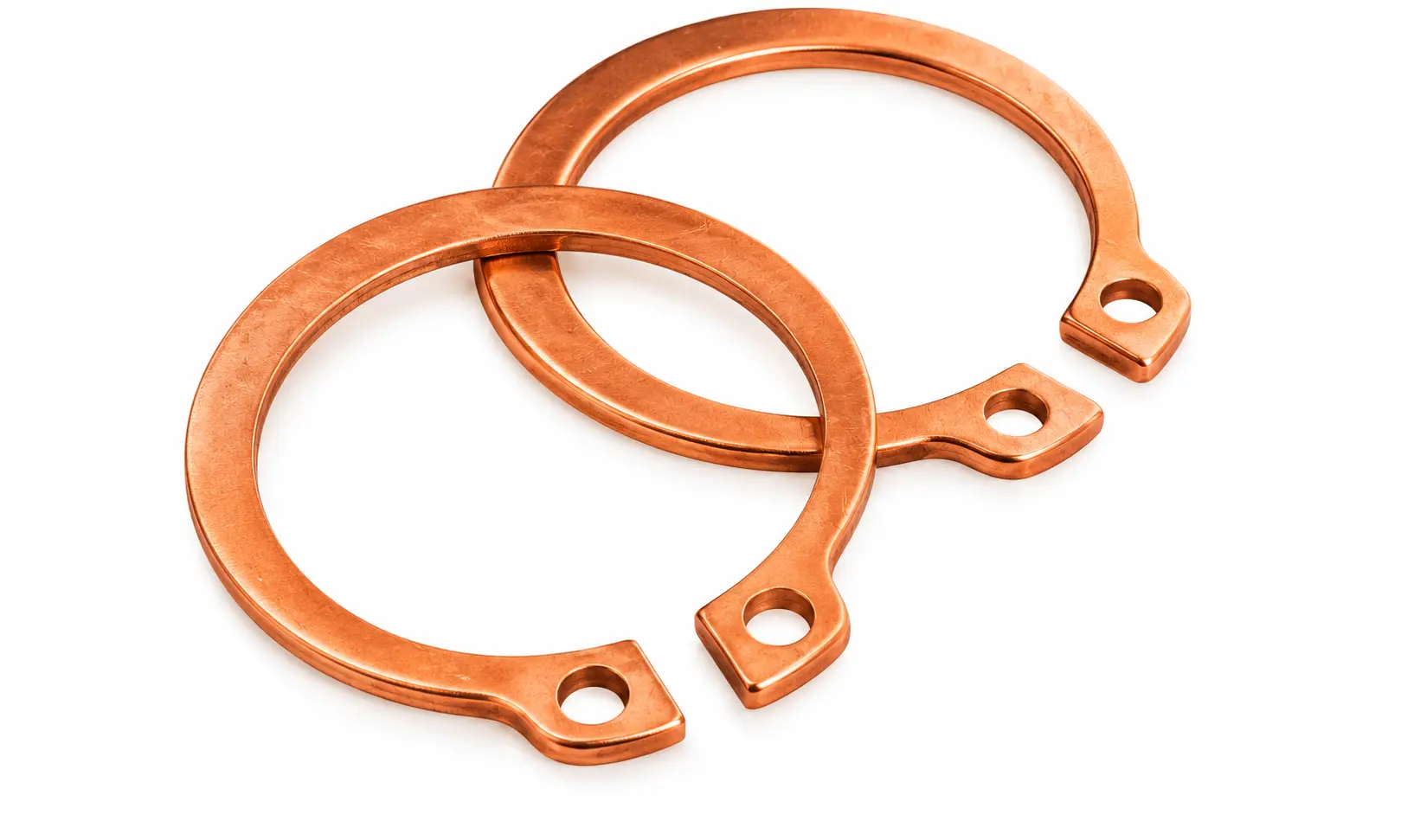
Copper C10200 Circlips
Copper C10200
Circlips
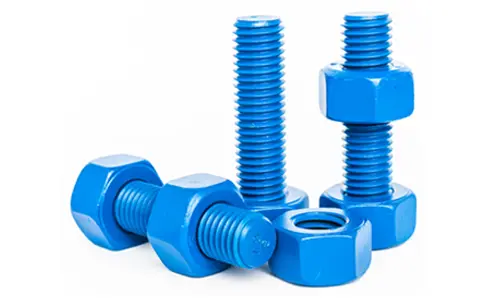
Copper C10200 Coated Fasteners
Copper C10200
Coated Fasteners
Copper C10200 Custom Spacers
Copper C10200
Custom Spacers
Technical Data

Copper C10200 Specifications

Chemical Composition — Copper C10200 (wt. %)
ElementMinimum %Maximum %
Copper (Cu), including silver99.95—
Oxygen (O)—0.0010
Mechanical Properties — Copper C10200
ConditionUTS (MPa)YS 0.5% EUL (MPa)Elongation (%)Hardness
Annealed, OS050 grain size (strip)221694540 HRF
Annealed, OS025 grain size (strip)234764545 HRF
1/8 Hard, H00 (strip)2481933060 HRF
1/4 Hard, H01 (strip)2622072570 HRF
1/2 Hard, H02 (strip)2902481440 HRB
Hard, H04 (strip)345310650 HRB
Spring, H08 (strip)379345460 HRB
Extra Spring, H10 (strip)393365462 HRB
Hard, H04 (rod, 6 mm)3793451060 HRB
Hard, H04 (rod, 25 mm)3313031647 HRB
Hard, H04 (rod, 50 mm)3102762045 HRB
Hard Drawn, H80 (tube)379345860 HRB
Hard, H04 (wire)379—1.5—
Spring, H08 (wire)455—1.5—
Physical Properties
Density8.94 g/cm³ (0.323 lb/in³)
Melting Point1083 °C (1981 °F)
Electrical Conductivity100% IACS minimum annealed; 101% typical
Electrical Resistivity1.71 µΩ·cm at 20 °C
Thermal Conductivity391 W/m·K at 20 °C
Coefficient of Thermal Expansion16.9 × 10⁻⁶ /°C (20–100 °C)
Specific Heat Capacity385 J/kg·K at 20 °C
Modulus of Elasticity117 GPa
Modulus of Rigidity44 GPa
Machinability Rating20 (C36000 = 100)
Magnetic ResponseNon-magnetic
Equivalent Grades & Standards
UNSEN / CEN DesignationWerkstoff Nr.Common Name
C10200 Cu-OF / CW008A 2.0040 (OF-Cu) OF Copper, Oxygen-Free Copper

Key Specifications: ASTM B152/B152M and ASME SB152 (Sheet, Strip, Plate & Rolled Bar) / ASTM B187/B187M and ASME SB187 (Bus Bar, Rod & Shapes) / ASTM B224 (Classification of Coppers) / ASTM B451 (Foil for Printed Circuits) / ASME B16.22 (Solder-Joint Pressure Fittings) / AMS 4602 (Bars, Rods and Shapes, Hard Temper) / SAE J461 and J463 (Wrought Copper and Copper Alloys) / ASTM B577 (Hydrogen Embrittlement Susceptibility) / Federal QQ-B-650 (Brazing Alloy).

Every copper order ships with EN 10204 3.1 certification giving the heat analysis, the temper, the mechanical test results for that temper and section, and the conductivity where it is a specified property. Positive material identification, electrical conductivity testing to ASTM B193, grain-size verification on annealed tempers and ASTM B577 hydrogen-embrittlement testing on tough-pitch material can all be added at order stage.

Machining: the high-conductivity coppers machine badly, and this is a real cost and lead-time factor rather than a footnote. On the CDA scale, where free-cutting brass C36000 is 100, these coppers rate 20. Copper is soft, extremely ductile and tough, so it does not break a chip: it produces long continuous gummy swarf that wraps the tool and the workpiece, it smears and built-up edge forms readily, and it tears rather than shears to leave a poor finish and oversize bores. Practical measures are high rake and generous relief angles, sharp tools with a keen honed edge, high surface speed with a light feed, free-cutting geometry with positive chip control, and copious lubricant rather than plain coolant. Where significant machining is unavoidable — turned terminals, machined nuts, cross-drilled or slotted parts — the right answer is usually to change grade: C14500 tellurium copper machines at a rating of 85 while retaining 93% IACS conductivity.

Forming: the trade-off runs the other way. Capacity for being cold worked and for being hot formed are both rated Excellent, and the forgeability rating is 65. Copper cold heads, upsets, rolls threads, spins, deep draws and bends better than almost any other engineering metal, which is why copper fasteners are made by forming rather than cutting wherever the geometry allows.

Forming: capacity for cold working and for hot forming are both rated Excellent, with a forgeability rating of 65. Cold heading, upsetting, thread rolling, bending, spinning and deep drawing are all straightforward from an annealed or light temper. Hot working is carried out in the approximately 760–870°C range.

Heat treatment: this grade is not hardenable by heat treatment. Annealing to restore ductility after cold work is carried out at approximately 370–650°C, with the temperature and time chosen to give the grain size the OS temper calls for — a coarser grain anneals softer and forms better but gives a rougher surface after forming, which is why the annealed tempers are specified by grain size. A stress-relief anneal at the low end of that range removes residual stress without losing much of the cold-worked strength, and is worth specifying where ammonia stress-corrosion cracking is a risk. Because C10200 contains no cuprous oxide, annealing and brazing atmosphere are unrestricted: hydrogen and cracked-ammonia furnace cycles that would embrittle C11000 are entirely safe on this grade.

All of the coppers share the same broad corrosion behaviour, which is excellent in the environments copper is actually bought for. Copper resists fresh and potable water, atmospheric exposure — where it develops the familiar adherent patina and then corrodes at a negligible rate, which is why copper roofing lasts a century — non-oxidising acids free of dissolved oxygen, neutral and alkaline salt solutions, and seawater at moderate flow velocity. It is biostatic, which is the basis of its use in potable plumbing and in antimicrobial touch surfaces.

Its limits are equally consistent. Copper is attacked by oxidising acids — nitric acid rapidly, and sulfuric or hydrochloric acid as soon as oxygen or an oxidising contaminant such as ferric iron is present. It is attacked by oxidising salts, by sulfides and by hydrogen sulfide, which is the limit on copper in sour service and in polluted harbour water. It suffers erosion-corrosion and impingement attack in fast or aerated water — conventionally about 1.2 m/s is the design ceiling for copper tube in seawater, well below what a copper-nickel will take — and it will pit under deposits. Elevated-temperature oxidation in air becomes significant above roughly 200°C.

This grade is immune to the hydrogen embrittlement that limits tough-pitch copper. Because there is no cuprous oxide dispersion in the metal, there is nothing for diffusing hydrogen to reduce, and so no steam generated at the grain boundaries and no intergranular cracking. That immunity is the whole commercial reason for the grade. It can be brazed in a hydrogen or cracked-ammonia furnace, torch-brazed, and run in hydrogen-bearing atmospheres at temperature without the loss of ductility that would wreck C11000 under the same conditions.

Ammonia and amines cause stress-corrosion cracking in copper, and this is the one corrosion mechanism that will fail a copper fastener without warning. A copper component carrying residual or applied tensile stress — and a tightened bolt is exactly that — will crack in moist ammonia, in ammonium compounds, and in the amine corrosion inhibitors used in boiler and steam systems. Nitrites and mercury compounds do the same. The practical consequences are that copper fasteners should not be used in refrigeration plant handling ammonia, in fertiliser service, in amine-treated condensate systems, or anywhere animal waste or decaying organic matter concentrates ammonia; and that where copper has been cold worked and must sit in a borderline environment, a stress-relief anneal to remove residual stress is worthwhile even though it costs some strength.

Copper is galvanically noble, so it damages what it is bolted into. Copper sits well above carbon steel, cast iron, aluminium, zinc and galvanised coatings on the galvanic series. A copper fastener in an aluminium or steel structure will survive, but it will drive rapid corrosion of the surrounding metal, and the small-cathode-is-safe rule works against you here: a small copper bolt in a large aluminium plate is the less damaging geometry, but a copper bolt clamping a thin aluminium or galvanised sheet will eat through it. Copper must be isolated from aluminium and from galvanised steel with insulating washers and sleeves or a barrier coating, which is why aluminium-to-copper electrical connections use bimetallic lugs rather than a direct bolted lap. Copper is, conversely, compatible with the other coppers and bronzes, with the copper-nickels and with Monel.

With copper, temper — not heat treatment — sets the strength. None of the coppers on this hub is hardenable by heat treatment; there is no quench-and-temper and no precipitation cycle to call on. Strength comes almost entirely from cold work, and the temper designation is therefore the single most important thing on the order after the UNS number. The sequence runs from the annealed tempers (O60 soft anneal, or the OS grain-size tempers such as OS025 and OS050, which specify the annealed grain size rather than a strength) up through H00 one-eighth hard, H01 quarter hard, H02 half hard, H04 hard, H06 extra hard, H08 spring and H10 extra spring. Across that range the tensile strength of a plain copper roughly doubles — from about 220 MPa annealed to about 390 MPa at H10 — while elongation collapses from 45–50% to around 4%. A hard temper bought for strength is therefore also a temper that will not take further forming, and cold heading a fastener head is itself cold work: heads are normally formed in an annealed or light temper and the shank drawn to the specified temper, or the part is formed and then the whole fastener left in the as-formed condition. Tell Exotic Alloy the temper you need, or tell us the property you need and we will specify it.

Copper fasteners are not chosen for load. This is the most common specification error in the family, so it is worth stating plainly: even at hard temper a copper bolt develops roughly 330–380 MPa tensile, against 830 MPa for an ordinary ASTM A325 structural bolt and 1040 MPa for a property class 10.9. Copper is specified when the fastener has to carry current, conduct heat, resist a corrosive environment, stay non-magnetic or avoid sparking — and the structural duty is light or carried by something else. Where a copper-coloured fastener is wanted at real strength the answer is a copper alloy — silicon bronze, aluminium bronze or beryllium copper — not one of the high-conductivity coppers here.

Stress relaxation is the companion problem. Copper creeps at modest temperature and under sustained load, so a bolted copper joint loses preload over time; the softer the temper and the warmer the joint, the faster it goes. Electrical connections in copper are therefore designed either to be re-torqued on a schedule, or to use a spring element (a Belleville or conical washer) that takes up the relaxation, or to use C19400 or a copper alloy whose stress-relaxation resistance is far better than that of a pure copper. A copper busbar bolt torqued once and forgotten is a loose, hot joint later.

How this family divides. The seven coppers Exotic Alloy stocks are not interchangeable grades at different price points; each exists to solve one specific problem, and the trade-off is almost always conductivity against something else. C10100 and C10200 are the oxygen-free coppers — buy them for immunity to hydrogen embrittlement and for the highest conductivity, C10100 when electronic-grade purity and vacuum-tightness genuinely matter and C10200 for everything else. C11000 ETP is the workhorse: the cheapest and most available copper, the standard for busbar and electrical hardware, and the only one in the group covered for bolts and nuts by ASTM F468 and F467 — but it is the grade that embrittles in hydrogen. C12000 DLP and C12200 DHP are the phosphorus-deoxidised coppers, bought for weldability and brazeability; C12000 keeps 98% IACS with a low phosphorus residual, while C12200 trades conductivity down to 85% IACS for the best weldability in the family and is the standard plumbing and HVAC copper. C14500 tellurium copper is the free-machining grade — the only sensible choice for a turned or heavily machined copper part. C19400 is the odd one out and the strongest: a copper-iron alloy that reaches 550 MPa and resists stress relaxation, at 65% IACS.
Key Characteristics

  • 99.95% copper minimum including silver, with oxygen below 10 ppm.
  • 100% IACS minimum annealed conductivity — 101% typical.
  • Immune to hydrogen embrittlement; brazeable in reducing furnace atmospheres.
  • No phosphorus or other deoxidant residue, so conductivity is fully retained.
  • Thermal conductivity of 391 W/m·K.
  • Excellent cold formability for heading, upsetting and thread rolling.
  • The practical oxygen-free grade — C10100 purity is rarely the real requirement.
  • Non-magnetic, non-sparking and biostatic.

Typical Applications

  • Busbar, electrical connectors, terminals and earthing hardware.
  • Brazed and vacuum-brazed assemblies in hydrogen furnace atmospheres.
  • Waveguides, coaxial components and RF hardware.
  • Heat sinks, cold plates and thermal management components.
  • Transformer and motor windings, commutator segments and slip rings.
  • Cryogenic and superconducting assemblies.
  • Anodes, electroplating hardware and electrochemical cell internals.