+91 97734 41022 sales@exoticalloy.com
Material Specification

Nickel Silver C75200

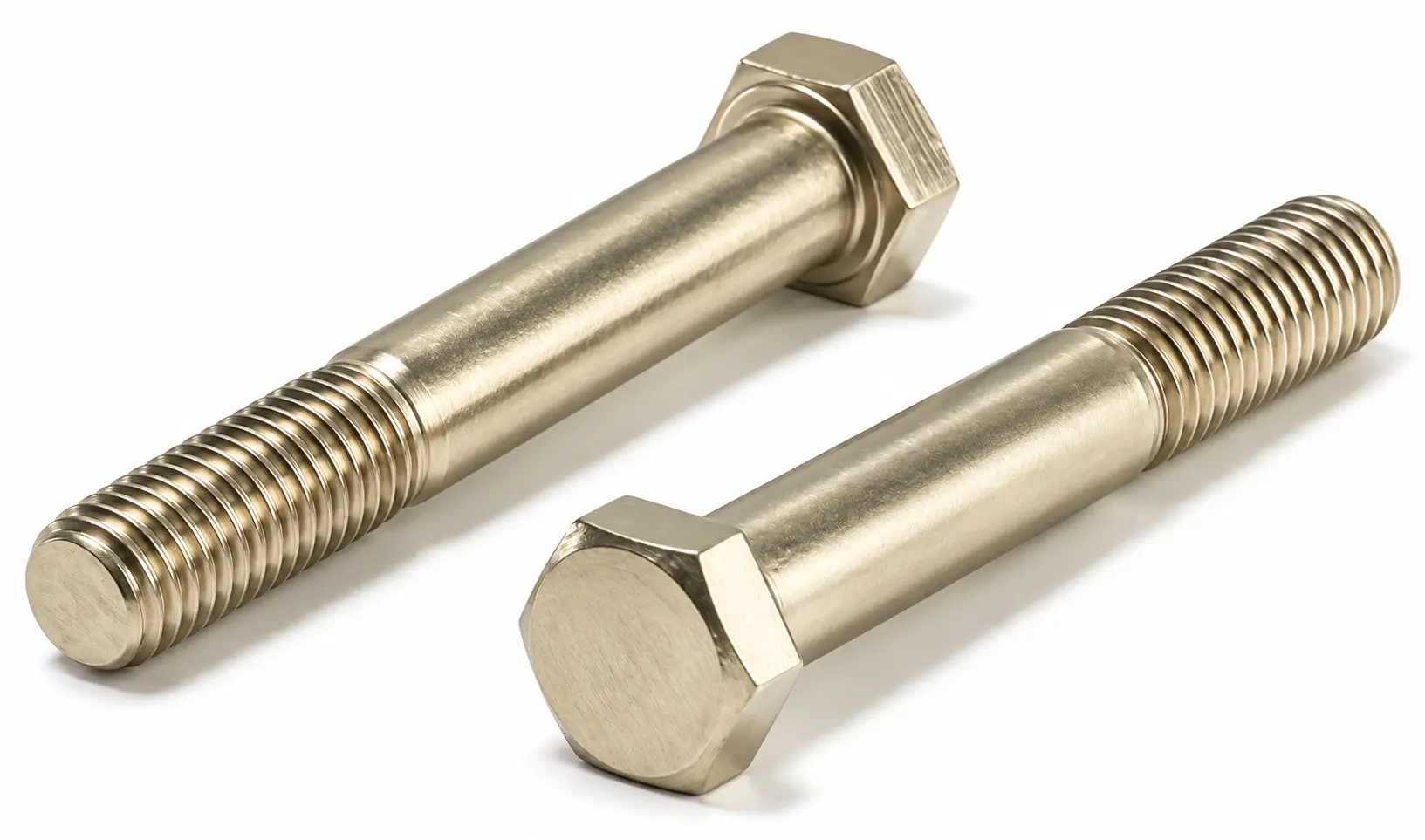
Nickel Silver C75200 Fasteners
65-18 Nickel Silver — The Classic German Silver

Nickel Silver C75200 Fasteners

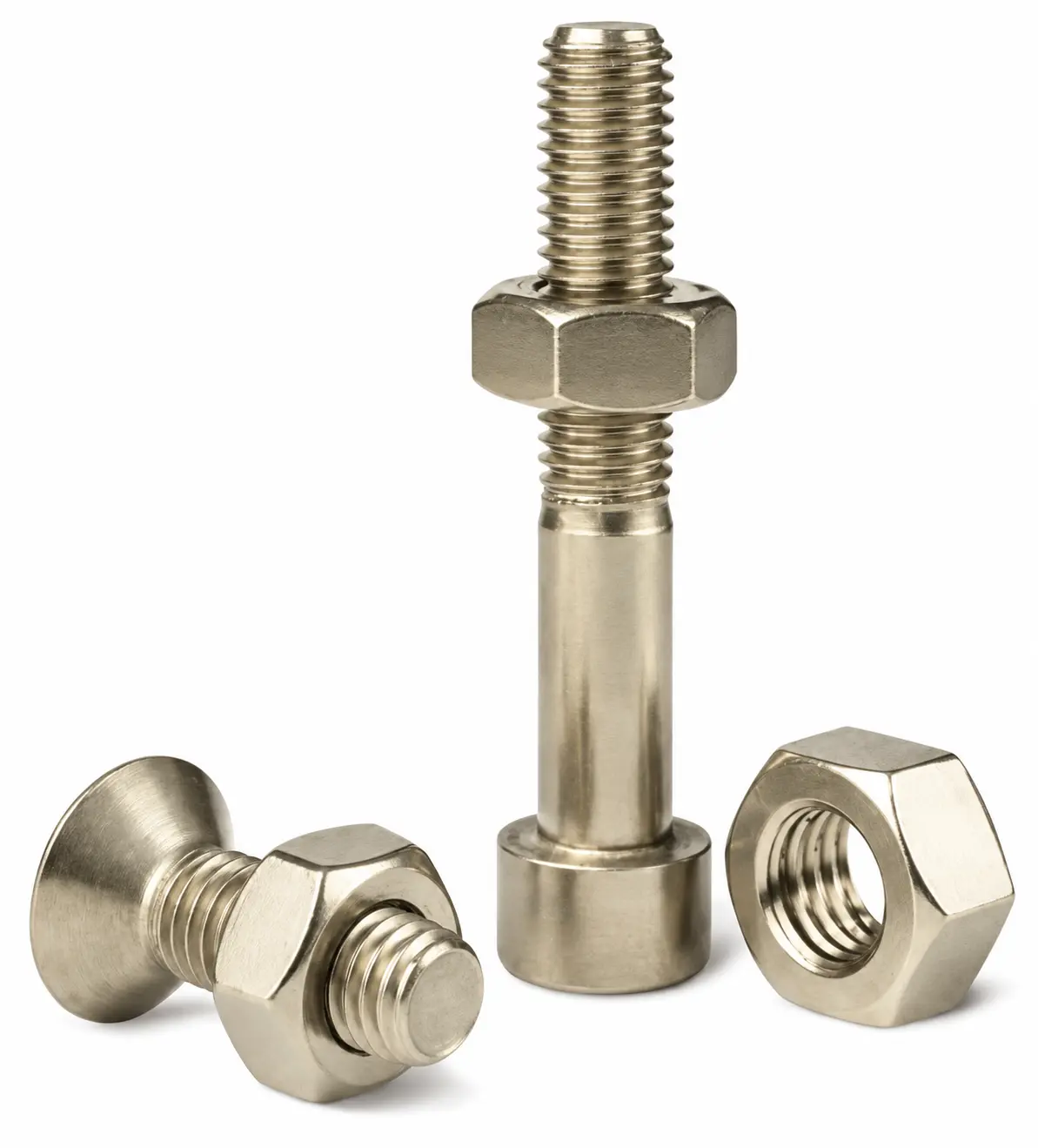
Nickel Silver C75200 is the classic nickel silver — the 65-18 composition that most people mean by German silver, alpaca or maillechort. Copper is 63.0–66.5%, nickel 16.5–19.5% and the balance zinc. At 18% nickel the alloy reads as convincingly silver-white, and it is the industry reference against which the other grades' colour is judged. It contains no silver at all.

C75200 is the grade behind EPNS cutlery — electroplated nickel silver, where the silver-white base means a worn plating does not expose an obviously different metal — and behind a great deal of musical instrument work, where its combination of colour, formability and acoustic character suits flute bodies, saxophone and clarinet keywork and brass instrument slides. It is covered by ASTM B122, B151 and B206 in flat, rod and wire form, runs from 386 MPa annealed to 710 MPa as hard-drawn wire, and cold forms excellently. Exotic Alloy supplies C75200 strip, rod, wire and formed components.

Request a Quote
Product Range

Nickel Silver C75200 Fasteners Available

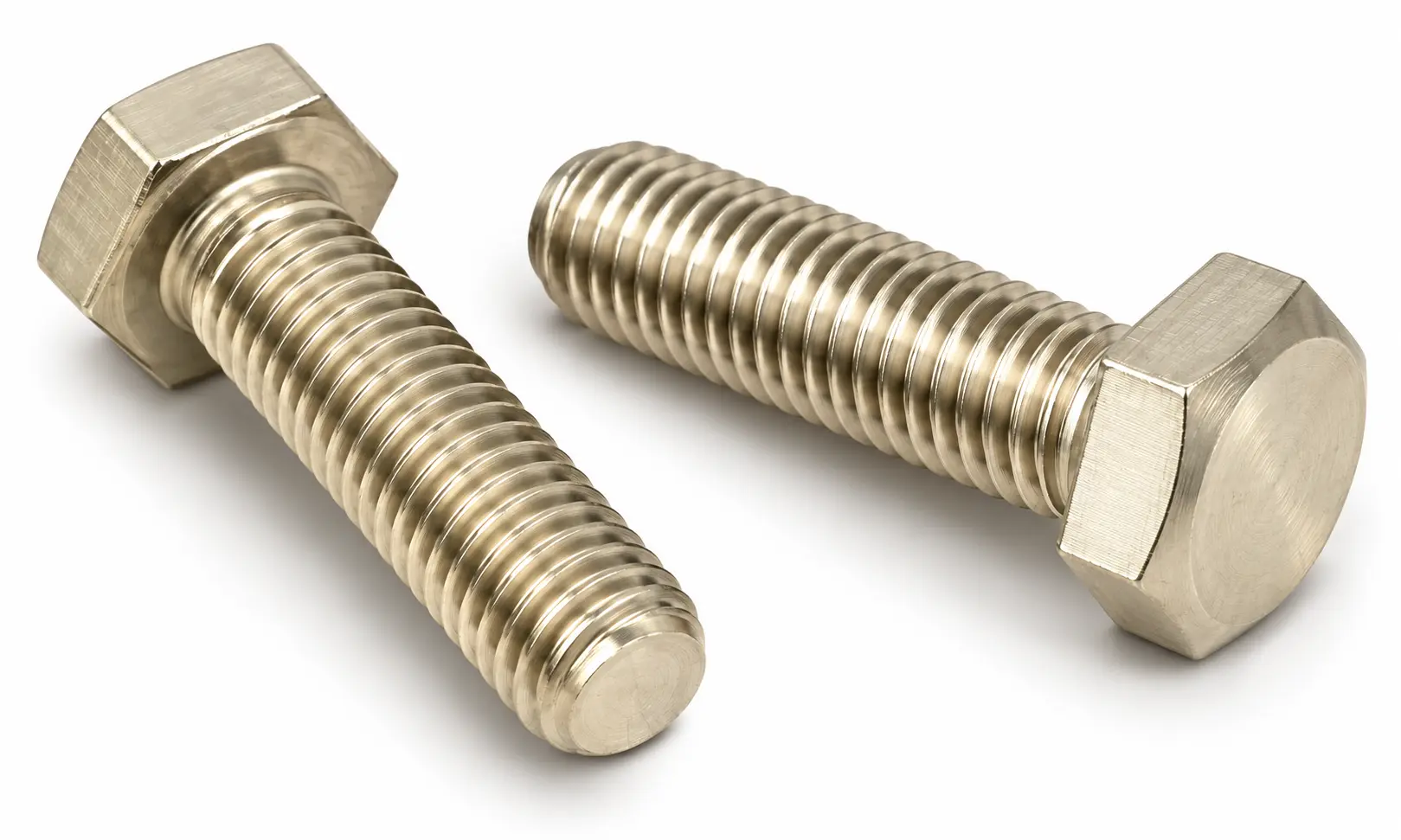
Nickel Silver C75200 Hex Bolts
Nickel Silver C75200
Hex Bolts
Nickel Silver C75200 Heavy Hex Bolts
Nickel Silver C75200
Heavy Hex Bolts
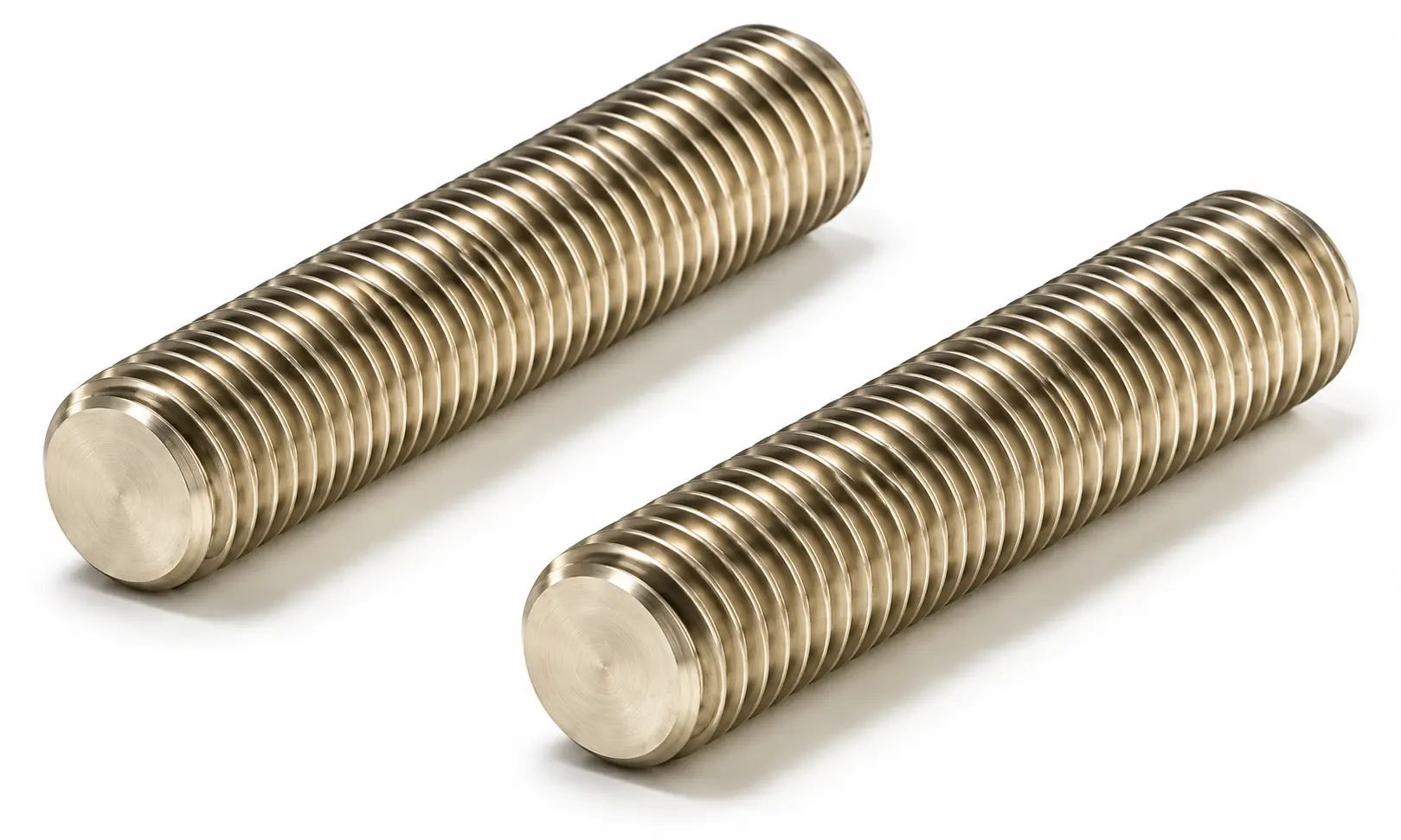
Nickel Silver C75200 Stud Bolts
Nickel Silver C75200
Stud Bolts
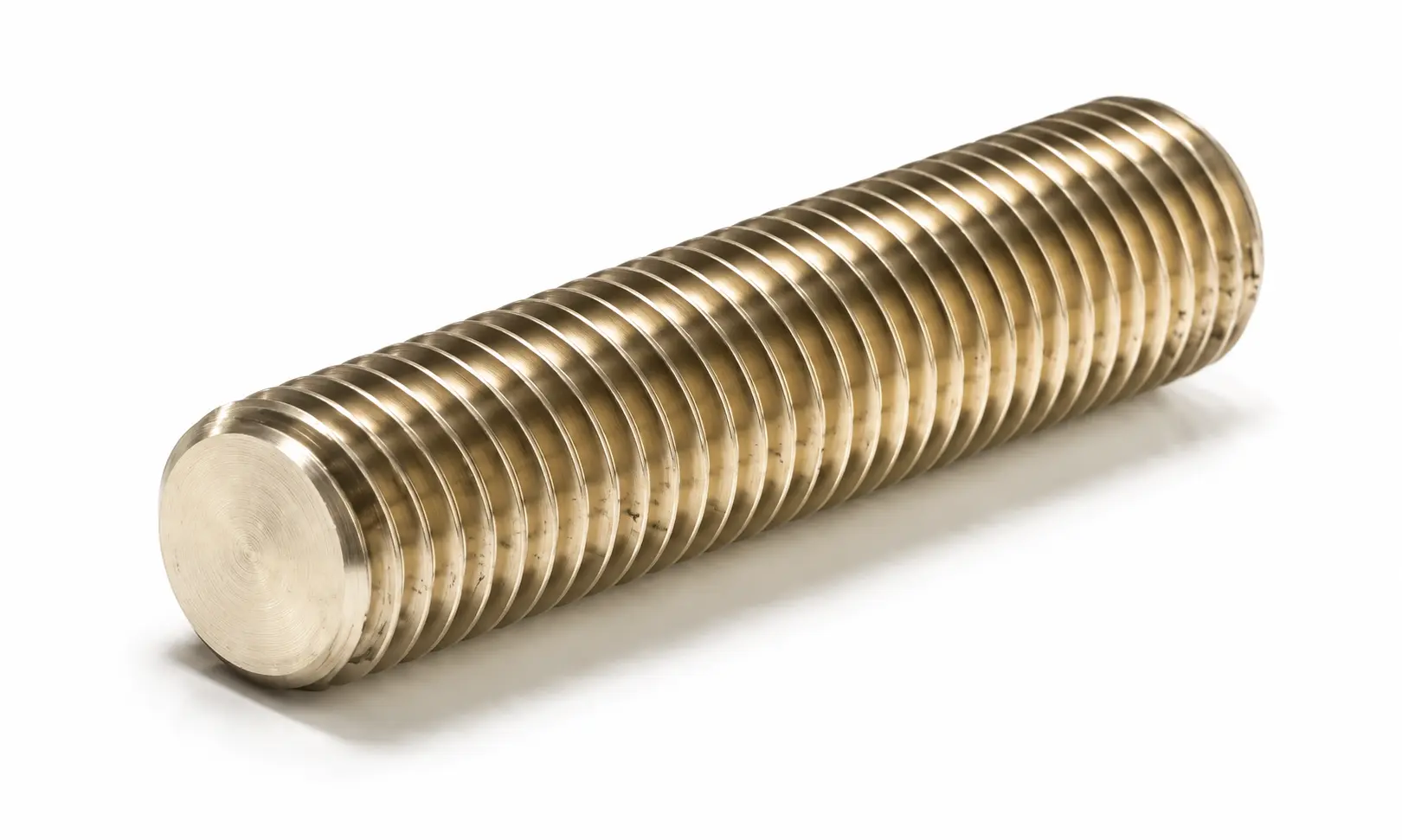
Nickel Silver C75200 Threaded Rods
Nickel Silver C75200
Threaded Rods
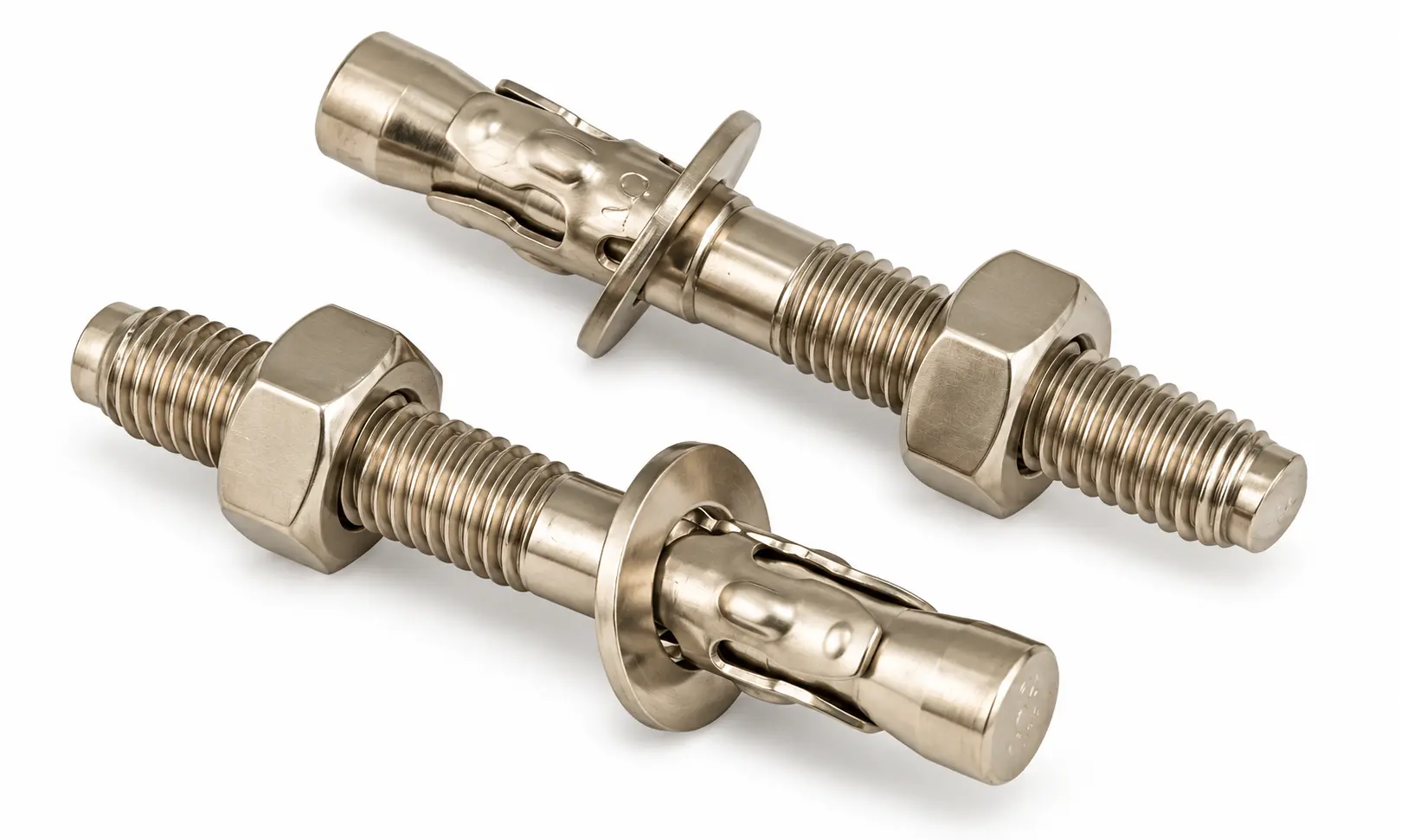
Nickel Silver C75200 Anchor Bolts
Nickel Silver C75200
Anchor Bolts
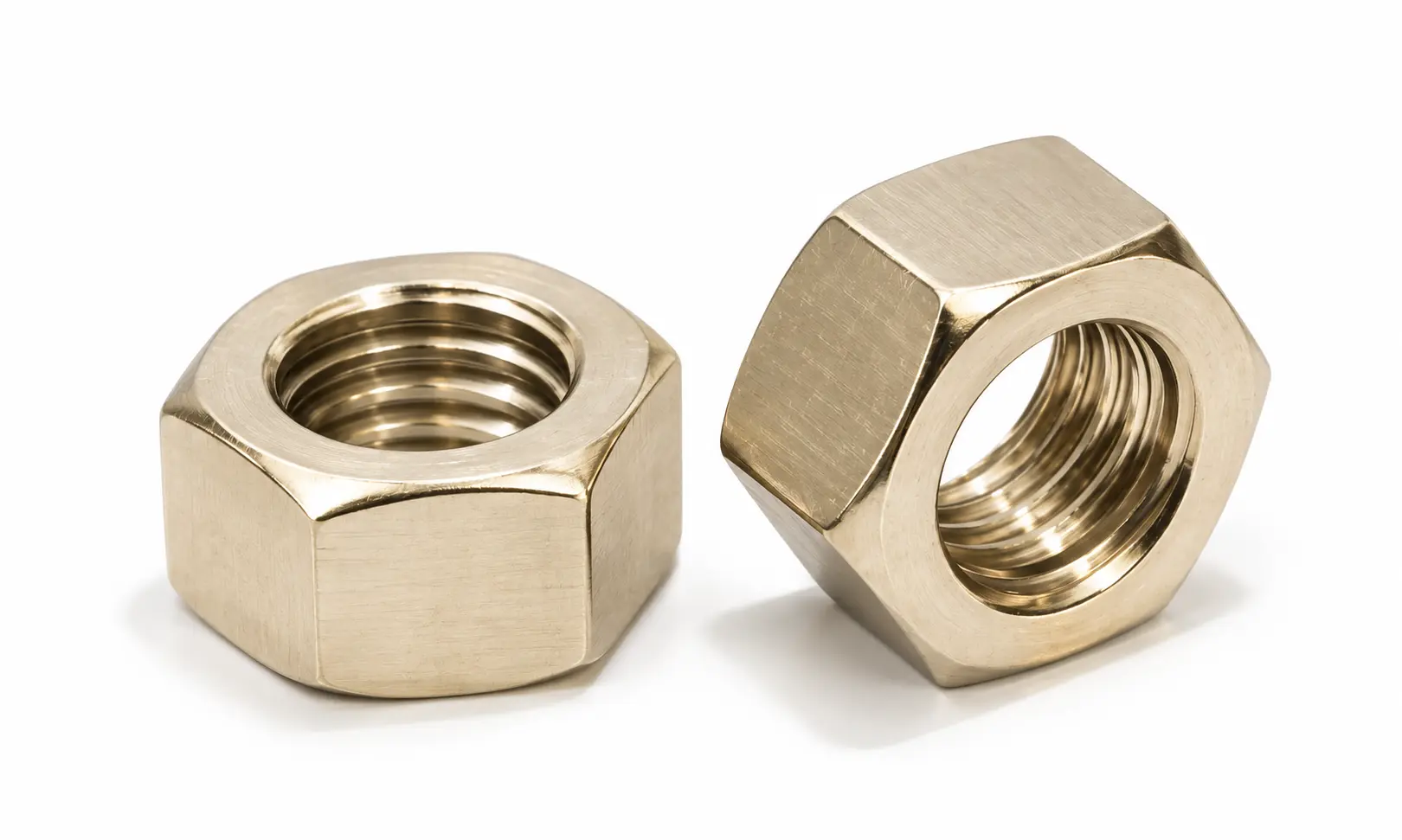
Nickel Silver C75200 Hex Nuts
Nickel Silver C75200
Hex Nuts
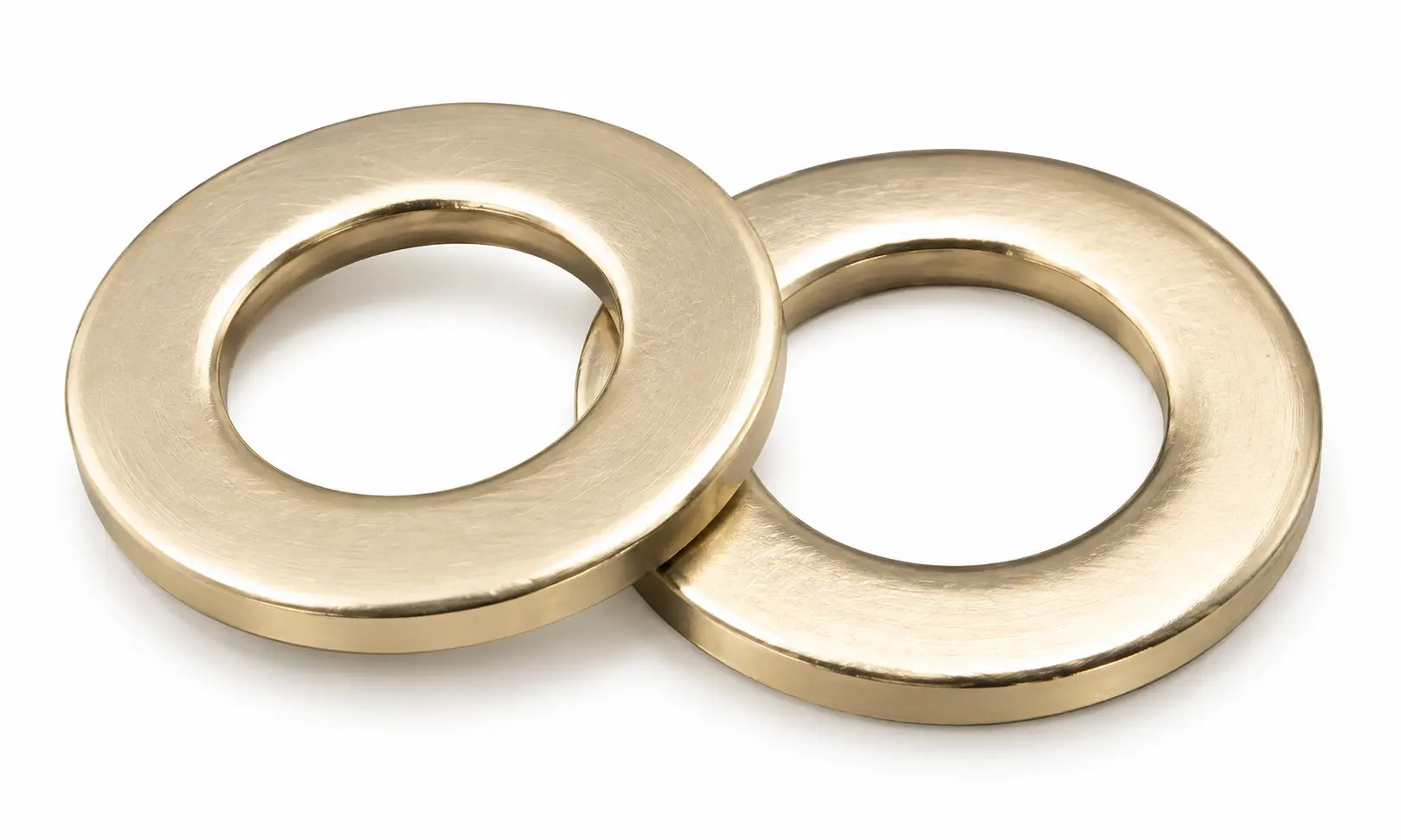
Nickel Silver C75200 Washers
Nickel Silver C75200
Washers
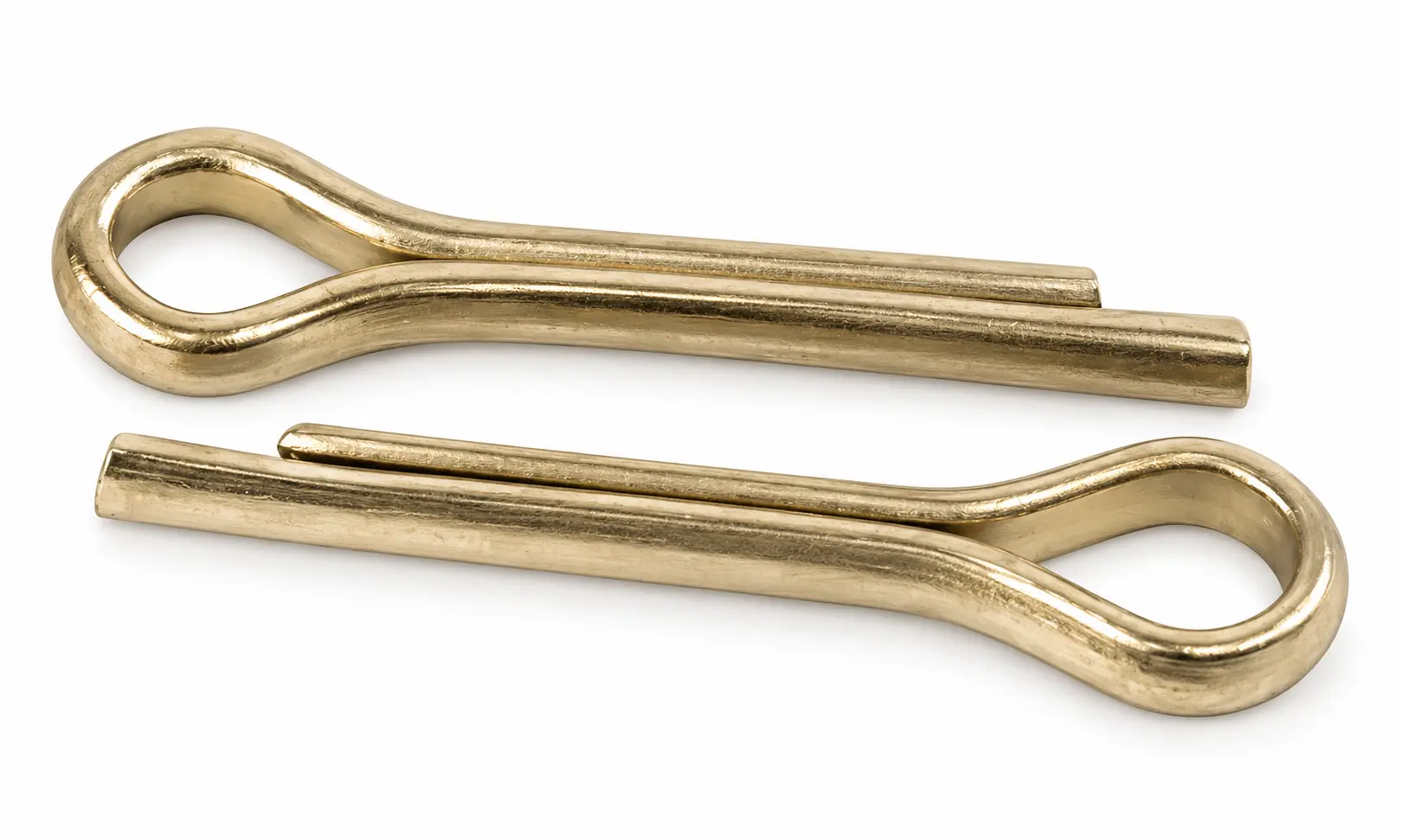
Nickel Silver C75200 Cotter Pins
Nickel Silver C75200
Cotter Pins
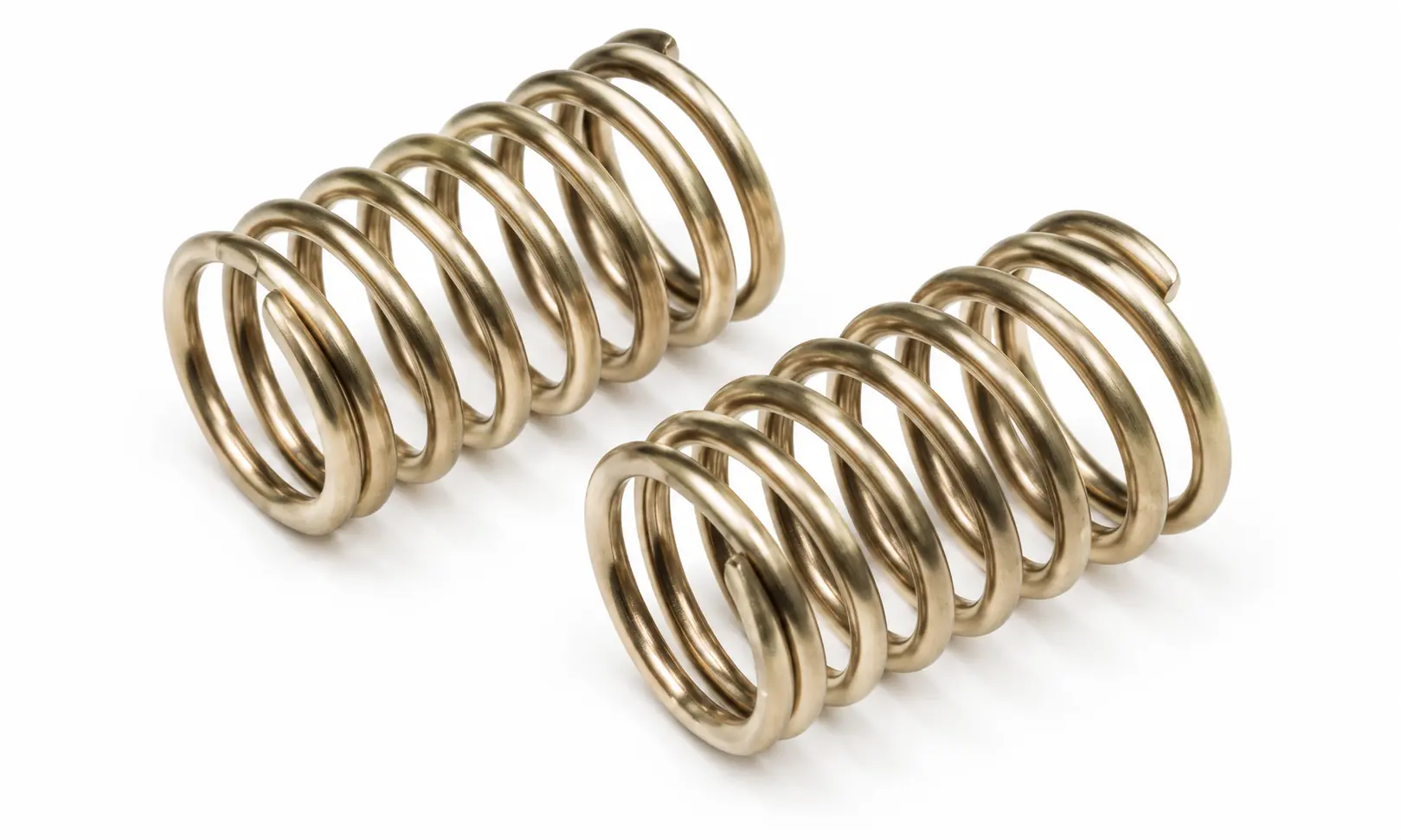
Nickel Silver C75200 Springs
Nickel Silver C75200
Springs
Nickel Silver C75200 Circlips
Nickel Silver C75200
Circlips
Nickel Silver C75200 Coated Fasteners
Nickel Silver C75200
Coated Fasteners
Nickel Silver C75200 Custom Spacers
Nickel Silver C75200
Custom Spacers
Technical Data

Nickel Silver C75200 Specifications

Chemical Composition — Nickel Silver C75200 (wt. %)
ElementMinimum %Maximum %
Copper (Cu), including silver63.066.5
Nickel (Ni), including cobalt16.519.5
Zinc (Zn)Remainder—
Lead (Pb)—0.05
Iron (Fe)—0.25
Manganese (Mn)—0.50
Copper + sum of named elements99.5—
Mechanical Properties — Nickel Silver C75200
ConditionUTS (MPa)YS 0.5% EUL (MPa)Elongation (%)Hardness
Flat, 0.035 mm grain OS0354001724040 HRB
Flat, 0.015 mm grain OS0154142073255 HRB
Flat, 1/4 hard H014483452073 HRB
Flat, 1/2 hard H02510427883 HRB
Flat, hard H04586510387 HRB
Rod 13 mm, 0.035 mm grain OS03538617242—
Rod 13 mm, hard H04 (20% cold work)4834142078 HRB
Wire 2 mm, 0.015 mm grain OS01541420735—
Wire 2 mm, 1/4 hard H0150344816—
Wire 2 mm, 1/2 hard H025935527—
Wire 2 mm, hard H047106213—
Physical Properties
Density8.75 g/cm³
Melting Point1071–1110 °C (1960–2030 °F)
Electrical Conductivity6% IACS at 20 °C
Thermal Conductivity33 W/m·K at 20 °C
Coefficient of Thermal Expansion16.2 × 10⁻⁶ /°C
Specific Heat Capacity377 J/kg·K at 20 °C
Modulus of Elasticity124 GPa
Modulus of Rigidity47 GPa
Machinability Rating20 (C36000 = 100)
Capacity for Cold WorkingExcellent
Capacity for Hot FormingPoor — cold-worked alloy
Hardenable by Heat TreatmentNo — strength from cold work only
Magnetic ResponseNon-magnetic
Equivalent Grades & Standards
UNSEN / CEN DesignationNominal CompositionCommon Name
C75200 — Cu-65Ni18Zn17 German Silver, Alpaca, Nickel Silver 65-18, NS107, CDA 752

Key Specifications: ASTM B122/B122M (Copper-Nickel-Zinc Alloy [Nickel Silver] and Copper-Nickel Plate, Sheet, Strip & Rolled Bar) / ASTM B151/B151M (Copper-Nickel-Zinc Alloy [Nickel Silver] and Copper-Nickel Rod & Bar) / ASTM B206 (Copper-Nickel-Zinc Alloy Wire) / SAE J461 and J463 (Wrought and Cast Copper Alloys).

C75200 is the most widely specified nickel silver and is carried by ASTM B122, B151 and B206 across plate, sheet, strip, rolled bar, rod, bar and wire.

Note on fastener standards: No nickel silver is covered by the ASTM nonferrous fastener standards. ASTM F468 and F467 carry a long list of copper materials — C11000, C26000, C27000, C46200, C46400, C51000, C61300, C61400, C63000, C64200, C65100, C65500, C66100, C67500, C71000 and C71500 — but none of the C73xxx to C79xxx nickel silvers appears among them. Fasteners and fixings in these alloys are manufactured from material certified to ASTM B122, B151 or B206 as applicable, with thread conformance to the relevant ASME or ISO standard and acceptance criteria agreed on the order.

In practice nickel silvers are rarely specified as structural fasteners in any case. They are chosen for appearance, spring properties, tarnish resistance, formability and acoustic behaviour — decorative screws and fittings, instrument hardware, contact springs, clips and pins — rather than for load. Where a copper-alloy fastener with a standard behind it is needed, the silicon and aluminium bronzes on the F468 list are the covered options, or C71500 where a copper-nickel is wanted.

Every nickel silver order ships with EN 10204 3.1 certification giving the heat analysis, the temper, and the mechanical test results for the product form and section supplied. Nickel and zinc are reported explicitly because the nickel-to-copper ratio governs colour and the zinc content governs dezincification susceptibility. Lead content is certified on the leaded grades, where it matters both for machinability and for regulatory compliance. Positive material identification, stress-relief treatment and colour matching against a supplied sample can all be added at order stage.

Machining: the unleaded nickel silvers carry a CDA machinability rating of 20 — the same as pure copper, where free-cutting brass C36000 is 100. They are tough and gummy, work harden ahead of the tool and produce long continuous swarf with a strong tendency to build up on the cutting edge. C77000 is marginally better at 30. Sharp positive-rake tooling, rigid setups, a positive feed that keeps the tool cutting rather than rubbing, and generous lubricant are all required.

Where machining dominates, change grade. The two leaded nickel silvers exist for precisely this reason: C78200 with 1.5–2.5% lead reaches a machinability rating of 60 — three times the unleaded grades — and C79200 with 0.8–1.4% lead is the other free-machining option. The lead is nearly insoluble in the matrix and sits as discrete particles that break the chip mechanically. The cost is joining performance and, increasingly, regulatory acceptability — see the notes on those pages.

Joining: the unleaded grades solder and braze Excellently and take oxyacetylene and butt welding Well, but CDA rate gas-shielded arc welding only Fair and coated metal arc welding Not Recommended. Zinc volatilisation in the arc is the problem, and it is also a fume hazard — zinc oxide fume causes metal fume fever, so adequate extraction is required whenever these alloys are heated to welding or brazing temperature. Soldering and brazing are the preferred routes, which suits the decorative and instrument work the family is used for.

Heat treatment: nickel silvers are not hardenable by heat treatment. They are single-phase alpha solid solutions with no precipitation reaction to exploit, so strength comes from cold work alone and the temper designation records the degree of reduction — OS grain-size tempers and O annealed conditions at the soft end, then H00, H01, H02, H04, H06 and H08 as cold work increases. Across that range tensile strength roughly doubles while elongation collapses from around 40% to under 5%.

Stress-relief annealing deserves particular attention on these alloys. Because they contain 17–27% zinc they are susceptible to ammonia stress-corrosion cracking, and residual tensile stress from cold work is one of the three ingredients that mechanism needs. A low-temperature stress relief after forming removes that stress while retaining most of the cold-worked strength, and is worth specifying as standard for components going into service rather than treating as optional. Full annealing is carried out in the region of 538–816 °C depending on grade and the grain size required.

Nickel silver contains no silver whatsoever. The name is purely descriptive — these are copper-nickel-zinc alloys, and the nickel bleaches the natural red of copper to a silver-white that closely resembles sterling. They are also sold as German silver, alpaca, maillechort and nickel brass, and the historical trade abbreviation EPNS — electroplated nickel silver — refers to cutlery made by silver-plating a nickel silver base, where the base metal's own colour means a worn plating does not reveal an obviously different metal underneath. That single property, a silver appearance at a fraction of the cost, is the commercial foundation of the whole family.

Colour tracks the nickel-to-copper ratio, and so does price. At the bottom of the range C74500 with 10% nickel retains a distinctly warm, pale-yellow cast. By C75200 at 18% nickel the alloy reads as convincingly silver-white, which is why that grade is the classic. C77000 holds the same 18% nickel against only 55% copper, giving both the whitest colour and the highest strength in the family. If appearance is a specified requirement, state the grade — the difference between 10% and 18% nickel is plainly visible side by side.

These alloys contain 17–27% zinc, and that changes the corrosion rules completely compared with the copper-nickels. It is worth being blunt about this, because the C7xxxx UNS numbering invites the assumption that nickel silvers behave like C70600 and C71500. They do not.

Dezincification applies. In the copper-nickels there is no zinc to lose; here there is a great deal, and in stagnant or slightly acidic chloride waters the zinc can be selectively leached out, leaving a porous, mechanically worthless copper residue that retains the original shape. The nickel content improves resistance substantially over plain brass, but it does not eliminate the mechanism. Ammonia stress-corrosion cracking — the classic ‘season cracking’ of brass — also applies, and a cold-worked or tightened nickel silver component carrying residual tensile stress will crack in moist ammonia, ammonium compounds, amines or nitrites. A stress-relief anneal after cold work is genuinely important on these alloys, not a refinement.

Nickel silvers are not seawater alloys. They carry none of the deliberate iron addition that builds the protective film in the marine copper-nickels, and they should not be specified for seawater piping, condenser tube or any flowing-seawater duty. Their corrosion credentials are for atmospheric exposure, indoor and decorative service, food contact and freshwater — duties in which they perform well and tarnish slowly.

Every grade in this family is rated Poor for hot forming, and that is the governing manufacturing fact. Nickel silvers are hot-short: the zinc volatilises and the alloys crack rather than flow at forging temperature. They are therefore cold-worked materials, and CDA rate most of them Excellent for cold working to match. Components are blanked, drawn, spun, stamped, cold headed, swaged and roll-threaded from strip, rod or wire, with interstage annealing where the work is severe, and the final temper set by the last cold reduction. Annealing is carried out in the region of 538–816 °C depending on grade. Hot forging, hot extrusion and hot rolling are not practical routes for these alloys — design the part for cold forming from the outset.

How the eight divide. Six are unleaded and two are leaded free-machining grades. Among the unleaded, the key variable is the nickel-to-copper ratio, which sets both colour and strength. C74500 (65-10) has the least nickel and the warmest colour; C75700 (65-12) and C75400 (65-15) step up through the middle; C75200 (65-18) is the classic German silver and the industry reference. C73500 is the high-copper, low-zinc member at 72% copper, giving the best corrosion resistance of the group and the standard coinage composition. C77000 (55-18) holds the same 18% nickel at much lower copper, producing the whitest colour and much the highest strength — up to 1000 MPa as hard-drawn wire — which makes it the spring and contact grade. The leaded pair, C78200 and C79200, trade weldability for free-machining behaviour and are chosen for turned and screw-machined parts.
Key Characteristics

  • The classic 65-18 nickel silver — German silver, alpaca, maillechort.
  • Nickel 16.5–19.5% gives a convincing silver-white colour.
  • The industry colour reference for the whole family.
  • The base metal behind EPNS electroplated cutlery.
  • 386 MPa annealed to 710 MPa as hard-drawn wire.
  • Covered by ASTM B122, B151 and B206 in all common forms.
  • Excellent cold formability; solders and brazes Excellently.
  • Contains no silver whatsoever.

Typical Applications

  • EPNS cutlery, flatware and hollowware base metal.
  • Musical instruments — flute bodies, saxophone and clarinet keywork.
  • Brass instrument slides, ferrules and trim.
  • Decorative architectural hardware and trim.
  • Optical frames and precision instrument parts.
  • Zips, slide fasteners, clasps and findings.
  • Springs, contacts and electrical connector components.
  • Jewellery, badges, medals and nameplates.