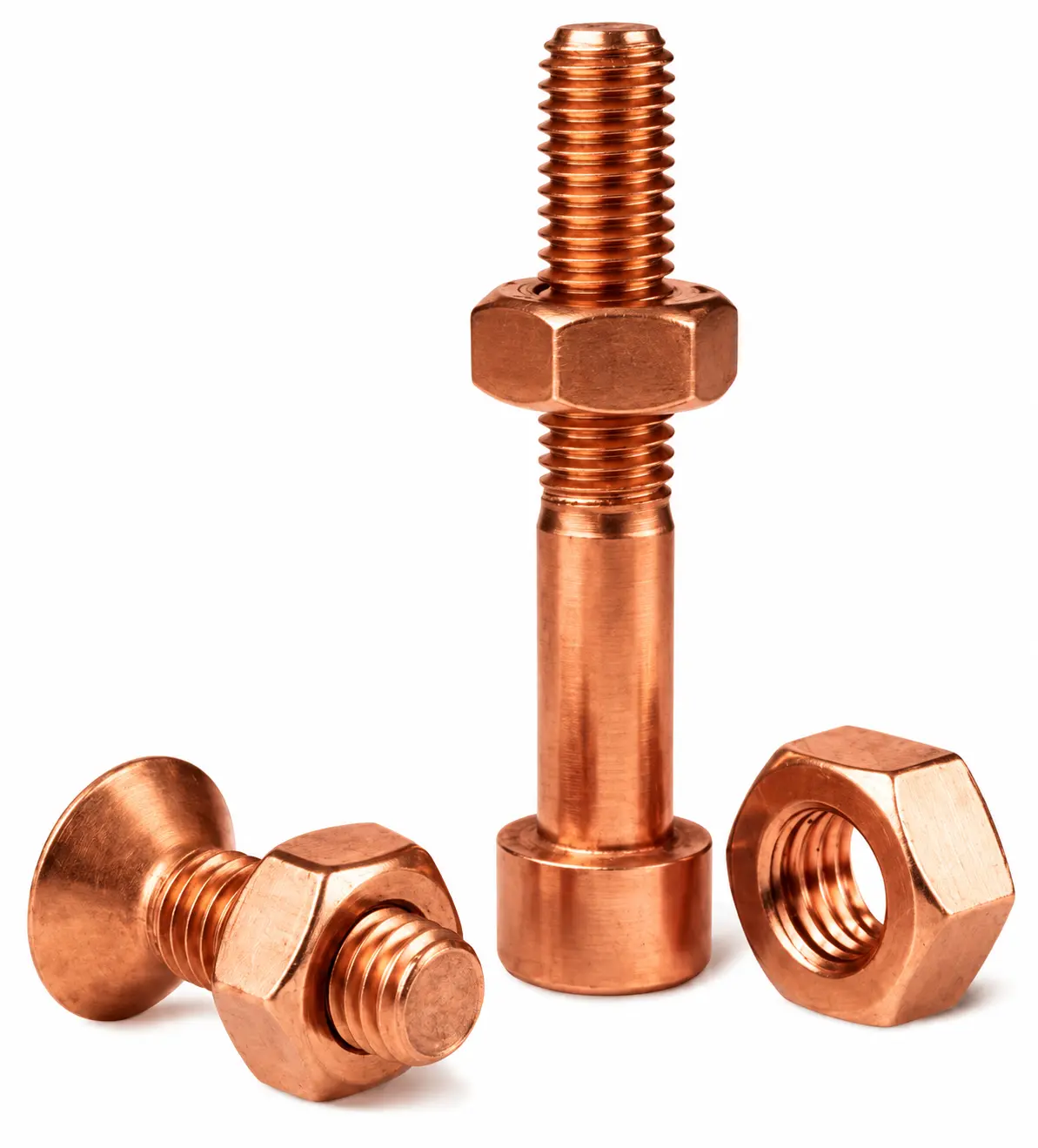
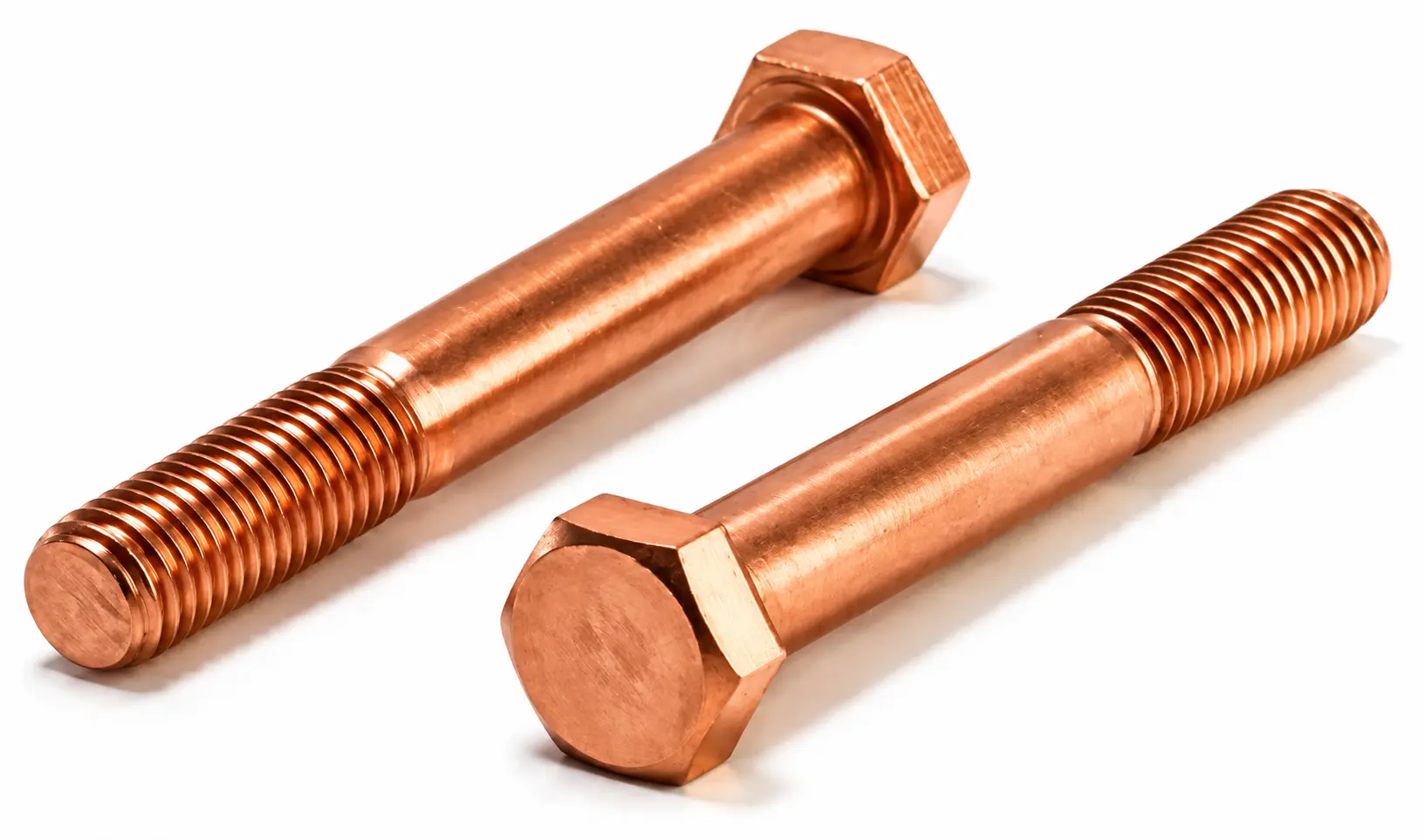
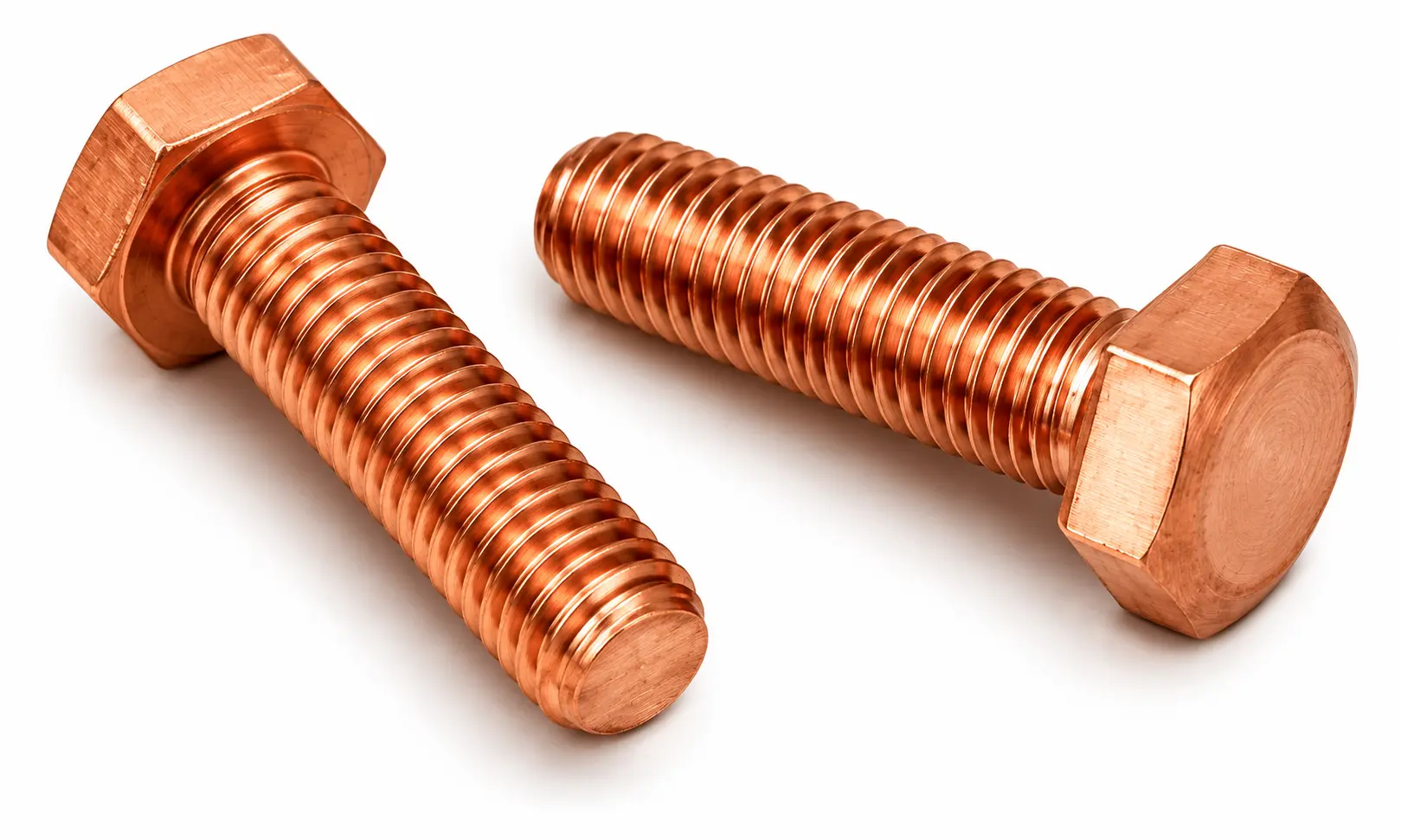
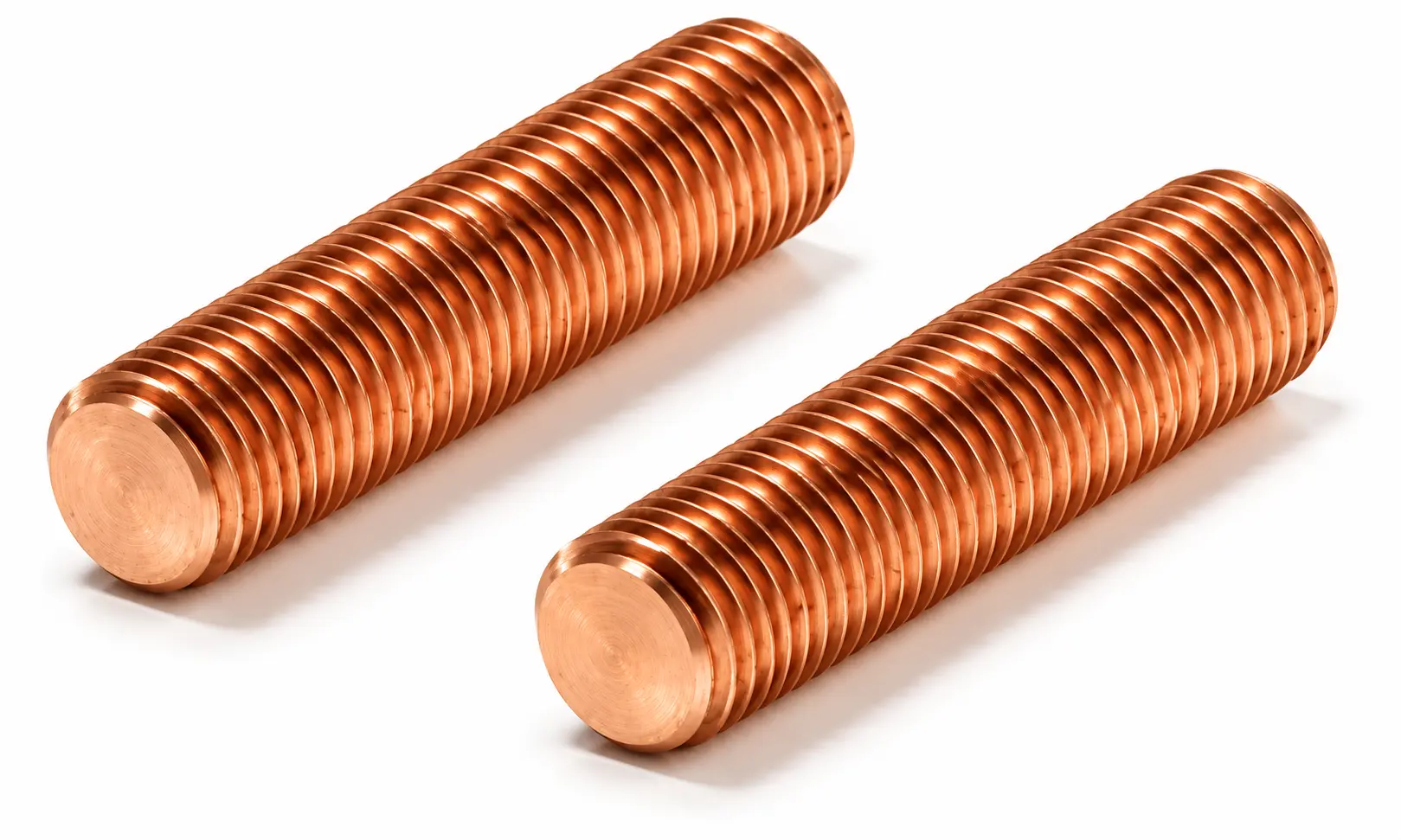
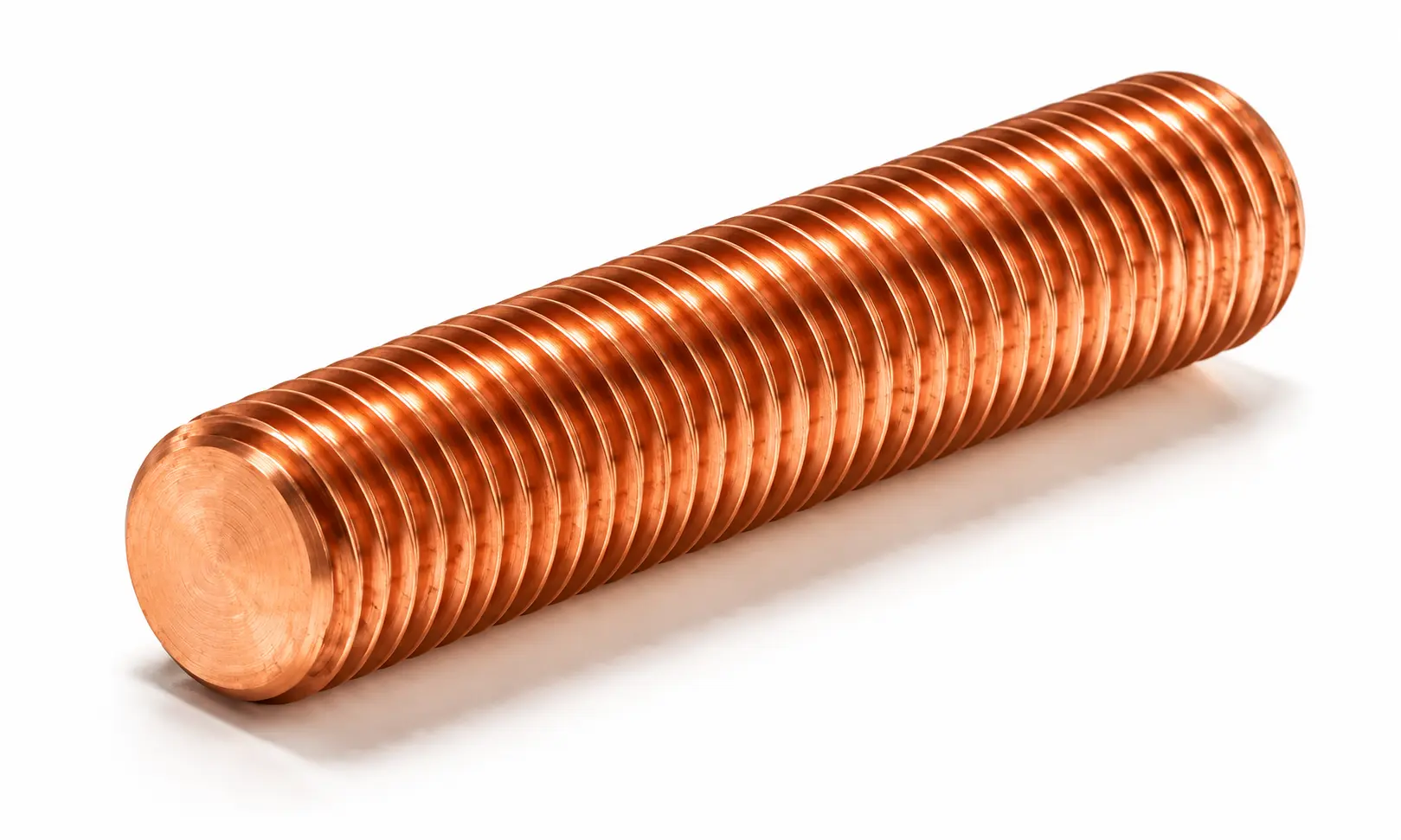
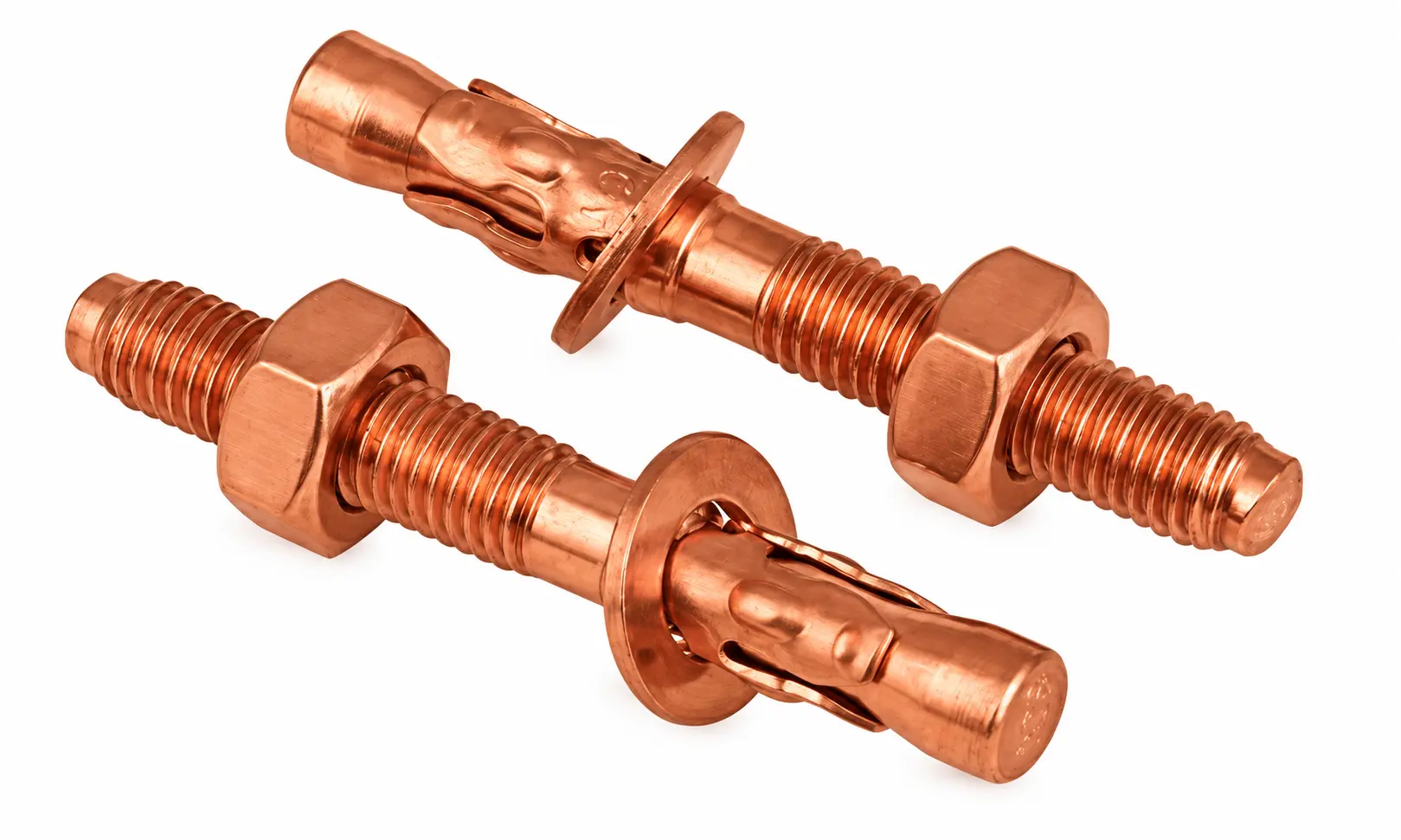
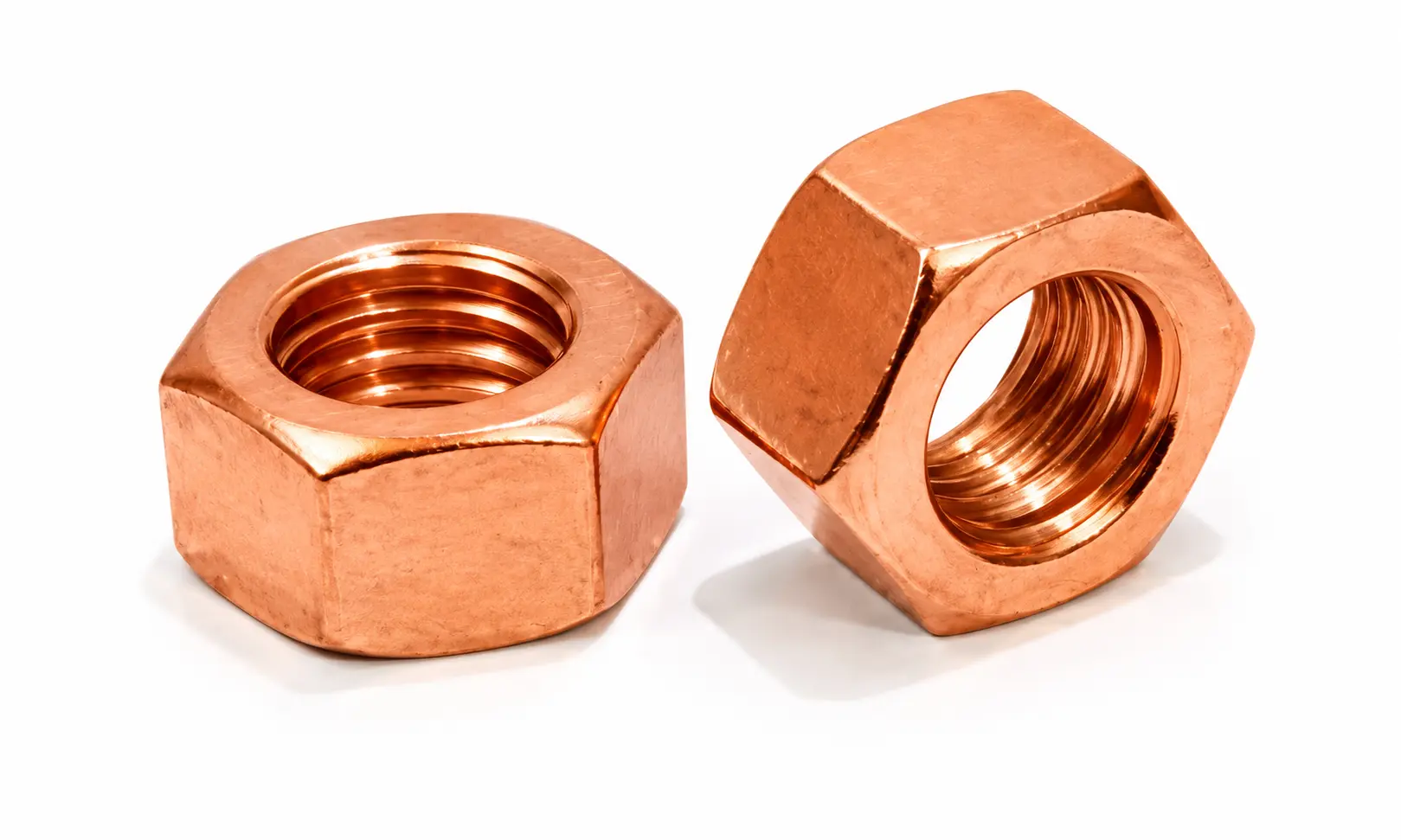
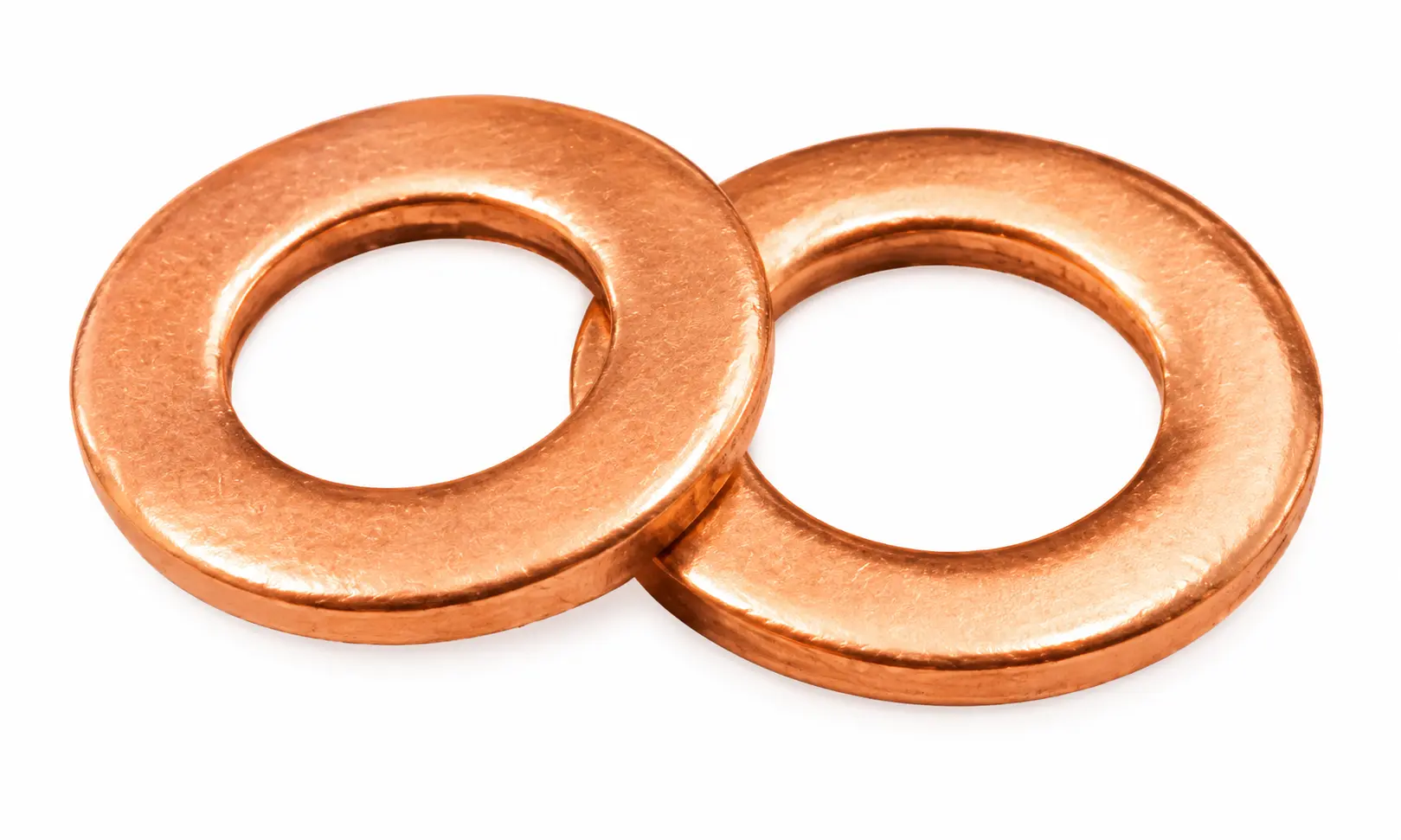
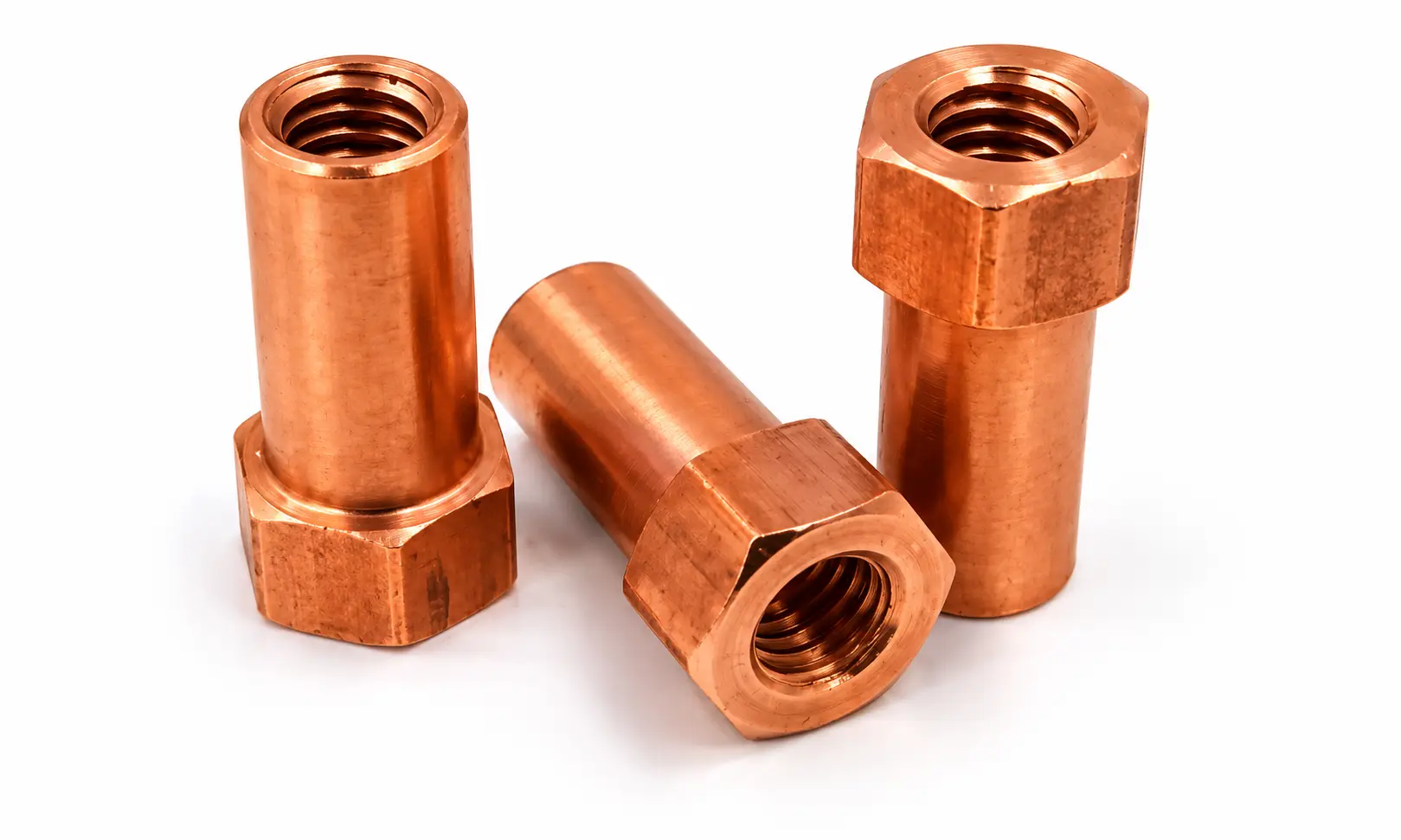
C18200 is a precipitation-hardening copper, and that single fact separates it from every grade on our commercially pure copper hub. C10100, C11000, C12200 and the rest are strain-hardened only: their strength comes from cold work and is set by the temper, and no heat treatment will raise it. Chromium copper is genuinely heat treatable. Chromium has appreciable solubility in copper at high temperature and almost none at low temperature, so the alloy can be
solution treated to take the chromium into solid solution,
quenched to hold it there in supersaturation, and then
aged to precipitate it as a fine dispersion of chromium particles. Those particles obstruct dislocation movement and give the strength.
The commercial importance is that precipitation removes the chromium from solution. Elements dissolved in copper scatter conduction electrons badly — it is why the 0.015–0.040% phosphorus in
C12200 costs it 15 points of conductivity. Chromium precipitated as discrete particles is largely out of the way electrically, so C18200 ends up at
80% IACS while reaching roughly 500–590 MPa in the fully treated condition. That combination of conductivity and real strength is what the alloy is bought for, and it is the reason it has no substitute among the pure coppers.
Resistance to thermal softening is the property C18200 is actually specified for, and it is why the alloy dominates resistance welding electrodes. A pure copper electrode would anneal and mushroom within a few hundred welds: cold-worked copper begins to recover and soften not far above 150 °C, and once annealed it never recovers. The precipitated chromium in C18200 pins the structure and resists that recovery, so the alloy holds its hardness and strength through repeated thermal cycling at the electrode face. C18200 is the standard
RWMA Class 2 electrode material on that basis, and CDA list resistance to thermal softening explicitly as the reason for its use in circuit breaker parts.
Be careful with the temperature figure, because sources quote it differently and they are measuring different things. CDA give the alloy as stable up to
371 °C (700 °F). Supplier datasheets commonly quote up to about 450 °C without significant softening, and some cite a static softening point above 500 °C. Those higher figures are static coupon values. Under
sustained load with thermal cycling — which is the real duty of an electrode or a bolted current-carrying joint — stress relaxation begins well below them, and designing around
350–400 °C is the conservative and sensible basis. Note also that prolonged exposure above the ageing temperature
over-ages the precipitate structure and softens the alloy permanently; the part does not recover on cooling, and only a full re-solution-treat and re-age will restore it.
The temper codes on a heat-treatable copper mean something different from those on a pure copper, and the difference matters when ordering. On
C11000 or C12200 the H-series codes simply record how much cold work was applied. On C18200 the codes record a
thermal history as well, and the strength depends on both. The sequence runs:
TB00, solution heat treated — the soft, supersaturated condition at about 234 MPa, used for forming;
TD00 and
TD04, solution heat treated and then cold worked, which builds strength by work hardening alone with the chromium still in solution;
TF00, precipitation hardened straight from solution treatment; and
TH01 and
TH04, cold worked
and then precipitation hardened, which stacks both mechanisms and gives the highest properties in the alloy — up to 593 MPa at TH04 in small section. There is also the annealed
O61 condition for tube.
Section size matters more here than on a pure copper, because the quench after solution treatment has to be fast enough through the whole section to hold the chromium in solution. CDA's own data show TF00 rod falling from 496 MPa at 25 mm to 379 MPa at 100 mm for exactly that reason. Specify the temper
and the section, and do not assume thin-section properties carry into a heavy bar.
C18200's corrosion behaviour is essentially that of copper. At 0.6–1.2% chromium the addition is a strengthener rather than a corrosion-resisting element, and the alloy behaves much as the pure coppers do: good resistance to fresh and potable water, atmospheric exposure where it develops the familiar patina, non-oxidising acids free of dissolved oxygen, neutral and alkaline salt solutions, and seawater at moderate velocity. CDA list corrosion resistance as a reason for its use in arcing and bridging parts, cable and connectors. It is worth being straightforward that
CDA publish no corrosion rate data for this alloy — their record states that no corrosion properties are available — so where a specific chemical duty is in question the alloy should be qualified against the actual stream rather than assumed equivalent to a pure copper.
The copper family's limits apply unchanged. C18200 is attacked by
oxidising acids — nitric rapidly, and sulfuric or hydrochloric as soon as oxygen or an oxidising contaminant such as ferric iron is present — by
oxidising salts, and by
sulfides and hydrogen sulfide. It suffers erosion-corrosion in fast or aerated water, and elevated-temperature oxidation in air becomes significant well before the softening limit is reached.
Ammonia and amines cause stress-corrosion cracking in copper alloys, and a tightened fastener supplies exactly the sustained tensile stress required. Moist ammonia, ammonium compounds, the amine corrosion inhibitors used in boiler and condensate systems, nitrites and mercury compounds will all crack a stressed copper component. C18200 fasteners should therefore not be used in ammonia refrigeration plant, fertiliser service, amine-treated condensate systems, or anywhere decaying organic matter concentrates ammonia. Where the alloy has been heavily cold worked and must sit in a borderline environment, a stress-relief treatment is worthwhile — though on this alloy any thermal treatment must be chosen with the ageing response in mind, since the temperature ranges overlap.
C18200 is galvanically noble, so it damages what it is bolted into. Like the other coppers it sits well above carbon steel, cast iron, aluminium, zinc and galvanised coatings on the galvanic series. A chromium copper fastener in an aluminium or galvanised assembly will survive while driving rapid corrosion of the surrounding metal, and a bolt clamping thin aluminium or galvanised sheet is the worst case. Isolate it with insulating washers and sleeves or a barrier coating. It is compatible with the other coppers and bronzes, with the copper-nickels and with Monel. This is the opposite of
aluminium, which is anodic and is itself the part that dissolves in a mixed-metal joint.
Where chromium copper sits in the copper family. Exotic Alloy's
commercially pure copper range runs from
C10100 at 101% IACS down to
C19400 at 65%, and across that whole range strength comes only from cold work — the best any of them manages is about 390 MPa, and all of them soften permanently if heated. C18200 breaks that trade-off by being heat treatable:
80% IACS with 480–590 MPa and genuine resistance to thermal softening. The nearest alternative within the pure coppers is C19400, whose iron-phosphide dispersion gives good stress-relaxation resistance, but it reaches only 552 MPa at 65% IACS and is a strip product rather than a bar and forging alloy. Where still higher strength is needed in a conductive copper, beryllium copper is the next step up, at a further cost in conductivity.